I used to embrace atheism and I used to be active in the Philippine atheist forum and community. However, during the past few years I find myself being drawn away from atheism. Did someone “save†my wretched soul and showed me the path to eternal life and salvation? No! I still believe that there is not enough evidence yet that I have witnessed and experienced that would offer sufficient proof (and arguments) for the existence of the theistic god. Given that my view on the existence of the theistic god hasn’t changed, why do I find myself being drawn away from atheism? If atheism is favored by science, evidence and reason, why is it such at a disadvantage against religious beliefs that often comes with credulity? The biggest word that comes to my mind when I think about this question is “Arroganceâ€. As long as arrogance lingers amongst the vocal proponents of atheism in the Philippines, I just do not see it prospering in the country despite the feeding programs, conventions, public debates and media mileage its organizations have.
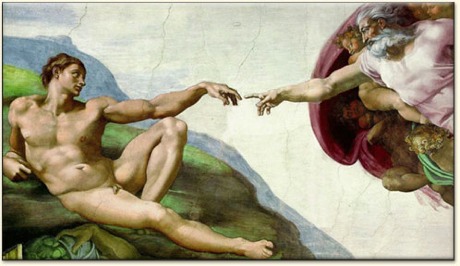
Ever heard of Salmoneus? In Greek mythology, Salmoneus was a prince who led a group of colonists to the Peloponesse and established the kingdom of Salmonia in the region later known as Pylos or western Messenia. Salmoneus was an arrogant and impious man who commanded his people worship him as the god Zeus. He impersonated the divinity by driving around in a chariot dragging bronze kettles to make thunder, and casting torches in the air for lightning. Zeus was angered and struck Salmoneus dead with a thunderbolt and laid waste to his city.
| SUPPORT INDEPENDENT SOCIAL COMMENTARY! Subscribe to our Substack community GRP Insider to receive by email our in-depth free weekly newsletter. Subscribe to our Substack newsletter, GRP Insider! Learn more |
Here’s another good “mythical†story.
A long time ago the whole earth had one language, and the same words. One day the people found a plain in the land of Shinar, and dwelt there. The people said one to another, “Come on, let us make bricks, and burn [them] thoroughly!†And they had brick for stone, and they had asphalt for mortar. Then they said, “Come on, let us build ourselves a city and a tower, the top of which [may reach] to the heavens; and let us make ourselves a name, lest we be scattered over the face of the whole earth!â€
Then God came down to see the city and the tower which the people built. God said, “Behold, the people is one, and have all one language; and this have they begun to do. And now will they be hindered in nothing that they meditate doing. Come, let us go down, and there confound their language, that they may not understand one another’s speechâ€.
And God scattered them thence over the face of the whole earth.
The story of Salmoneus and the Tower of Babel has one thing in common – they both teach us the folly of arrogance. The story of the Tower of Babel also shows man’s need to erect symbols of his achievement. When the people built the tower, it wasn’t built for God but a monument to themselves. Their intention was to reach heaven with it and proclaim themselves gods.
Some may ask: Why was there a need for an omnipotent god to confound the people’s language? Was God so insecure of Himself that He felt threatened by the tower being erected by the people? No, it wasn’t about God’s insecurity. The biblical mythology already depicts that the tower was never a threat to God. There was never any chance that it could actually reach heaven. In the story’s case, it’s not actually the deed (building the tower) that was the problem; it was the attitude of the people. The Babylonians were arrogant believing themselves to be “All-Powerfulâ€. We don’t have to look far to see similar arrogance in organizations and folks with (militant) atheist leanings in the Philippines.
I really feel bad about writing something negative about the Philippine atheist community because I still have a lot of friends there and I still share a lot of their philosophical beliefs. However, I just cannot help but feel dismayed about their projections and about a lot of the things they are trying to pontificate. For instance, I am puzzled about the reasons of these self-professed atheists who enter religious forums. Some of them say that they are there to learn from theists and some say they are there to test their own non-belief in the existence of God (in a form of discussion or debate). However, if we notice their approach and especially when they refuse to rationalize their own arguments and perspectives to the same kind of critical assessments that they demand of theists, their sincerity comes into question. In other words, when one spends so much time in a prolonged debate with one or more of these types of self-professed atheists, it becomes very apparent that there is absolutely no real desire to engage in a balanced, open, and reasonable discussion with theists. They express no desire to actually learn about what theists believe. Instead, they continually articulate the same old straw man arguments emphasizing their stereotypical characterization of theists (e.g. Christians) because it makes it easy for them to justify their rejection and in some cases, hatred of theists. A polemic built on intellectual laziness.
Anyway, what is atheism? Dr. Gregory Neal from the Errant Skeptics Research Institute offers a very interesting explanation that atheism is the denial of the existence of a deity or deities. You will be able to follow his arguments in this link:
Self-professing atheists place atheism in two forms – active and passive. The active sense, is regarded as the “denial of deitiesâ€, while the passive sense is merely a “lack of belief in deitiesâ€, as self professing atheists claim. But as Dr. Neal points out, there is no difference between atheism in the passive and active sense after assessing the linguistic and historic invalidity of the passive sense of the term. His argument summary states:
1. The particle “a” must be applied to the Greek word theos, not to the English word “theism,” thus reflecting the negation of the object, not the predicate.
2. The passive negation of the theistic precept isn’t attested to in the historic usage of the Greek word atheos.
3. Active negation of the theistic precept (either in general or in particular) is exceedingly common throughout Greek literature, thus reflecting the morphological formation of the word atheos.
How different would the assertion: “I do not believe a deity exists” be from “I believe a deity does not exist.”? This splitting of hair is what self-professing atheists use to avoid having to shoulder the burden of proof for their position (denial of the existence of God).
If atheism is simply the “lack of belief” in God, that self-professing atheists just don’t make any claims about God and that they don’t make any God postulates or that they simply don’t take God seriously, that is okay. But if one is to make a claim, such as “God DOES NOT exist” or “God IS inexistent” or “God is a delusion†or merely an “imaginary productâ€, then the claimant also has the burden of proof for the claim(s). Self-professing atheists who make such claims deny that God exists while, at the same time, deny that they have a burden of proof. As Dr. Neal points out, they want theists to prove their belief in God, but they don’t want to have to prove their belief in the non-existence of God. In other words, they refuse to provide the evidence for their belief while severely criticizing theists for failing to do the same. And if I may add, demanding that theists step out of their cocoon in order to meet the atheist mindset. Well, as Dr. Neal correctly points out, that is called hypocrisy and if I may add, arrogance as well.
Don’t get me wrong, I do agree that theism ought to be subjected to critique but atheism should not be about knocking down straw man in its critical analysis of theism. Projecting theists as merely non-thinking coddlers of an imaginary being to suggest more credibility to the atheist position is revolting and bone chilling at its very core. For thousands of years, religious belief has been accompanied by thought and intellectual discovery. In addition, projecting that theists are primarily driven by their own selfish motivation for salvation is smacking of ignorance and lack of empathy. Self-professing atheists who make such derogatory projections of theists do not do any service to atheism by characterizing people (a lot who are sincere in their goodwill intentions) that way. Again, this attitude comes across as a bit arrogant and characterizing faith as something only idiots would attach themselves to won’t help atheism’s case and cause.
A lot of self-professed atheists assert that theists are delusional. A lot of self-professed atheists seem to condemn theism because of its past record of having caused too many atrocities and that it deals with ridiculous life experience questions. But on the same token, self-professed atheists are being delusional as well if they think they can kill theism simply by exposing theism’s folly.
I agree that religious zeal in the past has resulted in many atrocities and unimaginable terror – the Crusades and the Inquisition immediately come to mind. However, atrocities and terror are not specific to religious inclinations! In the Enlightenment period, the proponents of anti-religion insisted that the universe and human nature could be understood and controlled by the rational mind. They saw the universe was ruled exclusively by consistent laws such as Newton’s law of gravity. Such laws can be explained mathematically or scientifically. The Enlightenment empowered those who argued that superstition, blind instinct and ignorance had to be eradicated. Immanuel Kant, in “Anthropology from a Pragmatic Point of View†asserted that Africans were inherently predisposed to slavery. The Enlightenment gave the world the “scientific racism†adopted as an ideological reason for murder by 19th and 20th century despots. Those who could not be educated and reformed, radical Enlightenment thinkers began to argue, should be eliminated so they could no longer poison human society. The Jacobins who seized control during the French Revolution were among the first in a long line of totalitarian monsters who justified murder by invoking supposedly “enlightened†ideals. Again, many lives were devastated from the roots of arrogance and powerlust.
Mythology and even history seem to teach us that whenever we try to put ourselves on the throne, we seem to suffer for it. Don’t get me wrong. There is nothing wrong with achieving great things. There is nothing wrong with trying to do the best one can do and strive for a little more. These things are not bad, it’s when we use them to define who we are and show others how special we are that these things become personal towers of Babel. It’s the attitude, not the tower that is the problem.
It seems to me that organizations in the Philippines with inclinations to atheism (especially militant atheism) are tools serving as the personal Tower of Babel of many militant atheists in the country. While it is true that many of the members are intelligent and articulate individuals and while it is true that a lot of them have embarked on admirable pursuits such as social activism and community support programs, a lot of them still seem to be unable to recognize that genuine honor and respect are not gained through noise and mere dole-outs and bragging of one’s intellect while undermining others’. Much like Salmoneus, they won’t gain respect by driving around in a chariot dragging bronze kettles to make thunder, and casting torches in the air for lightning. As long as arrogance dominates the attitude of proponents of atheism in the Philippines, I think atheism in the country won’t succeed.

- Why Filipinos are More Enamored with America than with China - June 30, 2024
- The Duterte Chinese Brown-nosing Diplomacy - April 28, 2024
- The Real Pawns - April 1, 2024
Well… the way certain atheists spit on religion, you’d not be surprised if they wanted to kill off EVERY single religious person or make religion a crime, like what certain governments do (yes, I’m looking at Red China).
Sometimes they certainly do sound like it, Aegis-Judex. Anyway, thanks for reading! 🙂
Dude Hector, You are but an another hypocrite pathetic theist out there attempting to discredit atheism as whole. By reading your nonsensical argument in the begining its appear that you were expressing your grievences against some bunch of arrogant atheists you encounter in. your country and thus change your mind to turn against the whole atheism itself while still claimg to be one. Secondly you clearly explained by yourself in above article that “Atheism” simply mean disbelief in any diety or god etc. what so ever. But then in the end you show very of your usual atheistic stupidity by branding atheism as an belief system. Thus its make your argument null and nonsensical.
you’re equating Communism with Atheism. Certainly there is no logical pathway from atheism to communism. Many communists are atheists but the crimes of communism were done entirely for political and ideological reasons, not because of atheism. The truth is communists are in direct competition with religions because they are similar in many ways. Both are dictatorial and anti-democracy. Both have a cult or worship of leaders. Both suppress free speech and free expression. Nuff said.
I strongly agree with you…
You seriously think that? To your fellow human? And you call yourself a religious person?… Hopeless.
well islam and christians especially in the dark ages wanted that exactly. and btw they even already tried doing it. red china, cmon pls dont compare atheism with the red because their is no relation
Funny how you could use the same argument against theist who try to push their beliefs to others in hopes of “saving their souls”. Both sides need to stop trying to change the other and just respect them for who they are. In short, stfu.
I agree, asmodeus. I said it before in an article I wrote a few years ago… the institutional abuse of an idea or belief does not necessarily discredit the idea or belief. People of religion and non-religion have had their (and continue to do their) share of wreaking havoc to humanity. To me, it is the utopic exclusivist and fundamentalist mindset that really is to blame and this mindset is not held exclusively by either sides. Thanks for reading!
name one atheistic group who wreck havoc to humanity! by the way, if you mean communist regimes of stalin or the hitler’s nazism you are wrong. stalin was an atheist, hitler was a catholic. neither communism or nazism had anything to do with atheism. they murdered people for different reasons. communism has no logical pathway to atheism. what is clear is that religion has everything to do with conflicts in the world today. violence have been done in the name of god, faith or beliefs.
i agree
i’m a theist… and most of my arguments are being voiced out by an atheist…
the irony is not lost to me
good read! it’s refreshing to know someone has my sentiments 😀
Hi RagPen! Well, I used to consider myself as an atheist but now I am more like an agnostic. Thanks for reading! 🙂
agnostic? i think your a believer now.
Funny, I was thinking of doing an article like this myself.
I see Hector’s point that atheigm isn’t a problem in itself. People are free to believe (non-believe?) it. The problem is MILITANCY. Some of them believe eradicating religion in the world is possible and should be their goal. They think religion is the root of every problem.
That idea is very much poorly founded. If you blame religion for most of the deaths of people in colonized worlds by colonizers, they forgot one thing; most of them died through DISEASE which the colonizers brought. Religion had nothing to do with that. Also, as I said before, desiring the elimination of all religion in the world is akin to genocide. It has the potential for violation of basic human rights.
For me, religion often provides people with the first inkling of the rule of law. It’s where I learn that cheating, stealing, lying and killing are wrong. Religion is more than just worshipping a deity. It involves everything you stand for in your life.
Hi Chino! Yes, the problem is that a lot of the militant atheist types seem to fail to see the bigger picture. (I submit that this is the same case with the religious extremist types.) Thanks for reading! 🙂
I think in the end, it doesn’t matter whether one is a theist or atheist. What matters is, how much do you contribute to the world and society, to others. Many atheists in the Phils. belong to the middle or upper classes and some of them merely want a liberal lifestyle without religious parents reminding them to be good. I hope those kids remember that they have to be good, or they’re doing their belief… uh, non-belief… a disservice.
By the way… isn’t Salmoneus that funny guy in Xena? hehe
Xena… wow… that’s a show I haven’t seen in a long time! 🙂 hehehe
I also once questioned what looked to me like an over-emphasis on gay issues in the tweets being fielded by the @ffreethinkers (not that there’s anything wrong with that)…
You get to wondering, actually, what civil liberties exactly are gay people being deprived of that these Pinoy ‘atheist’ groups are up in arms about?
@paulfarol chimed in and pointed out that a lot of gay people hold influential positions in the Philippines, which highlights the reality that gay people aren’t exactly a disadvantaged group in our society.
Perhaps all that is, indeed, just for the sake of that militancy we’ve observed in their ways..
“Not that there’s anything wrong with that.” Very Seinfeld. 🙂 hehehe Well, I think one of the things that the gay community is fighting for is same-sex marriage. They want to have the same rights and privileges given to married heterosexual couples. For me, I think that’s okay. Let them be able to get married if they want to but I wouldn’t want them to force Churches or religious institutions to marry them if those Churches don’t allow same-sex marriages. A civil wedding would suffice, I think; they should also get the same tax breaks heterosexual couples do. But for other issues… I also don’t think they are deprived of rights and privileges given to other heterosexual folks.
nice point there chino!
while reading your comment, it reminds me of a definition of religion i have read a long time ago.
“Religion is what keeping the poor people from killing the rich people.”
I’ve always taken ‘atheism’ to mean simply, the lack or absence of belief in “God”. So I can see the atheist’s point, if he looks at it in the same way, that the burden of proof that there is a God falls on the theist, because the atheist’s perspective in that case is, “I have not sufficient proof to satisfy me that there is a God.”
Of course, as you pointed out, most ‘atheists’ don’t have that perspective, and rather treat it as a different form of faith. Philosophically, it is rather impossible to believe in the “nonexistence” of something — belief requires an object.
What I find rather funny is that a lot of these militant atheist types love to go on and on and on in bashing something that they claim not to exist or something they lack any knowledge of. 🙂 hehehe Thanks for reading, BenK!
Although I recognize that the god concept doesn’t survive Occam’s Razor, I don’t feel the urge to shout out that there is no god, gods or goddesses. Why would I bother? I can’t prove that there is no god, just like the believers can’t prove there is one. If people are at peace with their belief, let them. At least it’s healthier than tranquilizers or drugs.
The “god of the gaps” (in our knowledge) is evaporating as we speak. We don’t need a god any more to explain the emergence of life and evolution, just as we don’t need a god any more to explain lightning. We don’t need any supreme being to explain the fabric of the cosmos, even the big bang. Maybe there is a god, hiding beneath it all, but we can’t prove him or it.
We just have the word of a prophet that described his hallucinations in a sulfur cave in the Quran, and the New Testament that was written a couple of hundreds of years after Jezus’ death, from hearsay. If you ask why all these fancy (and sometimes interesting and uplifting) stories should be inspired by god and where’s the proof, they just answer in a circular way that god said it himself. Yeah right.
Why atheists in the Philippines are so vocal? Perhaps they want to hit back at the Pajero bishops and the fact that the Philippines is a part-time theocracy where the church can obstruct a bill (the RHB) for more than 10 years. Where the church wants to have its say on anything that isn’t their business but Caesar’s.
You can take it rather lightly. In general Filipinos change religion as they change underwear. The Spanish bogeyman came 400 years ago but after a while, most Filipinos turned to be catholics (the religion of the oppressor), betraying their native values, culture and gods. Later, American missionaries of the most marginal bible belt sects came around, and lo and belo, part of the Filipinos became Jehovah witnesses, Reborns, Methodists, and all other flavors that someone in the American retarded Midwest ever dreamed of.
Make a good show, add some celebrities, have a white skin and wear a white robe and you can even convert Filipinos to the religion of the Holy Spaghetti Monster. And in due time also to atheism.
Dami sinasabi. Do you care about the truth.. Do you believe in humanity? Ganun lang.
“And you can see them there, on sunday morning, stand up and sing about, what it’s like up there, they call them paradise, i don’t know why…call some place paradise then kiss it goodbye…”
good point, NTI.
what we forgot was that we were pretending to embrace the religion of the conqueror. we have to or else we will perish. our great grand parents would scold those who would act otherwise. Why? they want us to survive. Pretend that we embrace the religion on the conqueror. Many years later, we survived, the Priests has long gone, but we forgot that we are just pretending.
The good part is that now they are not burning people to the stake or sending them to garote. Religion has lost its greatest argument tools.
It’s rather funny either that you push to people your own reasons, own beliefs about atheism that you used as a reason to why you left atheism.
it is rather impossible to believe in the “nonexistence†of something — belief requires an object.
What I find rather funny is that a lot of these militant atheist types love to go on and on and on in bashing something that they claim not to exist or something they lack any knowledge of. 🙂 hehehe Thanks for reading, BenK!
I think that’s rather your previous attitude you’re trying to rid of yourself, but until now you hadn’t rid of it as just in your statement, it’s clear that no matter how it’s irrelevant to the person’s comment your response is, you still push to his/her throat your unproven claim about atheists that they “love to go on and on and on in bashing something that they claim not to exist or something they lack any knowledge of”.
And atheism is seriously something you lack knowledge of. You can’t even call yourself an atheist or former with a good philosophy or of any good moral, if your reason for leaving atheism is merely because of the arrogance of atheists as you claim (or your arrogance when you were atheist as it implies) you want to rid or hide of, or by simply getting convinced upon reading and not even caring to look for available counter (your article lacks counter references) and make a comparison, sorting before deciding, and would have prevented you committing the numerous logical fallacies and claims you have carried the burden of proof but you simply can’t carry.
name one atheistic group who wreck havoc to humanity! by the way, if you mean communist regimes of stalin or the hitler’s nazism you are wrong. stalin was an atheist, hitler was a catholic. neither communism or nazism had anything to do with atheism. they murdered people for different reasons. communism has no logical pathway to atheism. what is clear is that religion has everything to do with conflicts in the world today. violence have been done in the name of god, faith or beliefs.
Been a year that this have been presented but was ignored. It seems though, you only left atheism as you’ve done painting it’s name by your own attitude but the attitude remained.
If you ended up in atheism merely because you benefited from the umbrella of burden of proof, and you left because your umbrella was unsuspectingly turned by other’s words, you didn’t realized that doing so puts you back to having no umbrella at all. Indeed, made a lot of claims that upon being specifically pointed, you failed to carry your burden of proof to prove your claim. You said, you need to sacrifice RATIONALITY to understand theism, but what can a mind understand if it’s not in RATIONALITY?
So, isn’t that the reason why you did not hesitated to claim a lot of fallacies against atheism? Because you lost a grip of rationality. You got convinced that being atheist is also a sort of believing something, but only fools will believe and get convinced that belief in the nonexistence of something is possible, logically, rationally, and philosophically. That is ignorance, and if I am to be intellectually honest, you sacrificed your half-baked atheism, switched from your self-implied arrogance to ignorance.
You did not even understood the real essence of burden of proof, so it’s a lot easier to rely on the definition of the word atheist to try to switch it, or to convince a fool by definition to accept it.
Let me remind you that the first claim is the existence of god, and any body, atheist yelling that god doesn’t exist is an opposition to this claim, unless of course you pretend that you never heard about the god claim, which is very unlikely to Filipino’s, where religions is practically everywhere that it’s almost completely impossible for anyone not to know about god.
But what is disappointing there is that you failed to pinpoint to the cores of atheism and theism, instead, you made an extraordinary claim against atheists, made a lot of implications against atheist organization in the Philippines, claiming they try to venture for promoting atheism, claiming they won’t succeed because you claim they were arrogant. But actually, it’s almost impossible an unverifiable by science to make any claim against atheists because of their way too small population, way so scattered and only rely on virtual communication, that implies that your claims were all based on merely your self observation, your ill-reasons.
Hence, I could imply that you were once a militant atheist who take atheism as dogmatic, tried to promote and force atheism, became arrogant and realized you were doing it the wrong way. Yet, due to that arrogance, you failed to accept that you’re wrong. Instead, you passed the blame to an abstract group of atheist much like someone putting the blame to Satan or any entity he could imagine, and populate it with description he hate about himself.
Folk, there are no militant atheists.
There are no atheist principles to promote.
There are no atheists promoting atheism forcibly.
There are no atheist organizations wide in the Philippines.
There are even not much, if there’s any few, of arrogant atheists, because there aren’t that much of atheists and they’re mostly afraid of being discriminated, as I speak to them in the Net.
So, there’s no proof to your own claims aside from yourself, and the proof that you’re criticizing merely your antithesis is your own article in a logical perspective.
I have read your comments here and there and all you’ve been saying is your claim about the mythical organization of militant atheists promoting atheism are arrogant.
Perhaps, it’s even only you taking atheism as a fashion as you write in your other articles, and the fall of atheism is merely your fall of grip to your half-baked share of it.
There really isn’t so much about atheism, and while the burden of proof logically puts umbrella for atheists not providing proofs for the non-existence of something, there are a number of philosophical and scientific-based proofs as well as logical procedures to tear down every theistic argument towards god and to prove the impossibility of god, aside from the burden proof umbrella – which any arrogant and ignorant person can use, and any half-baked atheist could rely to.
Though being an agnostic as you redefined yourself, I honestly admit that battling atheism, trying to switch the burden of proof towards them, through the use of merely scrutinizing the structural definition of the word, instead of the theme it represents, is the most ridiculous argument I ever encountered – only in the Philippines, perhaps?
So, is your article another form of the popular stereotypical crab mentality of Filipino’s against each other?
The name getrealphilippines, and it’s contents devouring other Filipino’s reputations just to gain virtual likes from your readers, regardless of how biased your claims and untruthful your claim may be, perhaps it’s crab mentality that Filipino’s have always succeeded in promoting, right?
Whence you can’t provide proofs for your year-aged claims against people you’re stereotyping, wouldn’t it be just fair to refute your own fallacies against them and make for a sincere apology? Or will it be arrogance again, the self-superiority assumption that won’t make it happen?
Get real, Philippines. Get real, Hector Gamboa.
If it is really respect, empathy and sincerity you’re emphasizing in this article, then why doesn’t it reflect from your article?
Respect is earned, but you can’t earn it by dimming the light of others.
Atheism is not an endpoint. It’s either you end up as a half-baked atheist with ill reasoning portrayed by this very article or to step out of your burden of proof umbrella and face the rain of problems faced of the society viewed clearly from a godless perspective.
Atheism does not exist. It is only a word that means disbelief in god. But there are no words pertaining to the disbelief of other supernaturals. Staying to atheism simply puts you into dangers of unconsciously losing reputation to people you haven’t even knew nor did anything wrong against. You just lose it because you call yourself atheist, and as people like the author of this article paint negative impressions and throw cheap fallacies bought by cheap readers, you’ll be seen at the bottom of their list of moral and ethical people as a result of suggested impressions instead of observing it their selves.
Atheism had always been the favorite attack target of people from all directions, religions, social groups, media, schools, mostly portrayed as some sort of evil practice or plain freedom to do immorals and unlawful.
And that’s the real position of atheists. It’s not advancing any principle but merely defending their selves side by side. Do they make any claims? No. They remain in silent unless being suppressed to bring noise, and that silence doesn’t seem to happen since sides alternately paint atheism dark colors, in attempt to brighten theirs.
I still go to church and yes it doesn’t break any of my atheist principles because there isn’t any. And yes, I personally hear it myself those falsifications done by the church against the disbelievers. Deceived by Satan. First candidates for eternal damnation.
Go to philosophy classes, and you’ll casually observe disbelievers in contrast to what is goodness.
Watch morality movies and shows and you’ll see disbelievers avid portrayers of perfect immorality.
And on social media, easy preys for mediocre bloggers.
And the sad part is that after these things, people can just wash out everything and turn the table towards the deteriorating atheism – the plain disbelief of god.
In contrast, the author should have asked if atheism is plain disbelief in god, why do religions and all things influenced by it, take atheists seriously?
Isn’t because most people can’t bear not to see a shadow just to convince themselves that they’re in light?
When I choose to become an atheist, it’s when I decided to get real and intellectually honest to myself. I did not choose it with the guarantee of acceptance, of being good, fair, right, but plainly of being real.
Atheists agree on that reason, Filipino’s I happen to meet virtually along the net. I did not chose it because I was convinced, and not only because no religion was convincing after studying religions in attempt to search a right one, but because I was convinced by reality itself.
So, with that, I think, due to atheism’s old negative reputation, one can only come up to atheism with sincere reason of being real, unless you haven’t done your home work, not really understand atheism and thought of it as a new fashion, or an organization promoting any cause.
Atheism promises nothing but breaking down your presumed moral obligations which is based mainly on religions you happen to abandon.
Promotes nothing but self liberation and a never ending struggle to study for convincing alternatives of your new found lies you once believed, of accepting the big chance you might never make it, and that if it’s reality you’re searching, you might not as well like it.
But it also provoked over honesty. I thought I’ll be a good liar once I become atheist but I realized life is too shorter without afterlife to dwell in lies. I became atheist because I hate lies either.
It changed my attitude towards lies and liars, at first by hating such, but I managed to change it because of understanding.
It gave me the opportunity to understand each religions’ side, something so hard to grip if you’re so biased to one, at the same time revealing further the points that’s making it seemingly invulnerable despite refutable.
If there’s anything unique about me now, I can say is my purview of the concept of respect. I deem it’s not right to have higher and lower classes and I mean none, if it’s fairness at stake. I began speaking for the voice of people who were being disrespected unconsciously, most of the time being laughed at by these abusive mockers.
So, for me, respect is not all about gaining respect, it’s mostly giving respect to others. It is based directly on the conservation of life and preservation of it and it’s habitat. With that, we become aware that every life is important, and must be preserved. Respect is not anything egoistically satisfying but of merely the contentment of living and the opportunity to maintain the life of others. Beyond that is egoism.
I leaped to study atheology and reconsider myself to become an atheologist as my next step in being an atheist. I invite all atheist to do so, because calling yourself an atheist no longer help to your reputation, and as well to rid you from laziness of staying under the umbrella.
Atheism doesn’t end in atheism. It is clear that atheism has unshaped, or not well-defined morals ( not implying there are no atheist morals at all ). It’s a part of my research for now to draft for moral codes based independently from fear of deities and eternal damnation, and of lust from eternal life.
The backbone of atheist morality swings back and fort from “attaining contentment with your life while not wasting the opportunity to make an improvement, and make a difference.” It must be directed to the benefit of the next generations and not to our self-selfish desires in the present.
Not all of us are parents, but we are all parents of the future generations. Thus it’s a moral obligation of normal people to think as a parent for their descendants.
In the end, all attempts to shape atheist morality becomes clearer that it is and must be based to the evolutionary worldview of man – that we’re still animals who need to survive.
One thing religion is causing people not wanting to.
These moral drafts were certainly contradictory to the present politically dense morals, more life preservation drawn, more environment conversation drawn, and less stressing to common mass, at the same time less emphasizing to the group of people current morality is biased of and is being ruled from.
But surely, I wouldn’t be using the name atheism to carry out these morals. Simply because I’m not fighting for atheism, but for the future. It is my self aim and not that of the whole atheist community.
If you really understand atheism, you’ll easily understand that atheists don’t advance their atheism but their varying concerns arising from their awareness.
Every atheist I happen to know of, those who embraced atheism by the sincere reason of getting real, aim for fairness not only for their selves but mostly for those they see being suppressed from, and that includes no matter how you denied it on this comment box, the third sex. It’s stupid to tell that they’re not deprived of legal rights but it’s moral rights they’re aiming for. These friends also have clear views on how they could serve life and humanity.
If that’s so hard for you to grip, then I suggest you should stop posting a lot of rubbish rants like these kinds of articles. If you’re demanding and complaining something about the attitude and behavior of atheists, that’s plainly their nature and they’re just getting real with it.
How did you relate hypocrisy to atheism again?
Since when did hypocrisy mean to describe someone demanding a proof? Whereas in fact, hypocrisy is clearly defined as the explicit pretension of someone believing something he is not. And that fits you, Hector Gamboa. A hypocrite pretending to be an atheist.
A hypocrite of going against arrogance while acting arrogant.
You demanded refraining from arrogance so atheism will succeeded and isn’t that hypocrisy to promote something that won’t work? Even if atheists aren’t arrogant which they aren’t, people of ill-reasons like your kind have long done their job to paint atheism more than arrogance. So, why bother?
It’s also hypocrisy to pretending you agree with your reference, Dr. Neal just so you can assert the arrogance you’re stereotyping towards atheism.
Did I just get arrogant, disrespecting, derogatory, and became a claimant on this course?
No, there’s no way I am. I am only maintaining my side of remaining silent UNLESS SUPPRESSED BY THESE KINDS OF CIRCUMSTANCES that calls for more than silence. Anyway, I’m only getting real for it. As a respect for those who were being unconsciously stereotyped and morally defamed, abused by your fallacies and accusations.
And you? If I were you in your position, if I’m honest and sincere, there’s no way you would have done this awful article. Why? Because if I’m the friend of your friends, I would have discussed this matter to them. There’s no harm trying and the fact that they’re open minded, they’ll try to reach what you’re trying to explain. That’s particularly talking about Filipino atheists whom you used to be with, if that’s even real.
But putting your friends’ reputation in vain, going against them at their back, yet be proud to announce that they’ve been your friend, isn’t that the correct definition of hypocrisy?
You’re in no way concerned for your friends, nor a friend to them at all, in no way serving atheism any good, either, if that’s how you perceive it. You’re in no way of any better reason of doing this article other than the very arrogance of creating noise, proclaiming something that surely won’t succeed simply because you disliked it, you’re just using your atheist friends for your egoistic reason of publicity. You’re fake and your article more than proves that you are.
If you have a problem with your friend or somebody else, you resolve it by doing confrontations, you don’t use that as a motivation and talk against them in public.
I hope you don’t forget you carry more than lots of burden of proofs to support your claims. If there’s still a little piece of respect in you, provide your proofs against these people you’re accusing, yeah, the Filipino atheists. Since we still respect our selves and our fellows, we demand proofs for your stereotypical fallacies against all Filipino atheists, or if you would like, your FRIEND Filipino atheists. If you can’t, then shame on you. 🙂
In my opinion, one needs a better-than-average grasp of philosophy, mathematics, and science (or a combination, say, of two of these three) to have a deep enough understanding of the subtle implications of a “godless” universe.
I wonder then how many self-described “atheists” are equipped with those intellectual tools to apply to the task?
I also wondered about that, Benigno. But for most of the militant atheists I encounter, I sense that they seem to be under the mindset that they are all that and a bag of chips. These militant types love to vilify religion and present their vilification as “truth claims”. Their use of debunking religion or superstition using the irrationality of religion seems to be smacking of a strong dichotomist mode of argument. “It is either A or B. B sounds utterly stupid so it must be A!” 🙂 hehehe
have to consider theists that have no choice in the matter. i find indoctrination offensive as it is simple enough for humans to learn/share their morality with others without the religion tagged with it. it takes choice away as those successfully indoctrinated would forever see all other options as bad, as opposed to those actually free to choose.
Eto benigno. Pinanganak kang pulubi. You have no beliefs. You’re an atheist right?
You don’t have to be intellectual to not belie. Basta pag di kapanipaniwala pinagsasasabi sayo, wag mo basta paniwalaan. Like ghosts, unicorn, zeus, and other god stories.. Jesus.. oh wait, him included.
Here’s something that my buddy quipped: a lot of atheists think they’re emulating Carl Sagan, but in the end they all sound like Richard Dawkins.
You have claimed that you find yourself being drawn away from atheism and you used to embrace it then yet, you have rejected the existence of a theistic god. What an oxymoron. You’ve got some personal issues against some specific persons. So what? what has a certain belief got something to do with it? Arrogance exists in both parties, atheists and the otherwise. Unless, what were you trying to imply was that atheism equates to arrogance. Then that would be nothing but a sweeping generalizations to all the atheists.
good one Petra!
Hi Petra, I once wondered whether someone can reject the theistic god yet not be an atheist. Then I read John Shelby Spong’s books and was inspired by them. Yes, I tihnk so… that we can reject the theistic god but not the experience of god. As for arrogance, as I said it exists in both camps. The problem is that for atheism to succeed in the Philippines, its adherents and promoters need to control their arrogance in order for it to be attractive to the majority of Filipinos who do not have a clear understanding of what it is all about. Thanks for reading!
Atheists don’t need to make themselves look attractive, need not to be decorated just to draw people towards it. That’s mere hypocrisy. And hypocrisy is one reason why a person leaves religion.
” it to be attractive to the majority of Filipinos who do not have a clear understanding of what it is all about. ”
You’re the one who do not have any clear idea about atheism. I suggest you stop talking about something you know nothing about.
Being attractive, being hypocrite is a form of delusion by any way you look at it.
“It’s better to be hated for what you are than to be liked for what you are not.”
If you don’t understand the essence of getting real, then cut all your nonsense about atheism.
I do not tolerate arrogance for this, it’s that changing an attitude for the sake of being attractive, that only liars and best of the fake industries will do.
If I’m to promote atheism, I’ll promote it by showing real people, not fake faces.
can you explain the difference of having a concept of a theistic god (is there a non-theistic god? i find it find it contradictory. please clarify. thanks) and experience of god?
All I know is “Theism” doesn’t work for the Failippines and its people.
Arrogance is the negative connotation of “prideâ€, and synonymous to “hubris†(the overestimation of one’s competence). Historically, this contemptible emotion has been exhibited by some members of the society, atheists and theists alike, since the dawn of civilization. But the most ostentatious display of arrogance is committed by no other than the “elitistâ€. Let me just clarify that I’m not referring to the “elite†for it is semantically divergent from the elitist. The former is a class or a member of the group of the powerful, rich, gifted or educated; while the latter is a just person who adheres to the belief that certain members of certain classes deserve favored treatment by virtue of their perceived “superiorityâ€. In other words, the elite are genuine constituents of aristocracy, high society or crème de la crème; while the elitists are just persons who project as snob, highbrow, prig, or even social climber. Triggered by their “superiority complex†which is just defense mechanism to conceal their inferiority, the elitists show off their pedantry and dogmatism to undermine the naïve and to rub elbows with the people of the highest social level. However, only the “wise” can shatter the elitist’s glass of pretension, and eventually its mirror of narcissism smash to smithereens. 🙂
Good point, PrincesaUrduja. Thanks for reading! 🙂
You’re welcome. 🙂
Nice description of the catholic church. Thanks!
I believe many atheists in the Philippines are among the upper classes and thus have a limited perspective on the issue of religion in the country. They have better access to a more liberal lifestyle and thus enjoy more freedoms that they seem to take for granted. Plus they also have access to foreign writings of atheists… note how they kept on harping about the pedophile priests in other countries. Thus they tend to believe in things that may be irrelevant to this country. They think up these things while sipping coffee at Starbucks. Far removed, I would say.
I think it’s possible that atheists like theists also belong to lower, middle or upper classes, although in quite diminutive numbers. Maybe some of them have read western philosophy of non-belief to deity that made them convert to atheism but some I think have become atheists for personal reasons. In my experience of tête-à -tête with atheists, a few can argue in terms of logic but most of them resort to name-calling and flaming. Sounds typical. Personally, I have no issue with them or with their expression of doctrine but with their pessimistic or even vicious “attitude†towards all religion and theists in general. I just hope some of them who are levelheaded will try to pacify their hostile colleagues in order to verbalize their thoughts in the most humane and civilized manner. 🙂
I am a self proclaimed aetheist, yet I do agree with your article. It seems like both parties take the extreme ends of both points while those in the middle are caught in the crossfire.
The Philippines need to take a look at Northern Europe for example. Those countries have some of the highest percentages of atheists yet they tolerate and respect the presence of religion in their lands. Need I remind you that these Scandinavian countries are some of the most well developed nations in the world as well. Some food for thought right there.
Wishing that the other side does not exist is perhaps the main cause of this hubris.
Hi Sid! What is unfortunate, I think, is that the extremists of both sides are getting all the attention because of the noise. I believe that most religious folks are decent and peace-loving folks who go about their business and are respectful of the rights of other people. This goes the same with most atheists, I believe. However, in the Philippines religion is already big and embraced by a lot of people. Atheism is something that not a lot of people know about or at least they are misinformed about. The vocal militant types in the atheist fold, with the venom and vitriol they spew and the kind of arrogance they show wouldn’t help atheism’s cause in the Philippines. I really think that if their organizations really want to reach out and spread atheism in the Philippines… they have to put the arrogance of the militant members of their group in check. I suppose they can bash religion and religionists to their hearts’ content within their group as if it’ll be preaching to the choir. But outside of their group, the hatred, vilification, and arrogance would not attract outsiders to give their ideas and ideology much consideration. Anyway, thanks for reading!
My feeling on Atheism is that it doesn’t really add anything to society overall and in many ways is destructive. Of course, I’m not a theist either, both are hypocritical in their own ways but at least religion seems to provide a common ground for community building. Atheists need to do the same thing and focus their efforts on things that are more constructive. My advise, instead of being an atheist, be a humanist! I consider us humanists to be the light side of atheism, with our main purpose being that of building a perfect society, beginning with ourselves. There is no need to prove or disprove the existence of God, it’s inconsequential. Let us focus on the tangibles like advancement of scientific reasoning, human dignity, love and respect, etc., and push these pointless arguments aside.
Hi Chris! I can see what your point. Atheism, by itself, is really nothing but the denial or the lack of the existence of god. Anything else attached to it is simply just another ideology. Atheist Jim Verluys, I think, said it well when he said: “…most atheistic organizations are not atheistic at all, they’re shills for ideological commitments other-than-atheism. And when I say other-than-atheism, I of course mean self-described leftist organizations. Humanism, vegetarianism, identity politics, and all sorts of patent nonsense go under the umbrella of atheism, as any jaunt around the net or an appearance at your local atheist organization will show youâ€. Of course I wouldn’t consider humanism as non-sense but I do not think humanism is equivalent to atheism. Some militant atheists, however, hide under the label of “humanism†when their brand of atheism is under fire. This, I think, is such a disservice to humanism as these militant atheists who claim to be “humanists†are giving humanism a bad image on those who are not familiar with what humanism is all about. Well, thanks for reading and have a good week!
I am a 49 year, dutch, atheist. Atheist since birth and still am. I am most likely not speaking on behal of all other dutch atheist or allatheist around the world. For me atheism means nothing else then living according to one´s own rules and being responsible and accountable for one´s own deeds and actions. I can never live, think, breathe, behave onrules set by a 3rd party other than my own and my government. I think for most atheists its stupid to live life according to a book.
As far as the existenz of a god, I can be very simple. I dont feel him, I dont see him, I dont sense him, I cant touch him, I dont hear him. I cant proof he is alive or he is existent. That may be my problem but I dont make it my problem. Personally, I think god is an invention of/by the male only authors of the bible. They just needed a mascotte, I have no problems with moderate abd enlightened catholics but the worst types are the fanatical ones (the extremists).
My current Philippine partner is by birth (baptised) a roman catholic. I am okay with that as long as she will not use her religion in such a way that it will harm and destroy our relationship. If she thinks she is a child of god then I am not the right partner for her, if she thinks god created all humans, all plants and all animals then I am not the right partner for her. I only have myself to answer to and I am doing that by staying critical to and about myself, my surroundings and my partner. How many theist people are critical to themselves, their surroundings (including their religion, no matter what religion) and others?
In response to that last question, count me in; I’m a practicing Roman Catholic, but that doesn’t mean I’m blind to the dickery, pardon the pun, that certain scumbags of the cloth get themselves in. Neither am I blind to the state of this quasi-theocracy. If you were that cynical, it would be a case of Even Evil Has Standards. But I wouldn’t know that, would I?
“Personally, I think god is an invention of/by the male only authors of the bible.” Uh, excuse me, but the Bible didn’t invent the concept of god. Even before Moses wrote the Torah, people were already worshiping various gods (ex. Egyptian hieroglyphics), Abraham was even polytheistic before he became a monotheist. But, as you said, “personally I think”, then I don’t have a problem with that because that is what you personally thought. Cheers.
Thanks for the comment and for visiting my article here at GRP, Tonybac! Perhaps Robert can address your comment to him in his next visit. Cheers!
Hi Robert! Thanks for reading and thanks for visiting Get Real Philippines. 🙂 As I have said, I believe that most atheists are probably nice and decent folks who go about their business and are respectful of other people’s rights. Same goes with most religionists, I believe. The problem is that the militant types seem to be dominating the scene. In the Philippines, religion is embraced by the majority of the people. Atheism is something new or something that is misunderstood by many. Your take on atheism and living a good life as an atheist is something that would be a good thing to share to the Filipino people for them to consider. If presented respectfully I’m sure most folks would at least listen to your narrative and points of view. The problem with a lot of organizations in the Philippines promoting atheism (or non-belief) is the arrogance. The way I see it, it’s not really atheism per se that is wrong but the attitude.
You are very simplistic about God. You want a god that you can see, touch, here, and feel? Is this your idea about what God is? What a pity.
Hi Entong! It’s okay, everybody has the right to believe what they choose to believe. As Desiderata has taught us…
“You are a child of the universe no less than the trees and the stars; you have a right to be here. And whether or not it is clear to you, no doubt the universe is unfolding as it should. Therefore be at peace with God, whatever you conceive him to be. And whatever your labors and aspirations, in the noisy confusion of life, keep peace in your soul. With all its sham, drudgery and broken dreams, it is still a beautiful world.Be cheerful. Strive to be happy.”
Thanks for reading! 🙂
Ha?? Bagito ka pre? Who says we want some totalitarian being who can see us everyday and everynight kahit nagku kwan ka? What a pity.
Good for you. You’re an original unlike some people like me. I was born Catholic and to this day labeled as one. You have no commitments and never belonged unlike other people who have to struggle to disengage on something they no longer believe in or never had to begin with.
I think atheists are also like people like me in terms of struggles, of adversary and conflict regarding the issue of non-existence of God. And, to surprise the theists, they are also like the atheists because they, too, really don’t have the real and final answer to the issue.
Atheist might forgot that cosmic law (karma)exists. I dont believe in any religion but I believe in spiritual growth like Jesus teach us.
Hi jon! I know a lot of folks who say that they aren’t religious but they are spiritual… and these are nice decent and peace-loving respectful folks. My friend John Paraiso (President of the Philippine Atheist and Agnostics Society) once said that he considers himself to be a “mystical atheist”. The Theravada Buddhists, if I am not mistaken, do not subscribe to deities but they are a spiritual bunch of folks. Theologian Paul Tillich once said that God is not a being but rather the “ground of being”. Bishop John Shelby Spong posited that perhaps God isn’t really someone up in the sky who sometimes intervenes in the affairs of humans but is rather an experience of love only interpreted by different people according to their surrounding environment. Anyway, thanks for reading! 🙂
What you believe is your business…if Atheism is working for you…then, be an Atheist. Does Atheism gives you joy; makes you kinder to other people; and makes you more honest than Noynoy Aquino and his YellowTards. Then, go for it. The trouble for all of us is: we humanize God. And we think, that our eight (8) pound brain , can fully understand the Divine. God is beyond time and space. God and good are the same.There is no difference, between them. Spiritual world is very much different from the Physical world, where we exist, at present…The atom is an example…you cannot see an atom…but you can see its power, thru the atomic bomb…we humans, have much more to learn…
Amen, Hyden! Thanks for reading! 🙂
All in all, this is a very poorly written article with no substance. You claim to have been an atheist, yet you cite some of the most pathetic religious parables as if they were factual.
The real reason why atheism will take ages to take root in a backwards country like the Philippines is simple: ignorance. Most people are too ignorant to question the religious brainwashing they receive over the years, and are uncomfortable challenging the authority of the pedophiles–err, priests. The Philippine educational system doesn’t train people to learn and think, it trains them to be parrots.
Maybe partly. I agree with the author. Some atheists also display the arrogant bearing of Da Pinoy. And like the above, those tend to be part of the upper crust of Philippine society. Never heard of atheists coming from poor areas of the country. Perhaps it’s poverty too.
“authority of the pedophiles–err, priests” See, this is what the article was about. I’m not Catholic, but name-calling is just disrespectful, even for atheist, right? You could have put the word “some” in that part of your argument so that it may not look you’re generalizing. But then again, that is your opinion and you have the rights to your own, and I respect you for that. Cheers!
Hi “anonymousâ€, well I’m sorry if you didn’t enjoy the article but I thank you anyway for taking the time to read it. The message I was trying to convey is that arrogance amongst the militant atheists seems to be the stumbling block for the atheism in the Philippines. The way I see it, people can be ignorant of anything and that is fine. We certainly weren’t born in this world with the knowledge that we have now. We learned a lot of things along the way. I think the problem is not ignorance per se but the interest and willingness to learn about something new. Atheism or any other new concept can be learned and appreciated if the ignorant person has the will and interest to listen and learn about it. However, I think it will be difficult for the militant atheists to attract the ignorant folks to listen and have the willingness to learn about it if the militant atheists are continuously insulting them and being rude to people’s sensibilities (however stupid these sensibilities are to the atheists). Sure, not all atheists are rude and arrogant and I’m thinking the majority of atheists are probably nice, decent and respectful folks. The problem is this majority doesn’t seem to be doing enough (if any) to put in check the militant folks in their fold. Sure, everybody is entitled to free expression and the militant atheists are free to bash god and religionists to their hearts’ content but the only point is that exercising such freedom, although it may be appealing and may sound like music to atheists, probably won’t be so appealing to the “ignorant†people who may have listened had the message only been respectfully delivered. Again, thanks for reading!
But then again, what do you mean when atheism “succeeds?” Push in the agenda of atheists into government, law and society? Make atheism a state non-religion? Or eradicate religion? But if you mean have an environment where you are free to be atheists, you already have it. You just have to deal with the thousands of people with religion around you… that’s a fact of life. But if one means eradicating religion… still, it’s a pipe dream. It’ll never happen. And it’s wrong.
I am a Christian since birth, still am and still preaching the Bible but i find this Article heart warming. I’ve never came across a simple explanation about atheism in such a diplomatic way. Thanks for your critical thinking and humility.
Hi azucarrera! Thank you for your kind words. I am glad that my message was appreciated. Best regards!
As a Christian, I always remember the teachings from 2 Timothy 2. Most of this chapter is about what should believers do if they are to handle the Word of God. When I first became a Christian, I was really eager to debate with anyone about my faith. But as I progress with my faith, and as I study it more, I became more, how should I say this, calm. Don’t get me wrong, I’m still firmly a biblical Christian and wouldn’t have it any other way, but in a way that I will not try to shove my beliefs on other people. As it is written, it just leads to more ungodliness. I will only try to discuss my faith if someone started a discussion about it to me. I’m saying all of these because I think, all kinds of belief, whether atheism or Christianity or any other religions, has this type of followers. They are so zealous about it that they become what they are preaching against. If only Christians will try to study the history of the faith (up to 2 A.D.), they would certainly find that Christianity during that time were not like the Christianity that we are seeing right now. Many converted to Christianity during that time because they saw how Christians lived their faith. They didn’t do it through conquests or through forced conversions, they didn’t even tried to be the state religion or even to be remotely recognized as such because that was not even taught or even encouraged, they did it through peacefully sharing the Gospel. During that time, Christians respected the beliefs of other people (though Nero blamed the Christians for the burning of Rome, and then a horrendous persecution ensued). In the end, whether one believes it or not, I believe that God will judge us all. So in the meantime, why can’t we just respect each other’s belief? Cheers.
Hi again, Tonybac! Thank you for what you have shared. Yes, I do agree with you and I wish atheists (especially the militant types) who want to promote atheism would read what you have said and perhaps learn from the early Christians.
In the book “Beyond Belief” by Elaine Pagels, you’ll be amazed right from the very first chapter. The first chapter of the book is entitled “From the Feast of Agape to the Nicene Creedâ€. The chapter talked about historical accounts on how beliefs and rituals in Christianity evolved. There you will see the various people of history who helped shape the bible and the Church. There was Emperor Constantine, Bishop Irenaeus, Tertullian, to name a few. The first chapter describes how these people contributed to shaping the evolution of Christianity. Although I found the origins and the interpretations of the rituals very interesting, what struck me the most is how the chapter describes how Christianity won over the other popular religions in the early days.
Pagels mentioned that what attracted many people to Christianity in the early days was it’s generosity. Spiritual and healing power was given free of charge by the Christians. Pagels says:
“In Rome, the sick who frequented the temples of Asclepius, the Greek god of healing, expected to pay when they consulted his priests about herbs, exercise, baths, and medicine. These priests also arranged for visitors to spend nights sleeping in the temple precints, where the god was said to visit his suppliants in dreams. Similarly, those who sought to enter into the mysteries of the Egyptian goddess Isis, seeking her protection and blessings in this life, and eternal life beyond the grave, were charged considerable initiation fees and spent more to buy the ritual clothing, offerings, and equipment.”
In addition, Irenaeus was shown to have recorded that many people came to Christian meetings, hoping for miracles, which some of them received. Even without receiving any miracles, those in need could find immediate practical help from Christians. Many poor people living in the shantytowns in Alexandria, Antioch, Carthage, and Rome, survived by begging, prostitution, and stealing. Yet Tertullian, wrote that unlike members of elite groups and societies that collected fees, the Christians even gave money voluntarily to a common fund to support abandoned children and the dregs of society. The Christians also brought food, medicine, and companionship to prisoners/criminals. Some Christians even dug graves for the dead criminals.
In Irenaeus’ time, a plague (Galen’s plague) devastated many cities of the Roman empire. There was no cure for the plague back then so a lot of the healthy people, out of fear of getting infected, left the cities for safety. Even the doctors of the time ran for cover. But some Christians were recorded to have stayed in the cities and even helped the sick people to be healed and helped people alleviate their suffering.
What I’m asking right now is this. What drove the Christians back then to give such generosity, kindness, and love – even to those who did not share their beliefs and those who persecuted them? Whatever that was, it must have been quite powerful to move someone to adopt that kind of generosity. Was this the “God-experience†that Bishop John Shelby Spong talked about? I think beneath the supernatural and theological claims about Jesus Christ, lies the essence of love for one and all, that the early Christians experienced. This essence, I think, is what drove the Christians to give such generosity. This essence, I think, is also what inspired people who wrote the bible, write supernatural explanations. But can we separate these supernatural explanations to the “God-experienceâ€? I have this nagging feeling inside of me that we can. “Loveâ€, is probably the most powerful word there is. Even without the purported miracles or supernatural claims (e.g. Resurrection, salvation, afterlife, etc.), this “God-experienceâ€, as learned from the likes of Jesus Christ, is still powerful, very moving, and very existent.
Now, with regards to the other book by Pagels that I would recommend, “The Gnostic Gospels”, you may want to check out chapter 2 of the book if you are into the politics behind the formation of the bible and of the Church. Other books that will help you piece together the politics behind the bible and Christianity can be seen in Bishop John Shelby Spong’s book, “The Sins of Scripture”. If you know John Paraiso of PATAS perhaps you can borrow the book from him. I gave him a copy of that book I think about 3 or 4 years ago. Take care! 🙂
I’m confused by the article actually.
After reading the whole thing, i concluded that from being an atheist, you became agnostic…because of the arrogance of atheist. Probably, you had/have a dispute with one that made you generalize the atheists and pushed you into creating this article. Correct me if I’m wrong.
Anyway, the Philippines will NEVER embrace or merely acknowledge atheism into society because the Filipino people are afraid of change and are afraid of opening their minds to what is really happening. Look at the population of the Filipinos. Most would pray rather than act on something. “Province X is flooded, I’ll pray for them (instead of preparing for relief goods).”
Filipinos have a tendency to choose a “heavenly” path (pun intended). That’s why PNoy won some people with his “Daang matuwid” slogan. If majority of the Filipino people will lessen their dependence from the government, then they will prosper. Same with religion. I’m not saying that religion is bad. It may help you spiritually, i don’t know. What i’m saying is that, religion has instilled a mentality into the minds of the people making them say – “Bahala na si Lord sakin at sa pamilya ko”.
If arrogance is your only basis of atheism not to be accepted and citing a tower of babel scenario, then how come hundreds of other religion pops out of nowhere? Is it because these minor groups are affiliated with religion that it is alright to establish a “Jesus the Savior is Coming!” religion even though they preach the same bible? Is that god scattering Christianity because they are becoming “arrogantly organized”? Or is that proof that Filipinos will believe anything just as long as there is “a pot-of-gold at the end of the rainbow”?
As a Christian, I learned that praying without working is hypocrisy and laziness. I can even pray while working. I believe that it is not biblical Christianity that is in the Philippines, rather it is a mixture of faiths. Actually, I don’t even see the Philippines as a Christian nation at all (flames in 5…4…3…2…1…).
I actually have to agree on what you just said. The Philippines can no longer label itself as a Christian country…but a country full of religion and superstition. In our place alone (Baguio), there are are dozens of religion. They said the purpose of religion is to unify the people…but, these religions don’t even see eye to eye.
The Philippies, to me, seems to be a land where people are afraid of the forces of nature. It seems to be largely a matter of luck whether one person or another is taken out by a wave from the storms that ravage the countryside. The god of Bad Luck must constantly be appeased through rituals in order to keep its distance. The more gods one believes, the more power one has to keep the god of Bad Luck away. Christian saints, encantos, fairies, are all believed and not seen as mutually exclusive. Which god is the true god? Who cares. Worship them all.
/If arrogance is your only basis of atheism not to be accepted and citing a tower of babel scenario, then how come hundreds of other religion pops out of nowhere? Is it because these minor groups are affiliated with religion that it is alright to establish a “Jesus the Savior is Coming!†religion even though they preach the same bible? Is that god scattering Christianity because they are becoming “arrogantly organized� Or is that proof that Filipinos will believe anything just as long as there is “a pot-of-gold at the end of the rainbow�/
I think the point of the author is that Atheism will not succeed in the Philippines if its vocal proponents adopt an arrogant attitude by making people feel inferior to them intellectually. Religion, on the other hand, although it is arrogant in itself, wins over people because it makes people think that they are special, that God “loves” them. That’s the difference. You don’t convince anyone by calling them idiots or making them feel like one. You only incite anger and disrespect.
Thanks jct110788! Yes, you are correct and I am glad my message came across to you well. Thanks for reading! 🙂
First, you mean to say that the author generalized atheism because of a group of atheists…sorry, militant atheists belittling religion? Then this article then fails to give a justified conclusion. It’s like saying this religion will not succeed because the leaders of this particular religion don’t want to support the government. -if you look at another perspective.
Lastly, you mean to say that the Filipino people only want sugar coated information? Seems legit.
Hi GinTonic. The arrogant attitude certainly played a big part of my reassessment of whether I want to be identified with the militant atheists or any of their organizations. As I began to detach myself from the atheist circle I was part of, I became more open to other aspects concerning the question about god. The arrogance from the militant atheists certainly didn’t help me strengthen my desire to stand for atheism; in fact the attitude probably drove me away from it. But I suppose that may have been a blessing as well because I found other inspirations.
Now with regards to your question on why religion seems to attract more people… well… as I previously mentioned in one of my responses, I think it is the difference in the attitude. I think people, however ignorant they may seem, will always be willing to at least listen and try to understand the positive approach more than the negative approach. You can catch more bees with honey than vinegar, as the saying goes. Of course this is not to say that the negative approach has not been successful. Demagoguery has been used to gain support as well and this has been used by both religionists and non-religionists. But for me, I do not find it appealing to believe in something because of hatred and vilification of the other side. Thanks for reading!
Then you sir, is an agnostics or a theist who is in sort of denial of your god. Not sure if you can still call your self atheist because your belief is already contradicting an atheistic description.
I am not part of any atheistic group or community nor i follow any group in particular so i am not offended or anything.
Now, i understand that human beings always prefer anything positive. It is proven through electoral campaigns and advertisements and any social experiments.
Why atheism will not succeed in the Phil is because not of the people behind the atheist community, it’s the people who are listening to them. Therefore, your article should focus on the Filipino people, not the Filipino atheists. Yes, atheists seemed aggressive with their points, trying to debunk every point of theists. Because that’s their way to come across the listeners. What’s the method of the theists? “Don’t listen to them, they worship the demon.” Tada! People automatically become religious. Yes, theists are not aggressive, they plant fear instead. You can’t even question religion. This is what’s bothering me. They promise something when you die, they plant fear into believing something, and they command you to do something out of a single book. Having doubt in religion is like the sin of all sins.
If this atheists are humble, you think people will listen more?
Hi GinTonic. I believe I told one of the folks who posted here that I identify myself more inclined towards agnosticism. However, there are also aspects about god that I have become optimistic about. The god I am optimistic about is not the traditional theistic god, though. For me, I think people can go beyond theism but probably not beyond god. God and theism are not the same. There are nontheistic aspects about god that I have come to be inspired about.
I don’t believe that subscription to religion or faith necessarily comes as the result of fear, although I’m sure there are religious folks whose motivation is to overcome such fear. Different folks have different motivations for their beliefs. There have been a lot of people of religion who arrived at their faith not just because of their fear of eternal damnation but rather after self-realization and intellectual thought. Anyway the way I see it, it’s the same thing about embracing atheism. It would be a shame if atheists would embrace atheism because they see inconsistencies in the Bible and that they are sick and tired of evangelists trying to “save†their wretched soul. Well, first of all, what does biblical inconsistencies and evangelism have anything to do with God’s truth anway? So God must be false because some book that describes what God is supposed to be is inconsistent or even incoherent? That God must be false because of some annoying jerk who just wouldn’t leave us alone without us having to accept Jesus Christ as Lord and Personal Savior? If that is the motivation then I’m afraid that is pretty much as shallow as believing in God merely out of fear.
Now, do I think people would listen more if the atheists are humble? Yes, I think so. Like I said before, even if one has the most brilliant point of view, I do not think a lot of people would listen to the person if the person is very insulting to them. The key, I think, is to attract the interest of the people and entice them to have an open-mind. Telling people that they are a bunch of idiots and that only stupid people would believe in religion would not entice people to have an open mind to listen to the atheist; they would most likely just raise their defenses because for them they would take the insults as a form of attack.
@Hector and all others,
Probably I am very simplistic and down to the ground kind of person.
For me god equals bible, old testament, new testament, vatican city, priests and Mr Ratzinger c.s..
Protestant and catholic churches are getting emptier and emptier here (The Netherlands). By itself that doesnt need to mean much. But many lose faith in their religion and the leader(s) bec mostly any pope makes “stupid” remarks like not allowing to use condoms while there is a big problem with AIDS in Africa. In an ideal world where no woman and no man would cheat, no condoms would be needed. But we are human. So now and then some people may “eat outside” and not at home. Some poeple may do that often, for others it may be an “accident”. We still are humans with flaws. We may strive for perfection but not all have it in them to strive for that or dont want/need perfection.
The bible, or any other biblical reference, was written more than 2000 years ago. The world looked different then. Maybe even the people then were different compared to today. Most people evolve, most people become “richer” in knowledge. But the bible is fixed, unchangeable. That is a fact, whether I like it or not.
I cant see the beauty in only having sex while being married, I cant see the beauty in the demand of “go and multiply”. I cant see the beauty in worshiping a thing called god, jesus christ, his disciples or whoever. I cant see the beauty why a book should tell me how to organize my life. I cant see the beauty that religious people can only defend themselves by copying “arguments” mentioned in one book and one book only. It makes people stop thinking for themselves. It makes them non-critical to their own religion. I cant see the beauty in no absolute divorce. I cant see the beauty in no absolute abortion (what about rape? what about an “accident”/ accidental pregnancy?), I cant see the beauty in no absolute euthanasia. Is there a hell? Is there a heaven? Should I care about it? According to biblical laws and rules I sinned many times so for sure I will end up in hell. Who cares? Did god really created men? Fine with me but I agree to disagree. For me personally the bible is based on fear. If you dont do this you go to hell, if you dont do that you will be ex-communicated.
I dont hate or dislike people that are religious but I cant respect people who are so very one-sided, naive and ignorant (closed minded, narrow minded). A coin has 2 sides, a problem can be solved in more than one way. You have to earn my respect as I have to earn yours. Respect is not granted by just living and breathing.
If I can find a religion that fits my thoughts and mind set, I may consider joining that religion. But why should I join a religion (by getting baptised and going to a building every sunday) that fits my ideas, thoughts and mind set? Do I need confirmation by joining and going to that building every sunday? No bec I already have my mind set. And by new insight I can even change my mind set every now and then.
I do agree with the author that atheism stand no chance in the Philippines, not in a million years. A group like PATAS may win a few more souls here and there but at most it will remain a tiny minority group. But I also foresee that the Philippines will remain a poor 3rd world country for the next few centuries. Hopefully I am wrong about the latter (no sarcasm intended).
Hi again Robert! I do not think the Christian Church is perfect. You are correct that there are a lot of archaic beliefs that the Church seems to be desperately holding on to. But the Church, the Bible, and all other sacred texts are not God. These are human tools to explain the experience of god and such explanations are influenced by cultural and temporal bias. The Bible seems to make no sense at all when we read it because we are trying to read it according to our time and not according to the time when they were first written. So whenever the militant atheists bash Judeo-Christianity by pointing Biblical inconsistencies or absurdities, there are really just merely cheap sniping.
Allow me to give you an example… militant atheists have ridiculed Judeo-Christians for believing in the entity called “soul†as well as the concept of God breathing into man to give him life. Militant atheists of course would point out that there is no evidence for the existence of the “soul†and that the life giving concept of God’s breath is nothing but a fantastic story as we now know a lot about genetics and other modern science that explain how life came about. But this is really missing the point.
“Ruachâ€, is the Jewish term for wind and “nephesh†is the term for breath. This has a very interesting connection to the God explanation if one is to look at the Bible in its intended context.
The ruach or wind was first of all, impersonal. It was conceived of by Jews to be mysterious in both its origin and its destination. It “blows where it wills and you hear the the sound of it, but you do not know whence it comes or whither it goes,” said the Johanine Gospel (3:8) written near the end of the first century. The writer went on to say, “So is everyone who is born of the spirit.” The wind is an analogy for the spiritual life. Wind also had an animating power. It vitalized the world, which shook and waved as a sign of the wind’s power. To try to capture the wind, or to strive after the wind, or even to try to capture the wind, or to define the wind was vanity, said the book of Ecclesiates (2:17, 26, 4:4). The wind was also assumed by the Jewish mind to have come from God. “Thou didst blow with thy wind,” said the book of Exodus (15:10), and “There went forth a wind from the Lord,” said the book of Numbers (11:31).
God might have been defined by these ancient people as a distant, theistic, personal power who lived beyond the sky, but in the very mysterious wind, which the Jews felt on their own faces, they believed they found themselves touched by God here and now. So the theistic concept of God and the non-theistic experience of God were already in a creative tension. The wind was the symbol of God’s vitality, God’s incorporeal status, and God’s intimacy, and even though the divine one dwelled beyond this world, a God presence in this world forced God’s reality upon them. So the Hebrew word for wind, ruach, became a synonym for spirit.
The second Jewish word for spirit was nephesh, breath. In the ancient Jewish story of creation, God created life in the man, Adam, when God “breathed into Adam’s nostrils the breath of life and this creature became a living being” (Gen. 2:7). So the mighty wind, the ruach, we discover, was also sometimes understood to be the very breath of God. Hence, God’s breath, or the divine nephesh, came to be thought of as the very source of all life, and nephesh or breath was identified with the vitality and animation found in every living being. Therefore, in Jewish thinking, spirit was conceived of externally as the wind, the ruach, and internally as the breath of life itself, the nephesh. When nephesh was removed from a being, that being became inert and dead. That is how nephesh, the breath of God within us, came to be identified with the nonmaterial part of our reality. Thus nephesh would later be translated as “soul” or “spirit.” But at its inception and at its heart, it referred to the breath of God dwelling within us, calling us to life itself.
If we are to criticize God based on what the Bible says about God, I think we have to assess the Bible and Judeo-Christianity; the culture, the history, politics, etc. If the Bible says that God created all living things on Earth and we debunk that with evolution, then we may be just dealing with the surface or even wasting our time. Surely a lot of the events in the Bible are not verifiable. We can’t verify the story of Creation, we can’t verify if Moses really saw God’s back in Mt. Sinai, we can’t verify if the Sun really stood still for Joshua to win a battle; we can’t verify if Jesus really walked on water; we can’t verify if a voice spoke from the sky when Jesus was baptized; and so on and so forth. The question, then is, what made (or inspired) the writers of the scriptures to write these fantastic (and even atrocious) things in their manuscripts the way they did?
With regards to the things you cannot see, well… that is really up to how you choose to see things. But there are other beautiful things written in the Bible that sends out very powerful messages.
According to Bishop Spong, in the world where Jesus lived, stereotypical prejudice separated Jews from the Samaritans. They would not eat together, they would not worship together, they would not inter-marry, etc. Yet Jesus in the Gospels was said to have taught that the Samaritan was worthy of healing (Luke 17:11-19) and that a Samaritan who acted out the claims of the law in terms of showing mercy was more deeply a child of Abraham than the Jewish priest or Levite (Luke 10:29-37). These were radical statements of barrier-breaking inclusion, which expanded rather dramatically and in a new way the meaning of love.
Jesus, as well, broke the barriers between the Jews and the Gentiles. Back then Gentiles were even considered as unclean by the Jews, they weren’t circumcised, not bound by Kosher dietary laws, and ignorant of the demands of the Torah. Association of Jews with Gentiles was a big taboo back then. Yet Jesus was portrayed in the Gospel according to Mark as going to the Gentile side of the lake to repeat the feeding of the multitude in the wilderness story.
Jesus was also said to have reached out to the Syro-Phoenician woman, another Gentile, and to have healed her daughter (Mark 7:24-30). The Gospels also tell of Jesus healing a slave of a Roman centurion and even commending his faith as greater than he had found in Israel (Matt. 8:5-10; Luke 7:1-10). He also defended and forgiven an adulterer – a crime back then was punishable by death (John 8:1-11). We also note that he touched the rotting flesh of a leper (a sickness considered a curse and of the lowest form back then) and brought him once again into human community (Mark 1:40-41).
Beneath the God claims made for this Jesus was a person who lived a message announcing that there was no status defined by religion, by tribe, by culture, by cult, by ritual, or by illness that could separate any person from the love of God. If love is a part of what God is or who God is, then it can surely be said of this Jesus that He lived the meaning of God!
In the book, “The Sins of Scripture”, Bishop John Shelby Spong tells that perhaps that is why those believers wrote that human life could never have produced the experience they found in Jesus. They were so moved by this man he must have been of another realm! Perhaps his birth was said to have been announced by a star because a star does not shine just for a single nation, it shines for the whole world! His life drew all nations and all people beyond their limits.
Does the teaching of Christianity really teach that males are superior to females? Free people superior to slaves? Parents superior to children? Heterosexuals superior to homosexuals? White people superior to people of color? I guess it depends on how one would look at the scriptures. But we also have to note that the Jesus experience shown in the bible was a vision of new humanity and in that vision, no one is diminished.
Jesus crossed the boundaries separating males from females. In extra-canonical gospels, he was depicted to have invited women into full discipleship. His followers would say that in Christ, there is neither male nor female, bond nor free, both of which were radical pronouncements in those days.
Jesus also embraced the outcasts. “You are not repulsive, you are human” – Jesus told a leper whom he touched. Jesus welcomed the touch of a woman with a chronic menstrual discharge, despite what the Torah says that this would make him unclean (Mark 5:25-34). No one is ultimately rejectable, that is the power people experienced in Jesus and it was so freeing, so life-giving, that they said God was in this Christ!
Even religious rules are not ultimate. Religious rules and injunctions have been associated with divine authority because they have become part of the security system mindset. But Jesus said that even the Sabbath is not to be treated as a rule into which human life has to fit (Mark 2:27). The same thing goes with every religious doctrine, practice and rule. God is not met in the religious symbols that serve people’s insecurity and that enable certain people to pretend that they are the saved, the true believers, the holders of ultimate truth. These are sources of violence and pain. Militant atheists are quick to point these against theists, yet the same spirit of exclusivism and self-righteousness emanate from his their pontification of atheism.
Jesus invited us to step into our potential and full humanity. This invitation carried with it, the power to risk. By doing these things Jesus reversed the human value system that was dedicated to survival and self-preservation. He lifted up the downcast and humbled those who trusted in their own power (Luke 1:51). He valued the contributions equally of those who had labored only one hour and those who had toiled through the heat of the day (Matt 20: 1-16). He proclaimed that half-breed heretic Samaritans, when they showed compassion to those in need, were more the children of Abraham than the priest and the Levite who passed by without showing compassion (Luke 10:29-37). He honored the prodigal son because he came to himself, and Jesus made him equal to the elder brother who never ventured from home or duty (Luke 15). He placed as great a value on a single lost sheep as on the entire flock (Matt 18:12, Luke 15:4). He expanded the concept of humanity to include our enemies and the objects of our prejudice and scorn (Luke 17:16). He called on his followers to love their enemies (Matt. 5:43) and to be willingly to let their enemies love them (Luke 10:29-37). Jesus entered humanity so deeply and he gave his life and his love away so freely. This Christ experience has inspired people to regard Jesus as divine. With this inspiration came the fantastic expressions like the miraculous birth, the resurrection, and the ascension.
Now with regards to one-sidedness and ignorance, I submit that this trait isn’t exclusively held by religionists. Based on my experience, the militant atheists who love to bash god or anything about religion under the sun really has not taken the effort to actually try to understand the Bible and other sacred texts with a competent scholarly look.
Religion is a very personal thing and if you choose to be an atheist based on how it fits your thoughts and mindset then I do not see anything wrong with that. But that goes the same with people who choose to embrace a religion and for militant atheists to suggest that only the stupid and the idiots would embrace religion, I think, is unfortunate.
I used to support PATAS and I am friends with John Paraiso (the organization’s President). I realize that they are active in trying to spread atheism in the Philippines. The problem that I see however is that as long as they do not put the arrogance of the militant folks within their group, I’m afraid they won’t have much success.
Thank you for this article, you share sentiments 🙂
Again, thank you for the appreciation, jct110788! Best regards! 🙂
A very honest article! I have always believed that even some with inclinations toward un-belief can really be reasonable persons. I believe you hit the nail on the head by talking about the disposition of many atheist groups here particularly the FFt. They cannot take criticism well and this is puzzling considering that they are supposed to be free thinking people. There is a litany of things we can point to but the most prominent thing I noticed is that some of them, particularly the most hard-core vitriolic ones have “daddy” issues. By the way, you omitted the fact that many times they would rather throw invectives and ad hominems than argue about issues. Good luck!
Hi dboncan! Thanks for reading. Yes, as I mentioned, I believe that there are many decent and respectful folks in both camps. The problem is with the militant types and the utopic exclusivist and fundamentalist mindset. Take care!
No. You’re ignoring the elephant in the room.
The problem is the belief system itself. Can you actually tell me that it would be ok for anyone to update their facebook statusor simply open up to others, even to their loved ones, that they are an atheist without being looked differently??
“Impyerno mapupunta to” or kung close sayo, “Naku malas yan, need mo bumalik agad sa diyos, dali!”
At isa pa, classic to eh.. Pag pumalag ang mga atheists, sasabihin ng mga theists na, “Bakit nyo ba kami inaapi?”
Pero kung uusisain nyo ng mabuti, Kung merong isang tao na may pamukpok at pinupukpok lahat ng taong madaanan nya, then sinuntok mo yung tao na namamalo, tapos tinanong ka nung pumapalo na, “bakit mo ko inaaway??”, sensible ba tanong nya? At oo, yung pumapalo ang metaphor sa religion.
Hector,
Way I see it, as long as Filipinos keep up with their predilection of judging other belief systems instead of trying to understand them, then the Filipino brand of atheism will consistently fail to distinguish itself as anything different from religious groups. If they feel that they need to attack other people for having religions, then there’s something rotten in Denmark.
I don’t think the problem is religion, though. What I think the problem is how religion is used. It’s ideally something that can be used to give the masses peace of mind, but instead it became something like a mind control/herding device. Plus ultimately it came down to a “my god’s d*ck is bigger than yours” type of argument.
This is a simplistic point of view, but I think atheism should be helping people to see beyond religion instead of persecuting them for clinging to one.
Pinoys have a sort of negative Midas’s Touch. Anything they touch turns to crap – and that includes philosophies as well – including atheism.
Pinoy atheists seem to have reduced atheism into nothing more than a quaint fashion statement rather than appreciate the more profound nature of its implications.
I agree, benigno! It is unfortunate because I find that there are lots of interesting points of views coming from the atheist side but the attitude of these militant atheists in the Philippines are turning people off. Even if you one has the smartest point of view in the world, if he sounds insulting and arrogant, I doubt many people would consider to listen to him.
Hi Amir! I think you are very correct. It is unfortunate that a lot of the militant types within its fold seem to feel the need to attack other people for having religions. Yes, it isn’t religion (or even atheism) that is the problem per se. I find it absurd that a lot of the militant atheists discredit religion based on the atrocities committed by religionists. For me, the abuse of an idea, be it religious or non-religious, does not necessarily discredit the idea itself. Thanks for reading!
“I still believe that there is NOT ENOUGH EVIDENCE YET that I have witnessed and experienced that would offer sufficient proof (and arguments) for the existence of the theistic god.”
1. You don’t believe in God. God is not real. You end up with: NOTHING
2. You believe and worship God. God is not real. You end up with: NOTHING
3. You believe and worship God. God is real. You end up with: SALVATION
4. You don’t believe in God. God is real. You end up with: DAMNATION
You can’t find enough evidence or scientific facts to prove that God is real. Yet you can’t either prove 100% that God is nonexistent. Therefore the only thing you believe in is uncertainty. Let’s say you are a wise gambler and you are uncertain of everything. You have to choose among these cards: NOTHING, NOTHING, DAMNATION, SALVATION. What would you choose?
Anyway, God only teaches love, unity, peace, perseverance, hope, faith.. He also promises pure happiness, protection, salvation.. these things can’t hurt a man, right? It is better to have something to hold and believe in than nothing at all.
Hi pan2,
Yes, as far as the theistic god is concerned, I am not optimistic. I can neither affirm nor deny the existence of the theistic god. I also am not fond too much of Pascal’s Wager. You see, if, say, the theistic god does exist… I would like to believe in this theistic god for its truth (or righteousness) and not for merely what it can do for me. Id I believe in the theistic god because of what it can do for me such as the salvation of my soul, then I’m afraid I will be using this theistic god as “mere means”. I’d rather treat such a god as an end itself and not as a means; I would like to appreciate this god’s intrisic values and not the merely the instrumental values. Thanks for reading and enjoy your weekend! Best regards! 🙂
Hector,
You said that you would worship this God in truth and righteousness, not what it can do to you. I agree with you. The bible specifically states that very well in John 4:24 that “God is spirit, and those who worship Him must worship Him in Spirit and in Truth”.
Even 1 Samuel 12:24 in the Old Testament states this also. It looks like you have more in common with us theists than atheists who must worship God in the truth than our own contrived devices.
You see, the bible states that “pure religion and undefiled before God and the Father is to visit the fatherless and widows in their affliction, and to keep himself unspotted from the world.” (James 1:27).
The problem is that atheists often point out and attack religion because of the “atrocities” it has done, but what they point out are those that have been defiled by human minds and ambition. They fail to realize that what they are shooting down are only strawmen of their own imaginations.
If only militant and hateful atheists (New Atheists) didn’t have irrational hate about theists and religion in particular, they would come to the truth. Unfortunately, they would rather have their hearts darkened because they want to walk in their own way. One atheist poster here called Robert, succinctly gives out the reason why he is atheist – it is because he wants to walk in his own way and don’t want responsibility for his actions. It’s kind of sad that despite the militant atheist’s claim that they are intelligent and irrational, the reasons behind their non-belief often boils down to immaturity and childishness.
Hello anonymous,
When I said that I would rather believe in this god for its truth and righteousness, I was thinking more in line with Kantian ethics. Immanuel Kant once argued that the worst thing someone can do to another is to treat him/her as mere means. It’s like if you appreciate someone just because he can provide you with an end, then it’s kind of like using that person as a mere object like a toilet paper so that you can clean yourself after using the toilet. So for me, I would rather appreciate the intrinsic value of god rather than the instrumental value. But I also appreciate you sharing the Bible verses. Like I said before, I may not consider myself as a theist or a Christian but I am fascinated with Bible scholarship. Thanks for reading! 🙂
Pascal’s Wager. This old argument only serves one side. And any atheists/agnostics who understand this will not accept that argument.
People want to be in a religion because of what it can offer now…not what it can offer after you die or when the dreaded “judgement day” comes.
4. You don’t believe in God. God is real. You end up with: DAMNATION
Say for example, If I don’t believe in god then it would foolish to convince my self that god is real. Then who would say that god is real, it must be others like you, a believer. Now, if I end-up with damnation, it was you who put me into it and not me who does not believe in it…Is that what your god has taught you?
Thank you for affirming the fact that faith can also be intellectual. There are quite a number of conversion stories of atheist who intellectually found their way to Christian thought and belief. I would like to share with you the most recent story I found: http://www.patheos.com/blogs/deaconsbench/2012/06/awesome-a-patheos-atheist-blogger-to-become-catholic/
Even the archaic teachings that the Church seem to still hold on to have intellectual basis for them. The Church believes in truth that is universal and absolute. If something is true, then it shouldn’t change over time. It remains true across all ages. Thus, we tend to think that these are archaic, but rather they are truths that lasted for 2000+ years. Cheers! Great read!
Hi teachertwitch! Thanks for sharing the link with me. It is always interesting to know about how people evolve in their beliefs. Anyway, what I find interesting is that there are things in life that seem to remain true and unchanging – such as love and the experience for it. Unfortunately theists and atheists sometimes get too caught up with the theology and completely miss out on the spirituality and the underlying message behind the theology. Thanks for reading and thank you for your kind words. Best regards! 🙂
By the way, your moniker seems familiar. Were you, by any chance, a member of Christianster? I used to be one of the militant atheist types that I am now criticizing and during my militant atheist days I remember going to Christianster and debated with the folks there. I used to be called “amos3v6†there. But that was me before… don’t worry… I’m a lot nicer now. 🙂 hehehe
Very interesting article! I agree with most of the things you said.
I’m Catholic, and I, too, think that atheists, as well as theists, share the burden of proving their respective claims about the existence or non-existence of God. It’s quite simple, really. The onus of proof always rests on the person who is making the claim. The theist claims that God exists, therefore he has to provide arguments for that. The atheist, too, has to provide arguments for his position, for he is making the claim that God does not exist. If he says that he is not making any claims that God does not exist and that he merely “lacks” belief in God or any deity, well, that’s really just agnosticism, because the person doesn’t really possess any knowledge about God’s non-existence.
The argument you quoted by Neal is very interesting. He’s saying that there’s no such thing as a “passive” kind of atheist, right? Yeah, the label “passive atheist” doesn’t really make much sense. He is more likely an agnostic.
Hi Dante! Thanks for reading. That is a big reason why I identify myself more as an agnostic because I realize that I cannot affirm nor deny the existence of god. I do not see myself being able to possess wisdom or knowledge about this theistic god. I like how Margaret Atwood has described it that wisdom entails knowledge and that we can pronounce as knowledge anything that we can demonstrate. If we’re going to call it knowledge, we would have to be able to run an experiment on it that is repeatable. But we can’t run an experiment on whether God exists or not. So we can’t really say anything about it as knowledge. We can believe in a position (whether God exists or not) if we want to, whatever grabs us, if we feel we are “called” in that direction, if we have a subjective experience of that kind… whatever it may be. But I don’t think we can call it knowledge. This is why I had to abandon atheism because I cannot be intellectually honest about denying the existence of god as I am not able to demonstrate it and run an experiment on god. I also do not believe that anyone can do so in an intellectually honest way.
Now as for the self-professed atheists, well… I like how Bishop John Shelby Spong has put it. He said that the atheist is not really saying there is no God for nobody can really make that statement. What the atheist is saying is that there is no God like the one he or she have grown up with. The atheist is saying that the God he or she knows is not capable of being God for him or her. Theism is the overwhelmingly human definition of God. Theism defines God as a being, sometimes called the Supreme Being, supernatural in power, dwelling somewhere external to the world and periodically invading the world to split the Red Sea, to impose His Divine Will, to bless or to punish or to answer our prayers. But according to Bishop Spong, this definition of God has largely been destroyed by the intellectual revolution that began in the 16th century with Copernicus and continues in our day with discoveries of DNA, the dimensions of space and so many other things. The theistic god is no longer employed for the things we once thought God did. Such things are now explained with no reference to God at all, like tsunamis, hurricanes, sickness, death, behavior, etc.
Now, if their claim of atheism means that they know all there is to know about God and the world and have decided that there is no room in the universe for God understood in any manner, then I’m afraid that they are as close-minded as the most rabid religious fundamentalist they love to bash.
Thanks for reading and best regards! 🙂
You hit the nail in the head. Here’s another take on so-called atheists by another atheist: http://www.youtube.com/watch?v=Nv-N1uOndro
Hello komunista94. Thank you for sharing that video. I have never read about Camille Paglia nor any of her work. But after watching that video I find myself agreeing what a lot the things she said. Thanks for reading and again, thanks for introducing me to the views of Camille Paglia.
Hi Hector,
thank your for your elaborate explaining and follow up. I do know the words “soul” and “spirit”. Probably I neglect them both too much in me. All I have is my conscious (to tell me right from wrong), my psyche, my brains (which also will tell me what is wrong and what is right), my heart, my emotion and my senses (eyes, ears, touch, smell).
But no matter how we shake it, turn it, twist it, I will live about 80 years and I have to make it in those years (succeed or fail as human being or everything in between, in short half-baked re the latter). After those 80 years I will be dead and cremated. Is there a heaven, is there a hell? Personally I dont think so. Can we meet and a have a cup of coffee in heaven (your place) and/or in hell (my place)? It will be very crowded there in either place with already many billions of dead people scanning and roaming both rooms. Should I care whether there is a hell and heaven?
Now suppose I like Michael Jackson as musical artist then do I need to become a member of his fan club, do I need to buy all his CDs and DVDs? Pls let me just like and love his music and I will move on. But I also like other artists and other music genres. And maybe tomorrow I will regard Michael Jackson as a “has-been”
I have the freedom, privilege and luxury to allow gay men and lesbian women to get married. Why? Because they are human beings too. I just wish the bible was more tolerant about such things and not so condeming. That is what I dont like about most religions. I read what priests did (and maybe still do) with choir boys and girls. Is that also done by other civilians? I am sure it is, But priests have an examplary role to their flock although that doesnt mean that priests should be punished differently; all are as sick who commit sexual assaults on anybody (even rape within marriages and/or date-rape).
I consider the bible as a book, just a book. There are book reviewers, concert reviewers. Thank god I am not such a book reviewer bec I would just give 1 out of 5 stars. I know better fictional books and better novels.
At least you can ask why I am in favour of same sex marriage and I will give you a real true valid argument. Religious people can only tell me whats written in that book. No own free will, now mind of their own. A bunch of indoctrinated and brain washed people.
Am I here on god´s green earth to coerce you and to convert you? No, I am not. I will faill miserably and I am not missionary worker.
On the other hand, if and when my partner wants to marry me in an Philippine church then I have to convert myself to catholicism. Quite hypocritial, dont you think?
Again for me god is the representative of the bible and/or vice versa. So they are equal to me. I dont need a bible nor religion to tell me what is wrong and right. I dont need to join a group to confirm my ideas. That dependency makes me irry.
=============
I stand for the seperation of church and state. It is not there to protect religion from the grasp of government, but to protect the government from the grasp of religious fanaticism.
I am an atheist, but that does not mean I do not go to church. I do go to church. The church I go to is the one that emancipated the slaves, that gave women the right to vote. It gave every freedom that I hold dear. My church is this very chapel of democracy and freedom that we sit in together and I do not need god to tell me what are my moral absolutes. I need my heart, my brains and this church.
(From the movie “The Contender” (2000) with Jeff Bridges, Christian Slater, Gary Oldman & Joan Allen)
===============
Hi Robert. When I told you about “spirit†and the “soulâ€, I trust that you understood that I wasn’t telling you about believing in the existence of the “spirit†or the “soul†as understood by many religious faithfuls in the literal sense. The message was about how the ancient Jews who wrote the scriptures viewed such things. If you have time, I would invite you to research about “midrashâ€. Knowing this would let you understand that often times when militant atheists discredit religious claims through the simple senses and our modern day science, what they are doing is really merely cheap sniping of things that they really have no understanding of whatsoever.
Robert, I understand your doubts about the existence of this place called heaven and your doubts about religious claims. As I said, there is nothing wrong with choosing atheism if you think that this fits well with your values and mindset. In the Philippines, everyone has the freedom to choose whatever beliefs they want to believe in and I do not expect anyone to defend their choice of belief nor do I expect you to defend to me your choice of being an atheist. If you are happy being one, then all the best to you. What the article is trying to say is that the proponents of atheism in the Philippines (such as PATAS) who wish to spread atheism in the Philippines probably won’t be successful if arrogance amongst its adherents is left unchecked.
With regards to the Bible, well I do not deny that there are things in there that do not make sense and I do not deny that there are things there that are morally questionable in our time. However, that is the point I was saying before… why would you look at the Bible under 21st century lenses and not through the lenses of those who wrote them? You have to consider the cultural and temporal bias of the Biblical writers. You have to understand the message beneath the superficial reading of the Bible if you really want to understand what it is saying. If you choose not to read the Bible and understand it, that is fine. However, I do not think your choice not to take such a step nor your lack of interest in Biblical scholarship ought to be a valid reason why the Bible is inferior, per se.
With regards to your views on same-sex marriage, I do not see what atheism has anything to do with it. You may agree with same-sex marriage based on your sense of what social justice ought to be but this doesn’t necessarily have anything to do with atheism. Atheism is simply the denial or lack of belief in the existence of god. Not all people who believe in god are against same-sex marriage. Personally, I am not concerned whether you agree with same-sex marriage or not. I am not concerned whether you agree that the RH Bill ought to be passed in the Philippines. You can believe in whatever you want to believe in. I have no issues whatsoever in whatever you choose to believe – religious or otherwise.
Robert, you seem to be trying to justify your atheism to me. If that isn’t the case, perhaps you are just trying to share your reasons why you choose to be an atheist. I really can’t comment much about your personal sentiments as I really do not see that it is any of my business why you chose to be an atheist. Your narrative may be much more appreciated at PATAS and I’m sure you will receive a lot of praises there as you will basically be just preaching to the choir there. But if you would like to discuss about the chances of atheism to succeed in the Philippines with the kind of arrogance a lot of its proponents have, then I welcome the discussion. Otherwise, I really would like to leave you at peace with your atheism.
Now your wedding plans in a Church in the Philippines is none of my business. If you refuse to marry your fiancée in a Church she wants because of your atheistic beliefs then I wish you well in however you would want to resolve that issue. Whether it is hypocritical or not, it’s not my call. Whether you choose to value your atheistic principles more than what your fiancée values is none of my business.
Again for me god is the representative of the bible and/or vice versa. So they are equal to me. I dont need a bible nor religion to tell me what is wrong and right. I dont need to join a group to confirm my ideas. That dependency makes me irry.
Again, Robert… I do not question your atheism nor your stand against needing to join a group to affirm your beliefs. It’s none of my business if you want to join PATAS or not or any other atheist organizations. If you don’t need the bible to have a moral compass then good for you! Other people, however, prefer differently and for militant atheists (who wish to spread atheism in the Philippines) to say that people who prefer differently are just idiots or a bunch of non-thinking morons… I don’t think that would help in the success of getting people to listen to and consider atheism.
Constitutionally speaking, the Philippine government stands for separation of Church and State as well. However, as I have pointed out in my other article, secularism in the Philippines is a little different. The Philippines is religion-neutral in the sense that it has no State or official religion (i.e. no specific religion). However, it is not necessarily “belief-neutral†because as per our Constitution, it is assumed that ALL Filipinos believe in the existence of the “Almighty Godâ€. So the cards are really stacked against you atheists. I suggest that if and when the Constitution gets changed, that you guys call to strike out the reference for Almighty God in the Constitution.
Anyway, best wishes to you, your fiancée, and your chosen Church (whatever it may be). Regards!
Ooopps… sorry Robert (and other readers) … I forgot to put quotation marks in the 4th to the last paragraph. It should read:
“Again for me god is the representative of the bible and/or vice versa. So they are equal to me. I dont need a bible nor religion to tell me what is wrong and right. I dont need to join a group to confirm my ideas. That dependency makes me irry.”
Those were Robert’s words, not mine. My response was after that paragraph. Sorry if there was any confusion.
Hi Hector,
I think we – dutch – live maybe in the most free country of the world. We have
– the right of abortion
– the right of euthanasia
– the right to divorce
– the right of same sex marriage (civil only of course)
– legal prostitution
– legal/legalized soft drugs
Our dutch culture is open, tolerant (mostly), open minded (mostly). There is no pressure from family, clans, village-chiefs or whatsoever about what I must and should do. “Pls leave me alone”.
The dutch constitution is written with the individdual as center and not the family. And no reference is made to any religion in the dutch constitution.
We do have a multiple politic party system (not only Democrats and not only Liberals)
From what I know and from what I experienced personally when I was there, I find the Phili culture very choking and sufficating. Extended family start to interfere with other persons life, you almost (must) have to marry in Phili (or at least it is expected. Living together (unmarried) is hardly accepted).
In my country muslims assault many gay men, they also assault girls/women who are dressed too “naked”. Are that incidents? No, it happens more often then it reaches the media. If you come to our FREE country then we expect you to adapt/adopt and to blend in. If you cant hack it then stay away. Is that arrogance? No, that is fighting for our open freedom.
Personally, I dont care what ever people believe in. I will not sleep less over it. But pls use your brains now and then and dont get indoctrinated and brain washed by your culture and your religion (whether one believes in god, allah or whoever).
You mention the word “fiancee”, A very official word as if we both already announced our wedding date.I have to disappoint you, Hector. We live differently here in the Netherlands. First we start with “going steady” (boyfriend-girlfriend or something like that), followed by living together (unmarried) and then we will see. Continueing the latter, breaking up or maybe a wedding, Being in a BF/GF relationship is no different than being married (yes, including that). I dont like the status “GF/BF”, I prefer to use words like “partner” or “significant other” but never the word “fiancee” (no pun intended). For me its too conservative and too old-fashioned.
Hi Robert! You guys sure do sound to be enjoying a lot of freedom and I’m happy for you guys! Really, I mean the right to abort, the right for euthanasia, divorce, same-sex marriage, prostitution, drugs… and in spite of the freedoms for these I don’t hear a lot about any mayhem in your society. So kudos to you folks!
It sounds like Filipino culture has some similarities with you Dutch folks based on what you told me. Our culture is pretty open and tolerant as well, but to a degree and sometimes to a fault. The Filipinos are generally hospitable folks and sometimes this opens themselves for abuse by others. They tolerate a lot of things including mediocrity. However, they can be too onion-skinned too because there are times they just can’t take criticisms well or that they take jokes that make fun of the culture and country poorly.
As for family, yes I agree there is a very strong family connection and influence amongst its people. In fact, Filipinos generally pride themselves of having this trait. There are certainly times when I don’t agree with this as again family ties and influence can come to a fault as well. So yeah… I have no issues with your critique of the Filipino culture. In fact, if you browse through the articles posted here at Get Real Philippines, you will find that this site is replete with critical analysis of the Filipino culture and psyche. So with regards to your criticisms about Filipino culture, you are quite at home here at GRP. 🙂
As you pointed out, the Dutch Constitution is individual-centric while the Philippine Constitution emphasizes Family and acknowledges divine providence. It sounds like both the Dutch and the Philippine Constitution are the same with regards to having no reference to any religion, though. As I said before, the Philippine Constitution is religion-neutral but not necessarily (god) belief-neutral. It is assumed in the Philippine Constitution that ALL Filipinos believe in the existence of the “Almighty Godâ€. So Constitutionally speaking, in the Philippines, atheists like yourself are really at a disadvantage that is why I was suggesting to the Philippine atheists that if and when our Constitution gets changed, they should call for the striking out of the reference to “Almighty Godâ€. How they are going to pursue that is a different story and trying to convince the other delegates of the Constitutional Commission or Constitutional Convention by suggesting that only stupid morons believe in God or in religion probably won’t help their call.
We do have a multi-party system as well but in the Philippines political parties really are a sham. Political parties are not anchored in ideology but they are merely used as convenient vehicles by politicians for their political ambitions. Most of these folks from the different major parties… well…. if one is to take away the personality and focus on the party’s declared ideals you’ll find that they are all pretty much the same guys! Philippine politics is a circus and it is heavily based on personality politics.
With regards to your experience in the Philippines… well, I hear you, man! Kind of like living the life of that sitcom “Everybody Loves Raymond†but the difference is… the meddling is not funny when it comes to first-hand reality, I suppose.
With regards to Muslims assaulting gay men in your country… well… I’m not sure if the assault is the result of them being Muslims or just plain old bigotry. I believe bigotry is both (god) belief-neutral and religion- neutral. I don’t suppose that the Dutch government has released a scientific study showing the specificity of hate crimes toward homosexuals to Muslims, right? I don’t suppose there was a Dutch study showing that when an atheist subject is spiked (indoctrinated) with Islam, only then would that spiked subject be committing hate crimes towards gays. I don’t suppose there was a study commissioned by your government that shows, say, a direct linear relationship between Muslim population and hate crimes towards homosexuals, right? Let’s take a population of, say, 100 Muslims in Groningen and take the number of hate crimes towards homosexuals there. Let’s take a population of 200 Muslims in Limburg and the number of incidence there. Do this with 300, 400 and 500 different populations at different locations in the Netherlands. After you take the figures, you plot a linear regression curve with the population of Muslims in the X axis and the incidence of anti-gay hate crimes on the Y axis. What kind of correlation coefficient or the correlation of determination do we have?
You see, Robert, I don’t believe that correlation necessarily equates to causation. Just because two characteristics occur together doesn’t mean one causes the other. The US is a predominantly white country (~70%). If we are to apply the correlation is causation logic, given that the US is a country with a high average crime rate, does this mean that “whiteness” causes crime? I don’t think so. I would like to believe that the “non-thinking†and “brainwashed†Filipino people whom you are criticizing would be able to see the logical flaw in the correlation is causation line. Or perhaps the Dutch are far superior than the Filipinos in the logic department? I don’t know… I guess I’ll just leave it up to our readers here to judge for themselves, based on our exchange here, if we are to be taken as representing our respective countries.
Anyway, I would love to visit your country to see and experience its beauty. My life has been mostly spent in the Philippines (15 years), in Canada (20 years), and the United States (3 years). I did visit Germany once but that was only for a week and it was a business trip so I didn’t get the chance to explore much back then.
Now with regards to your comment “But pls use your brains now and then and don’t get indoctrinated and brainwashed by your culture and your religionâ€â€¦.. frankly I’m not sure how I nor my Filipino readers in the Philippines should take that, Robert. So for now I will take that as a well-meant advice from you. So thank you very much for the concern.
As for your issue on my use of the term “fiancéeâ€, well…. I assumed that you already announced a wedding date so I guess I was mistaken to assume that. So if you haven’t reached that stage yet then forget about the term I used and substitute that with a term you feel that is more appropriate for your case. It’s really none of my business how you prefer to call your gf.
“The fundamental right to freedom of religion and freedom of conscience are the cornerstones of the structure of human rights and the foundation of every truly free society.”
— Bl. John Paul the Great
Note that he also mentions freedom of conscience. If one’s conscience dictates that atheism would be best for that person, who are we churchgoers to excoriate him for his godlessness? Likewise, if one’s conscience dictates that he turn to a Higher Being, then who are we nonbelievers to claim that he is insane?
Very well put, Aegis-Judex. Thanks for sharing the quote by Bl. John Paul the Great. Have a good day!
Same side of the coin. For me, the best atheists are those who refuse to care and live in the moment, those who believe in life and humanity.
Of course, violent reactions to constant badgering and prejudice are understandable. But an atheist directly inciting conflict, I think, is akin to worshiping a god known as non-belief
There are atheists who embrace the “live and let live†attitude and these guys are alright in my book. The problem is with the militant types who, as you said, incite conflict. Have a great day, K3!
if God truly.. truly doesn’t exist.. that’s something to be happy about.. right? 🙂 why aren’t atheists happy? for the most part they’re suffering and are unwilling to admit it.. and that hatred of religion and theists? that’s just irrational..how can you hate a God that doesn’t exist?
Hi lovellespice! You are correct to say that the hatred for religion and theists is irrational. We can probably apply this to many other things other than hatred for religion and theists. The common denominator, I suppose, would be hate. Some of these atheists, though, may refute what you said about them being unhappy. We can grant them that, I suppose. However, even if they claim that they are a bunch of happy (intellectually liberated) folks, one cannot be blamed to have some doubts when most of the things we hear from them are vitriol, profanities, insults, and attacks on religion and god. Thanks for reading and have a great day!
I used to lurk in forums, groups and pages about atheism so that I could understand where they’re coming from and why they think that way. I was actually breathing atheism more than Islam almost two years ago. Until the arrogance of most atheists I “used” to talk to drowned me. One even called me and my whole family, suicide bombers and condemned the existence of Muslims. Another one made quick judgement about me, my friends, my family, and the whole community of Islam proclaiming things about my religion as if they were better than me in understanding it even if they were not Muslims themselves. In the end, all accusations, mockery, insults were hurled at me and I still stayed because I hoped that maybe some atheists could actually scold the others for such rash treatment and at least tone it down a little bit if they couldn’t help it. The other atheists I used to be friends with just surprising piled on and showed their true arrogant colors. In the end, it was really a disappointing experience and I sure don’t want any of my friends to suffer insults in that level so I advise them to stay away from those forums/groups/pages/websites as far away as possible.
Hi Abdul! Thanks for sharing your experience. I must confess that I used to be one of those folks who would sound very insulting to Muslims. I still do, from time to time, blurt out some stupid remarks about Muslims. It’s a bad habit that I’m trying to get rid of. Anyway, most of these insults and attacks, I think, are really coming from ignorance of your religion. I grew up in an environment where the predominant faith tradition is Judeo-Christianity so I am more familiar with and have more access to information about it from Bible scholarship and backgrounds from the Pentateuch. If I grew up in a Muslim environment, I probably would have at least the same access to information regarding your religion. I think the key for outsiders like me is the willingness to learn and appreciate the texts (such as the Koran and the Hadiths) at least starting from a scholarly look at the books, considering the cultural and temporal bias of the writers. This is how I treated the Judeo-Christian writings and it certainly gave me a good understanding and appreciation of Judeo-Christianity. Thanks for reading and have a great day!
I sure do wish people who do not believe in religion or gods are more like you.
Mr. Hector
Greetings!
I wish to to extend my utmost gratitude for a very well thought-out and written article.
I myself am a Catholic, but I would prefer to be considered a Critical Thinking Catholic. Why so? Because I believe in a RATIONAL, LOVING God. A God that champions Reason.
Perhaps the finest point of your article to me is the “arrogance” of these so-called militant activists. When you try to debunk a person’s belief (or disbelief, for that matter) without using a clear flow of reasoning, you will only incite hate or contempt from that individual.
Questioning one’s faith, I believe, is not a bad thing; in fact, doing so will provide us a great opportunity of having a deeper understanding of ours. And that is what I am into for quite a while.
A well-written article, i say again.
Kudos!
Kurt
Hello Kurt! Thank you for your kind words. When I was a militant atheist I used to believe that God or at least the idea of the theistic god is irrational and cannot be scientifically testable. But as my inclinations evolved, I realized that maybe even if something cannot be scientifically tested one must necessarily abandon rationality just to understand the subject. Maybe this just means that we have to consider looking at a different level. If empirical evidence is not enough (or applicable) to determine the existence of a non-empirical, then a person perhaps has to build inferences by different means of reasoning. Why can’t God be demonstrated to exist, at least in principle, in the same way? Perhaps the scientific method alone cannot ultimately determine the God question, even though it has a lot of important contributions to give to the debate. Well, I’m not there yet… as I said, I still haven’t seen enough evidence and arguments for me to conclude that the theistic god exists or not. However, there are other aspects about god beyond the language of theism that I have come to learn about and appreciate and I have learned to be content to walk in the mystery of God as I continue to live my life.
As for the atheists… well… I just wish that they would put the militant types of their fold in check as the arrogance is doing such a disservice to atheism.
Bottomline: These know-it-all militant “atheist” pricks are no different from the bigoted fundamentalists they mock. while the latter use fire, brimstone and old testament style promise of physical harm to non-believers, the former resort to snide, pseudo-intellectual ramblings and insults in the guise of ‘free thinking’ to make themselves feel better or coerce someone to look at their perceived truth or perspective. though i have strong doubts about these people’s motivations if they really are serious in ‘coercing’someone to join their ranks than ganging up on people who do not agree with them. I’ve always believed assholes like Richard Dawkins and Jerry Falwell were cut from the same cloth put at extreme ends of the spectrum. I always thought freedom in thinking meant freedom from tribalism and other baser impulses that automatically forces people to become a lynch mob whenever they encounter someone different than them. This is why The Filipino Freethinkers is a joke. For all the talk about freedom in thinking, what they turned out is a bunch of thuggish boors who have more in common with the fundamentalists bigots they claim to abhor in the first place.
Hi Tomas! I think differences in beliefs aren’t bad per se. The atheists have the right to subscribe to whatever beliefs they wish to adhere to. However, the problem seems to be that most friction between individuals or groups is based on the belief that others should be more like us. Psychologist and author Gwen Randall-Young offers a good explanation. She tells us to imagine what will happen if we put a dog, a cat, and a mouse, in one cage. Surely it would be conceivable to expect violence and bloodshed inside the cage with the 3 different animals, right? She thinks of this as like an “Earthly Cage” we are in and we often judge others because “they are not like us”. But imagine how different it would be if we had respect, admiration, and tolerance for all others. That in every single person and in every single life, we see our own image in them. Wouldn’t that be a wonderful thing? Wouldn’t that make us treat others the way we want to be treated? Anything other than our image that we see in others is the product of our interpretations of them. Ms. Young mentions that: “It is these interpretations that create separation. Without them, we would be aware of our Oneness and feel connected to others”.
Now I’m just wondering…. wouldn’t this be what the Bible teaches when it tells us that we were created in God’s image? So that in each and everyone of us, when we look at each other we not only see ourselves as we are supposed to have come from the same image? If the militant atheists would just take a pause and realize the message behind the fantastic claims in the Bible that cannot be scientifically proven, maybe they’ll be a little nicer? I don’t know but I am hoping that someday they will come to appreciate that message. Thanks for reading and have a great day!
tl;dr
I’m sorry if you found the article too long and that you didn’t read it, bawnjorno. But I thank you for visiting Get Real Philippines anyway. Have a great day! 🙂
I’m a slow reader but I finished it in five minutes..
Mea culpa, mea maxima culpa Hector!!!!
That remark wasnt meant for you (use brains etc). It was a general statement towards people who dont use their brains and are also indoctrinated and brain washed by their religion and fail to use all their faculties.
Anyway, most of my contributions are outside the scope of your Blog (for which I apologize sincerely. I just got carried away). Maybe its time I start writing my own Blogs where I can vent my disappointments about spending time in the Philippines. Sometimes I think I do understand the Philippines (the people) but a few seconds later I am confirmed in my -maybe – prejugdmental thoughts and ideas.
Last but not least: I sincerely do hope the Philippines may become the country that the current and future population wants it to be and become (no sarcasm)
Hello Robert. Don’t worry about it…. water under the bridge. 🙂
Your idea of writing a blog about your thoughts is a great idea, Robert. Do make sure that you drop by again here at GRP and let us know the link to your blog so we can hear more about what you think about the Philippines, on a foreigner’s perspective.
Thanks for the best wishes for the Philippines and I wish your country the very best as well.
what is your condition to consider atheism a “success” in the philippines? this post starts wrong and just goes downhill
Go ask the Scandanavian countries and New Zealand.
Thanks for visiting, domo! 🙂
Hello jaks. It is about having atheism be accepted as a viable (alternative) worldview to be applied on various things that concern the life of the Filipino. For instance, in the way Filipinos view morality. Atheism does not depend on a Higher or a Supreme Being for morals nor does it subscribe to religious injunctions for morals. With atheism, God simply is not a factor or a guide to morality because for atheists, God simply doesn’t exist or at the very least, atheists lack the belief in any deities. So they would get moral guidance from various philosophies and other human experiences that every person of all walks of life can easily relate to and embrace. The problem is that before this whole alternative worldview founded outside of theistic belief can even be understood by the people not familiar with or are mis-informed about it, it needs to be delivered effectively. If the proponents of atheism are arrogant (or at the very least deemed to be arrogant), not a lot of people would be willing to listen to and understand what the proponents are trying to say. Sure, not all atheists are arrogant but unfortunately, when you are trying to sell something… impressions do count. This is why I think it is important for atheist groups in the Philippines who are out to spread atheism in the country to put the arrogance of some of their fellows in check. Thanks for reading!
i see. well theres no getting around being viewed as arrogant because we will have to say it straight: the concept of faith is irrational and dangerous. it encourages dogmatic thinking. the way for atheist to emerge as a “viable alternative” is for atheists to live reasoned and ethical lives and show that it is a much better worldview/lifestyle
an aside on morality:
more and more people are turning to science as a basis for determining good and bad.
read sam harris book moral landscape
discussion here: http://blogs.discovermagazine.com/cosmicvariance/2010/03/24/the-moral-equivalent-of-the-parallel-postulate/
Nice article Hector!
There are things that we need to keep to ourselves in order for them to nurture. There will be a time to put them in to good use. I agree that arrogance affects the potency of an idea. Blurting it out in the open is very superficial.
kudos to you hector.
you have proven here that it wouldn’t hurt an aetheist/agnostic to read and understand the teachings of the bible.
I agree atheism may not succeed in PH. But I also believe they not disappear either.
I mean they won’t disappear either.
The fact that when you wake up in the morning and you’re still breathing attests that God exists.
Let me play the devil’s advocate here, theists and atheists both wake up in the morning breathing but do not share the same thinking about the existence of God.
I can handle the burden of proof.
God created a global flood that killed all life on Earth except for one family and between two and fourteen of each animal living on one boat.
This flood provably did not happen, and neither did this loss of life.
Thus any god who caused such a flood is disproven.
what an utterly simplistic interpretation of the scriptures my friend. puff the magic dragon was an actual dragon too, right?
The article is unfair description of atheism in the philippines. You seem to hint that atheists in the philippines are incapable of self censure and they are blinded by their arrogance and militant attitude. Among atheists themselves there are debates as to whether there should be confrontation or accomodation. The arguments are not lost among atheists who care about what approach to take. Sure there are those militants and perhaps you may be right about some arrogance. But if that is there worst “sin” then I will gladly take it. That “arrogance” is surely nothing compared to the effects of religious interference in politics, and pedophile scandals.
Hi Hector,
Thanks for the reply.
Oh, okay, you’re agnostic pala. 🙂
So your view is that we can’t know whether or not God or any deity exists because we can’t empirically verify his existence; knowledge is only that which we can perceive with our senses and verify using the scientific method.
But what about logic, though? We can’t verify empirically or through the scientific method the laws of logic, like the law of non-contradiction. Yet we know they’re true, or we have knowledge of them. They are the foundations of reasoning; without them, we can’t reason.
And what about the scientific method itself? How can we verify empirically or through the scientific method the principle which states that the only valid way of having knowledge is through the scientific method? It seems to me that that principle is self-defeating.
I think that theists typically begin with basic attributes like God is the Creator of the universe and the transcendent ground of moral facts or objective morality.
I think that the proper definition of atheism is the belief that God does not exist. It is a view because it’s a claim to knowledge. If the atheist does not support that, he is just making an unjustified opinion.
atheism is anti-poor. you can’t possibly think if you’re hungry. i do think most of atheism in the philippines is just plain hubris.
please explain to us how you arrived to that conclusion… no one’s going to take you seriously, otherwise
nag pe-pray daw kasi sya sir yung mahihirap.
makukuha naman sa daw pray eh, bakit pa mag aabala mahihirap eh nakatingin naman sa kanila si benevolent god nya kahit habang nagku-kwan sa banyo..
i don’t see the connection to your reply either papau, underdog tried to establish a logical statement from “atheism is anti-poor”
i don’t see prayer mentioned anywhere in his post.
he was saying that atheism requires thought and you can’t think when hungry… believe me, i’ve seen hungry atheists, and a thing i know about being hungry is that it makes you stupid
look, i know you’re enjoying your status as an atheistic freshman who just discovered a keyboard, but please, you’ve been copy pasta-ing other people’s opinions down other people’s throats
if you disagree with someone, don’t be a relidiot about it while using that idiot’s excuse that atheism isn’t a religion so you get the right to preach it up everyone’s ass
Atheists have always called me stupid when I tell them that the true reason they exist is because of the topic of God. That if God did not really exist, there wouldn’t be any reason for their own existence either. And to atheists, that is a concept totally illogical, yet not to us Christians. That they spend their lifetime disproving His existence and yet, they fail over and over again, is what I would call the height of incompetency. Furthermore, the same way we Christians have no scientific proof that God exists, neither do atheists. So, in this war of words and reasons, I would call the theists more consistent and more believable bec their belief is ONE THING – A ONE GOD. Whereas atheists believe in everything and not one thing.
We believe in the capabilities of humanity. We can create our own purpose, socially capabale tayo.
Live our lives now at hindi yung ok lang yan kasi mag namatay naman ako eternal happiness..
O kaya, naku nagnakaw ako sa mga tauhan ko ng malaking halaga ng pera, ok lang yan, magpe-pray na lang ako for forgiveness.. nasan ang social responsibity mo sa kapwa mo kung pwede naman palang patawarin ka ng omnipotent flying spaghetti monster mo by just praying mamayang gabi??
Nga pala Atheists has no burden of proof, we believe on something based on facts only at mga makakatulong sa buhay.. So no point in disproving the existence of any gods. What the heck are you talking about?
We have nothing to worry, just close minded, delusional people like you..
Stupid.
“Furthermore, the same way we Christians have no scientific proof that God exists, neither do atheists.” — It’s like you’re saying that ‘atheists’ have no proof that God exists. Because there is not one shred of evidence that would suggest otherwise. Spending lifetimes disproving their existence— wow it’s like telling me, “give me a proof that shows I am not holding an apple, when there is no apple in the first place”. Also please site any resource that tells anything about Atheists believing in EVERYTHING and not one thing. Does that mean we believe in astrology, homeopathy, psychic powers? That is part of Every known human knowledge too…tsk tsk….
I was an atheist at one time but quickly became agnostic when I considered that it was possible that God could be out there somewhere far away where I couldn’t see. Due to the proofs of the resurrection of Jesus from the dead and the changed life I experienced subsequent to faith in Him, I am now a Bible believing Christian.
As a Christian, I never had to check my brains at the door but continue to have an open mind. The point is, that to get the facts, the evidence needs to be searched. Much is found in historical evidence.
We should not be prejudiced in our judgements but we need to check out the facts of history and other facts themselves. Question: Did Jesus rise from the dead as He said He would, proving the gift of eternal life through Him OR is Christianity the greatest hoax in history? Again, check out the historical facts.
And what did the historical facts say?
I dont care if one believes in christ,superman, the noodle thing or batman, I just dont want people trampling on others beliefs and forcing them to believe what they dont believe in, to me that’s mere bullying
Exactly! Silly catholic church.
They should’nt force it to our children, specially in schools.. let people decide whichever they want to believe..
Great point Flit.
@Papapau,
As long as there are only catholic and other religious schools the children will be forced upon. Maybe its about time to establish non-religious schools in the Philipines. And what about the behavior that parents let their kids be baptised without the consent of those kids? Thats not absolute individual freedom. Too much is decided by parents for the kids.
Actually there already are non-religious school, they are called “public schools.”
Just like what Flit Asuno said. Those bully, trampling religious schools.
Agree with the baptism. Theists will say that children can’t decide on their own pa kasi.. But that’s exactly the point!
Would you force to the the babies which political group your family supports?
Their too young! Tama ka talaga @Flit Asuno.
Wait..
“I used to embrace atheism…”
tapos,
“I still believe that there is not enough evidence yet that I have witnessed and experienced that would offer sufficient proof (and arguments) for the existence of the theistic god”
So after all that you’ve said, you’re still an atheist.
Right Hector Gamboa? You just blabbered lang pala.
Sarap replyan mga delusional people dito na naniniwala sa medieval childish stories kaso senseless..
btw. Most of us are former believers so we are well aware of your positions. Understand first the concept of atheism para di magmukhang stupid pag nag comment.
Pinanganak tayong lahat na atheists, na delute lang kayo. And keep in mind.
Atheism is not a belief. It’s a CONCLUSION.
Over and out. ^^
…. you’ve been diving into the hitchens section, havent you?
@ Papapau
Atheism is nothing but the fear of Gods judgement. Richard Dawkins, the father of modern atheism in his billboard advertisement in London reads: There is no God, now we can be happy. Dawkins is a fraud who fears death and judgement.
@LA702
How ignorant and childish of you.
“Atheism is nothing but the fear of Gods judgement.”
You just committed a strawman fallacy. You are making things up and then telling us na yun ang paniniwala namin?? Bale gumawa ka ng sarili mong definition of that word? How asinine..
If you fear judgement, you believe in a magic man in the sky, and if you believe in a magic man, you’re a THEIST.. We are “A-THEIST,” or NOT A THEIST.. gets? di pa rin? Eto..
How can you be afraid on something that you don’t believe in?? sige nga, bigyan mo ko ng sample na kinatatakutan mo pero na reasonably convinced ka na hindi totoo?
Parang sinabi mo na takot kasi ako kay Chucky(Child’s Play) kaya i’m just pretending na hindi sya totoo..
C’mon.. Di mo matanggap at takot ka lang isipin na meron talagang mga tao na di naniniwala sa gods, unicorns, big foots, mermaids, leprechauns.
Papapau: “How can you be afraid on something that you don’t believe in??”
Me: Ever heard of “HUMAN INSTINCT”. All humans “Fear” the unknown(it’s all in the instinct). You don’t believe but your instinct is.
Papapau: and if you believe in a “magic” man, you’re a THEIST.
Me: The f***, You do realize that the Church considers Magic as SATANIC.
Papapau: “Parang sinabi mo na takot kasi ako kay Chucky(Child’s Play) kaya i’m just pretending na hindi sya totoo”..
Me: Let me say this….homophobes(are pretending gays don’t exist).
Off Topic:
Me: Also don’t mix Filipino and English language(it makes the grammar wrong in many ways), grammar Nazis will definitely kill you.
Example: Where na You?(the F*** is this s***)
you fear your God’s judgment! Science presents it’s evidence about the moment the Universe began and how we evolved from simplest forms to complex biology. You on the other hand is presenting your own definition of atheism without even a slightest use of your brain. tsk tsk.
“ATHEISM”
Satan is using human intelligence for them to deprive God. Satan is too powerful. He just make this people a marionette. Atheists just fear the judgement of God. No wonder why most intelligent persons suffer from Thanatophobia(Fear of Death) because they think that when they die, they would come to the world of nothingness and eternal void. They don’t believe that human have souls. They can’t figure out the reason why they were born on earth, to die??? Were they born to die???
Are the humans, plants, animals, etc. created by chance??? The complexity of our body system, is this really made by chance??? Is Charles Darwin’s Theory of Evolution is true??? I like Science that’s why I was formerly interested on his theory, but the more he presents his evidences such as the fossil remains, the more I neglect the theory. If we evolve from monkeys, why there are still monkeys on earth. It’s impossible to know what really happened on pre-historic time.
The Bible is a concrete evidence of God.
the bible is actually the worst evidence of god, thats if you believe god is a good god, i just dont believe god would be that narcissistic and would care so much about beliefs of mankind to him
i don’t think you clearly understood what the “theory of evolution” is. kindly read darwin’s book on the origin of the species and PLEASE, try to “understand” it using your brain(pun intended).
“Atheists just fear the judgement of God. No wonder why most intelligent persons suffer from Thanatophobia(Fear of Death) because they think that when they die, they would come to the world of nothingness and eternal void.”
the judgment of whom? my dear sir, do you have any official numbers(statistical data) to prove your claims that “atheist fear the judgement of god”. your statement is comical and idiotic, i’m so sorry ’bout the term i used. it’s the best term there is. now on death you say that many intelligent people fears death, again any proof on your claims? please, my dear darwin, if you are going to post any claims, back it up with links(neutral and official) to prove it, otherwise just be contented to be a…. have a good day. god less!
Very well said Pedro…
Bible is a concrete evidence of God. Just as the Odyssey the concrete evidence of the Existence of Zeus. Oh yeah. Spiderman and Wolverine exists as well! tsk tsk
Nice article! I am a bit confused though as to why do we (atheists) have to show evidence of our disbelief. Should we also show evidence as to why we don’t believe in monsters and santa claus? I know that absence of evidence is not evidence of absence but what good is that?
Personally I just keep my mind open and try to refrain from verbally bashing religious apologists of fundamentalists. It serves no purpose to me and gives atheism a bad rap.
The burden of proof lies on the one who claims that there is not the one who claims there is none.
“Personally I just keep my mind open and try to refrain from verbally bashing religious apologists of fundamentalists. It serves no purpose to me and gives atheism a bad rap.”
-same here man, unless provoked harhar.
Patunayan mo saking walang dios! parang kalbo lang yan, patunayan mong wala akong buhok! tama ba? tsk tsk lol
Aw!
The topic subject is based on the fallacy of denying the antecedent. It denies the other possible points, such as not all Filipino atheists are generally arrogant; success is not merely based in attitude; the analogy is not close to it’s counterpart situation. The argumentative proposition to it is in the form:
Not all Filipino atheists are arrogant.
Implies: Some Filipino atheists are arrogant. (Acceptable.)
Not all Filipino atheists are trying to spread atheism.
Implies: Some Filipino atheists are trying to spread atheism. (Questionable. As supported by studies and observations, atheists are not promoting atheism, mainly because they preserve atheism as the simple disbelief in god, atheism is not dogmatic, and nothing is promotable in the sense that each atheist is an atheist in their own reasons.)
If the questionable implication happen to get resolved, the form would become:
Not all Filipino atheists who are arrogant are trying to spread atheism.
And, not all Filipino atheists who are trying to spread atheism are arrogant.
The original author is also using a logical fallacy of denying the antecedent:
Not all atheist who are arrogant are Filipinos.
Yet, the entire article is lacking any rectification for that fallacy, thus implying that:
All Filipino atheist are arrogant.
All arrogant atheist are Filipino.
The author clarified that he’s also an atheist, but he did not clarified if he’s also a Filipino or not, but rationally evaluating his own fallacy arguments:
“Given that my view on the
existence of the theistic god hasn t changed, why
do I find myself being drawn away from atheism? If atheism is favored by science, evidence and reason,
why is it such at a disadvantage against religious
beliefs that often comes with credulity? The biggest
word that comes to my mind when I think about
this question is Arrogance . As long as arrogance
lingers amongst the vocal proponents of atheism in the Philippines, I just do not see it prospering in the
country despite the feeding programs,
conventions, public debates and media mileage its
organizations have.”
his subjective claims made from self-profession runs in the circle of being, by definition, arrogant.
Arrogance, as defined by Merriam Webster online dictionary is;
an attitude of superiority manifested in an overbearing manner or in presumptuous claims or assumptions
which reflects from these specific statements:
1) Given that my view on the
existence of the theistic god hasn t changed, why
do I find myself being drawn away from atheism?
2) As long as arrogance
lingers amongst the vocal proponents of atheism in the Philippines, I just do not see it prospering in the
country despite the feeding programs,
conventions, public debates and media mileage its
organizations have.
Evaluating from these statements, it does confirm that the author is merely founding his own arguments on his own observations without given hints and evidence of done verifications. Thus, the ” attitude of superiority manifested in an overbearing manner”.
In the sense that the author talks exclusively about Filipino atheists also include the antecedent that he’s exclusively observing Filipino atheists, and/that he’s only exposed to Filipino atheists.
Implying from these antecedents, we can conclude that this author is possibly living in the Philippines to make it possible to interact with Filipino atheists, as the other point: he’s living in other country where he’s free to observe carefully Filipino atheists is improbable to the fact that atheists aren’t that much of a number, nor are numerous enough to gather to a group whose number becomes sufficient for the observer to observe in an efficiently, outside the Philippines.
The main fault of the author of the article is then, as to be agreed, standing against his own standing, given that he did not give any rectification to how was he different from what he’s criticizing. Instead, he included himself in line with his own subject of criticism, the atheists:
” I still believe that there is not enough evidence yet that I have
witnessed and experienced that would offer
sufficient proof (and arguments) for the existence
of the theistic god. Given that my view on the
existence of the theistic god hasn t changed, ”
as well as he failed to present his claims and assumptions logically, free from fallacies and unverified, unobservable, and even unsupported statements (in his own article), which by definition, is arrogance. The same point of criticism he agreed to focus on. The following are the summary of assumptions which requires proving, otherwise intellectual honesty of accepting he is wrong, which are a few of possible things he could do to rectify his arrogance in his own article.
1) atheism is favored by science, evidence and reason, at a disadvantage against religious beliefs that often comes with credulity?
2)religious beliefs often comes with credulity
3 arrogance lingers amongst the vocal proponents of atheism in the Philippines
4) feeding programs,
conventions, public debates and media mileage its
organizations have.
– which organizations in particular? Is atheism an organization?
4) We don t have to look far to see similar arrogance in
organizations and folks with (militant) atheist
leanings in the Philippines.
– we’re not even looking to any. This statement requires proofs that there is anything to look on. It doesn’t fall to being false, but being insufficient as a conclusion for it lacks enough proposition to reach to this line. Thus, ad hominem.
5) they (Filipino atheists) are trying to pontificate their projections and
about a lot of the things .
– I would like to emphasize the phrase “a lot of things” here, which has failed to be sustained by a single instance supplied in the original article.
6) Some of them say that they are
there to learn from theists and some say they are
there to test their own non-belief in the existence
of God (in a form of discussion or debate). However, if we notice their approach and especially
when they refuse to rationalize their own
arguments and perspectives to the same kind of
critical assessments that they demand of theists,
their sincerity comes into question.
– then, how does your approach differ? Positively, there are atheists who refuse to give proofs because of the umbrella that the burden of proof is given to them as the opposite side of the claimer of God’s existence.
7) In other words,
when one spends so much time in a prolonged debate with one or more of these types of self-
professed atheists, it becomes very apparent that
there is absolutely no real desire to engage in a
balanced, open, and reasonable discussion with
theists.
– a fallacy of denying the antecedent that this is also the case for theists, as a reason for the lack of a balanced, open, and reasonable discussion.
8) They express no desire to actually learn
about what theists believe.
– One of the core first question about some Filipino atheist (and most atheist I encountered, given that I might be biased for this) is to let the theist define the god they’re claiming to exist, as it was a common fact among atheist community that most religious people take god as a personal abstract, and each person perceive god in some specific point. This, in turn, as a perceived weakness of the theist, refuses to comply to do so. So, if this is a common fact known among atheist community, the author shows lack of awareness and knowledge about what he’s trying to criticize.
9) Instead, they continually articulate the same old straw man
arguments emphasizing their stereotypical
characterization of theists (e.g. Christians) because
it makes it easy for them to justify their rejection
and in some cases, hatred of theists.
– Emphasizing the word “hatred” here as a claim, can you in any logically acceptable way, prove this so?
10) Anyway, what is atheism? Dr. Gregory Neal from the
Errant Skeptics Research Institute offers a very
interesting explanation that atheism is the denial of
the existence of a deity or deities. You will be able
to follow his arguments in this link: Self-professing atheists place atheism in two forms
active and passive. The active sense, is regarded
as the denial of deities , while the passive sense is
merely a lack of belief in deities , as self professing
atheists claim. But as Dr. Neal points out, there is no
difference between atheism in the passive and active sense after assessing the linguistic and
historic invalidity of the passive sense of the term.
His argument summary states: 1. The particle a must be applied to the Greek
word theos, not to the English word theism,
thus reflecting the negation of the object, not
the predicate. 2. The passive negation of the theistic precept
isn t attested to in the historic usage of the
Greek word atheos. 3. Active negation of the theistic precept (either
in general or in particular) is exceedingly
common throughout Greek literature, thus
reflecting the morphological formation of the
word atheos. How different would the assertion: I do not
believe a deity exists be from I believe a deity
does not exist. ?
– In the etymology of the word “atheist”, or “atheism”, the more acceptable definition is, people who are embracing the, or is the: mere disbelief in any deities’ existence.
Atheism is the disbelief in a deity,
A Implies ((NOT B) Implies D/E),
is different from Atheism is the belief that a deity does not exist,
A Implies (B Implies (NOT D/E)).
Two statements contains different words receiving the negation. That is the basic difference of the two statements, which, if you are not able to identify, implies the possibility that you are not aware of using logic to weigh the logical values of statements.
Atheism is the disbelief in a deity, the more narrower definition, is the one commonly used by people covered by the same definition. One important side which the author may have not noticed is that his self-professed active definition takes the presupposition that a deity actually exists as the default nature of things. Thus, as the proponent of his own argument, he made an implied claim which puts the burden of proof to him, to justify that the existence of a deity is the default nature. We only ran in circles by then.
The passive negation of the theistic precept
isn t attested to in the historic usage of the
Greek word atheos.
-even if it does not attest to the historic usage, it doesn’t mean that the definition is invalid. In fact, the active definition is rather theoretical than the real definition of the word. The argument presented by the author here is another fallacy of denying the antecedent, the point that the definition of words evolve, increase and change it’s meaning regardless of how was it first derived as opposed to its common use. We prefer to use the narrower definition because it is derived from the scientific means of eliminating assumed definitions asserted to the word making it ambiguous, which is commonly known as the Occam’s razor.
This splitting of hair is what
self-professing atheists use to avoid having to
shoulder the burden of proof for their position
(denial of the existence of God).
– this accusation, ad hominem, doesn’t gain it’s weight as long as the existence of god wasn’t proved, since the word denial applies only to existing things, and you can’t apply the word to any thing questionable, controversial, arguable of existence. It puts the author in circular reasoning of self-contradicting himself in his position as a self proclaimed atheist. The word atheism shouldn’t have existed if we take the active definition as a word in it’s core is not logically valid to put into it. That’s the reason why the passive definition is derived. That’s the end of the argument otherwise you wanna go in circles of self-contradiction.
If atheism is simply the lack of belief in God, that
self-professing atheists just don t make any claims
about God and that they don t make any God
postulates or that they simply don t take God
seriously, that is okay. But if one is to make a claim,
such as God DOES NOT exist or God IS inexistent or God is a delusion or merely an imaginary
product , then the claimant also has the burden of
proof for the claim(s).
– the claimant of the statements: God DOES NOT exist or God IS inexistent or God is a delusion or merely an imaginary
product only passes this burden of proof if it is presented before any direct or indirect, implied or explicit claim regarding the existence of a deity, or in the absence thereof. If it is presented as a counter against a yet unproven claim, the burden of proof isn’t switched to the claimant of the statements the author is arguing about. The same explanation goes for the ad hominem statements below.
Self-professing atheists who
make such claims deny that God exists while, at the
same time, deny that they have a burden of proof.
As Dr. Neal points out, they want theists to prove their belief in God, but they don t want to have to
prove their belief in the non-existence of God.
In other words, they refuse to provide the evidence
for their belief while severely criticizing theists for
failing to do the same.
And if I may add, demanding that theists step out of their cocoon in order to meet the atheist mindset.
Well, as Dr. Neal correctly points
out, that is called hypocrisy and if I may add,
arrogance as well.
-at which degree to which method of evaluation used, do you consider this as “correctly”?
Don t get me wrong, I do agree that theism ought
to be subjected to critique but atheism should not
be about knocking down straw man in its critical
analysis of theism.
– criticism isn’t effective if you’re explicitly part of your subject of criticism. You only run in circles at some point. It does points back to you the same terms, by definition, self professing, in criticizing, and by definition, arrogance, as evaluated from your self-supporting claims based from another self-supporting claim. The theist have more right to criticize atheism, compared to an atheist criticizing atheism without making any credible distinction.
Projecting theists as merely non-
thinking coddlers of an imaginary being to suggest
more credibility to the atheist position is revolting and bone chilling at its very core. For thousands of
years, religious belief has been accompanied by
thought and intellectual discovery.
– specify.
In addition,
projecting that theists are primarily driven by their
own selfish motivation for salvation is smacking of
ignorance and lack of empathy. Self-professing atheists who make such derogatory projections of
theists do not do any service to atheism by
characterizing people (a lot who are sincere in their
goodwill intentions) that way.
– since, by definition, it is proven early that the author himself fall to being openly definable as self-professing atheist, it doesn’t make him exempted and in no sense different by projecting that atheists (not in particular sense) are driven by their own self motivation of smacking ignorance and empathy – especially empathy, whence the self-professing author, by definition, is making derogatory projections of atheists that do not service to atheism by characterizing people (a lot who are sincere in their goodwill intentions) that way, either. The author, once again, is running in circular reasons of self-sustaining and self-proving his own claims.
A lot of self-professed atheists assert that theists are
delusional.
– as a lot of theists assert that atheists are delusional.
A lot of self-professed atheists seem to
condemn theism because of its past record of
having caused too many atrocities and that it deals
with ridiculous life experience questions.
– this statement needs proving to the point “A lot of atheists seem to condemn theism because of its past record…” and another point, ” theism’s past record
have caused too many atrocities and that it deals
with ridiculous life experience questions.” This is an obvious fallacy of denying the antecedent, of begging the statement. The second point is an obvious accusation.
But on
the same token, self-professed atheists are being delusional as well if they think they can kill theism
simply by exposing theism s folly.
– and arrogance if ever it really was, among atheists can’t be killed by exposing atheism’s folly. This counter argument is valid because it comes with the same premise as the above argument. It usually, do not work in tu quque, unless proven that both premises are the same.
religious zeal in the past has resulted in
many atrocities and unimaginable terror the
Crusades and the Inquisition immediately come to
mind. However, atrocities and terror are not specific
to religious inclinations! In the Enlightenment
period, the proponents of anti-religion insisted that the universe and human nature could be
understood and controlled by the rational mind.
They saw the universe was ruled exclusively by
consistent laws such as Newton s law of gravity.
Such laws can be explained mathematically or
scientifically. The Enlightenment empowered those who argued that superstition, blind instinct and
ignorance had to be eradicated. Immanuel Kant, in
Anthropology from a Pragmatic Point of View
asserted that Africans were inherently predisposed
to slavery. The Enlightenment gave the world the
scientific racism adopted as an ideological reason for murder by 19th and 20th century despots.
Those who could not be educated and reformed,
radical Enlightenment thinkers began to argue,
should be eliminated so they could no longer
poison human society. The Jacobins who seized
control during the French Revolution were among the first in a long line of totalitarian monsters who
justified murder by invoking supposedly
enlightened ideals. Again, many lives were
devastated from the roots of arrogance and
powerlust. Mythology and even history seem to teach us that
whenever we try to put ourselves on the throne,
we seem to suffer for it.
– this fallacy of diversion went halfway too far from the original premise of the discussion, and even if you use it as an analogy, it is in no way analogical to the very assumption that atheists pushes atheism to people basically because it’s an assumption, and atheism is even far not interchangeable with scientific racism. As such, the fallacy of ad hominem combined with fallacy of diversion on this anecdote is a mere exaggeration of the arrogance being asserted to atheism, which is yet unproven and is waiting for proving as you carry the burden of proof for it.
Don t get me wrong. There
is nothing wrong with achieving great things.
There is nothing wrong with trying to do the best
one can do and strive for a little more. These things are not bad, it s when we use them to define who
we are and show others how special we are that
these things become personal towers of Babel.
– it s when we you them to define who you are and show other (self-professing arrogant) atheists how special (exempted from being arrogant and self-professing) you are that these things become personal towers of Babel.
It s the attitude, not the tower that is the problem.
– or it’s the attitude to the tower that’s not existing, is the problem. Basically, atheists don’t argue for flourishing atheism, but because they’ve been pushed by theists to defend their side whenever they’re pushed, attempted to be subject for conversion, or being coerced. That’s the antecedence you’re denying from this fallacy statement.
it is true that many of the members are intelligent
and articulate individuals
– prove this claim.
and while it is true that a lot of them have embarked on admirable pursuits
such as social activism and community support
programs
-prove this claim. These two assertions were commonly stereotypically used by some atheists, yet it’s still a fallacy unless proven.
a lot of them still seem to be unable to
recognize that genuine honor and respect are not
gained through noise and mere dole-outs and
bragging of one s intellect while undermining others.
-this statement runs in circle with the statement above. By definition, saying “it is true that many of the members are intelligent and articulate individuals ” and “and while it is true that a lot of them have embarked on admirable pursuits
such as social activism and community support programs” is bragging of one’s intelligence while undermining others, and respect can not be earned from this very same noise and dole out.
arrogance dominates the attitude of proponents of atheism in the Philippines
-this statement is ad hominem fallacy. Proofs needed.
I think atheism in the country won t succeed.
– It’s not even trying to.
My only personal message is to the author is that be certain about your position before creating a topic, especially criticisms. Another is that when you criticize, make sure you’re actually criticizing “something”. Given that you’re an atheist, you should have reconsidered viewing your article in the view you were denying as an atheist.
The core point on your article is that your accusations and circular reasoning, logical fallacies and contradictions used to sustain the unproven myth about atheist arrogance is not so different with the myth of deities’ existence. Easily refutable, disprovable by facts. I just don’t feel arguing a person who proclaimed he’s an atheist, regarding the existence of god (though your nature of atheism is even questionable after presenting what is clearly flawed logical arguments). But if you’re interested in doing so, or is ready to confess and prove my suspicion – though not actually accusing you – that you’re not an atheist for real based on your twist and turn logic, feel free to drop an e-mail to my address.
P.S. I don’t tolerate hate mails and arrogant (!) senders, spams and pransksters. Won’t read it, so don’t waste your time if your only intention is to fill my Trash box.
ghostvVriter [at] gmail [dot] com
Wow! Kudos man! This should be THE article!
Why would you believe 0n a book created by ancient humans. **On the bronze age**?
Isn’t it just trying to believe in a myth that fairies and giants Co-existed with human beings?
Come-on guys, Use a little Logic upon thinking.
Its not that hard to try to find a little evidence…
It is a standard for Miracles to have no evidence and to occur in time wherein you cannot present evidence — parting of the red sea, holocaust, talking burning bush.. But it can be written in a book at a time where there are no internet, video cameras, or satellites. And that is so remarkable.
It can only be observed at those times.
I joined a small community of non-believers here because there was a time when I felt so alone, with no one to share my experience and beliefs without fear of getting scolded or shouted at. As much as possible I try not to quarrel with believers, but sometimes I can’t help but get frustrated by fundies. Even moderates agree with me on certain issues like the RH law. The rabid fundies just get on my nerves.
May aroganteng atheist , may humble na atheist. Walang pinagkaiba sa aroganteng Kristiyano, may humble na Kristiyano, may aroganteng Muslim may humble na muslim and so on and so forth. Yun lang yun. You are just venting out.
But even religious groups are guilty of arrogance one way or the other.
I don’t see arrogance as the stumbling block for atheism to succeed in the country. The hold of the Catholic Church’s claw in the countries social fabric is so deeply ingrained that I don’t think we would see it shaken by contrary beliefs such as atheism in our lifetime.
Please let me know if you’re looking for a author for
your site. You have some really great articles and I believe I
would be a good asset. If you ever want to take some of the load off, I’d really like
to write some material for your blog in exchange
for a link back to mine. Please send me an e-mail if interested.
Cheers!
Is this really important? A person perjaps used logic to determine thete are no gods. Then loses logic and gets suckered into church. Big deal.
I have reason to believe that the writer is a actually a theist and not an atheist. What does arrogance have to do with proving if deities exist? You make ad hominem and straw man fallacies plus you arguments are weak just like any other theist.
i’ll give u an idea..dr neal is a PASTOR. http://infidels.org/library/modern/g_a_wells/errant.html
and its quite obvious when i read this that mr gamboa may be a born again christian. im not surprised.
As atheist, I dont believe god because those who believed cannot provide proof of their belief. It was them (religions), in the first place, that have been trying and have convinced us to believe their teachings, then it should be them who should provide the proof for us to believe, not us atheist. It should be them who have the burden to prove their belief.
it’s so easy to tell if god is man made rather than the opposite. it just need a little research about how a god figure came about to human minds, how religion started. the problem is filipinos are mostly deniers and are afraid to face difficult situations in life without the assurance that there is some form of high entity that is standing behind. grow up, pinoys!