Mediocre political leadership. These are the words Malaysian former Prime Minister Mahathir Mohamad used to describe a key possible pitfall of “unbridled democracy”. This he said in a speech he delivered on the occasion of his being conferred an Honorary Professor Title by the University of Santo Tomas. Mahathir also added that free-wheeling democracy can make countries unstable and made the interesting point that, “We cannot assume majority of the people must be intelligent.” Almost as if directly alluding to the the last two and a half decades of the Philippines’ history, Mahathir also said…
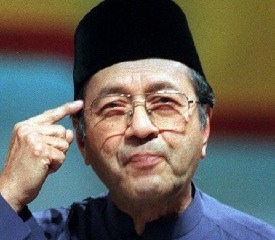
“Democracy works only when the people understand the limitations of democracy. When people think only of the freedoms of democracy and know nothing of the implied responsibilities, democracy will not bring the goodness that it promises. Instead it will result only in instability and instability will not permit development to take place and the people to enjoy the benefits of freedom and the rights that democracy promises. No sooner is a Government elected when the losers would hold demonstrations and general strikes accusing the Government of malpractices.”
Indeed, Filipinos have been suckered wholesale into believing the following:
| SUPPORT INDEPENDENT SOCIAL COMMENTARY! Subscribe to our Substack community GRP Insider to receive by email our in-depth free weekly newsletter. Subscribe to our Substack newsletter, GRP Insider! Learn more |
1. Democracy is all about elections.
2. Democracy is all about freedom.
3. Democracy is a pre-requisite to prosperity
We simply bought the application off-the-shelf and failed to read the small print.
Elections are not the whole point of a democracy.
Elections are expensive and a necessary evil of a democracy. The fact that our elections are, for the most part, a mockery of the concept of democracy, ironically, is therefore no laughing matter. We invest a huge amount of public funds on elections not to mention the cost associated with discontinuities in governance and policy focus, disruptions in the peace, and reduced labour productivity during the uncertain environment whenever elections are in the air among others. These elections are a national security risk as well. Imagine an imminent military threat suddenly emerging in the middle of a Philippine-style election!
In short, the costs of the practice of democracy must be justified! And for this to be done, one must first understand the true place of the freedom (of which elections are just one form of expression) we enjoy under democracy.
Freedom is not the whole point of democracy.
Democracy is not for the sake of freedom. Freedom is a priviledge of practitioners of democracy and a by-product of this system. The true essence of democracy lies in responsibility and accountability.
The Electoral Process is just one element of the democratic equation and should be put in the proper perspective of our democratic duty. It is our duty to:
(a) Select the right leaders;
(b) Use the system to hold them accountable; and,
(c) Hold ourselves accountable for the quality of the leaders we choose using the system.
It would be fair to hazard a guess that this whole “love of freedom” sloganeering associated with the practice of “democracy” is the work of a political machine averse to accountability. The point of democracy is not freedom as many of us were foolishly led to believe. The point of democracy is the practice of a system that enables us to hold our leaders to account. One can therefore understand why this, by now, puzzling obssession with “freedom” is prevalent today. Who else but our politicians are the biggest trumpeters of the “freedom” we enjoy under “democracy”?
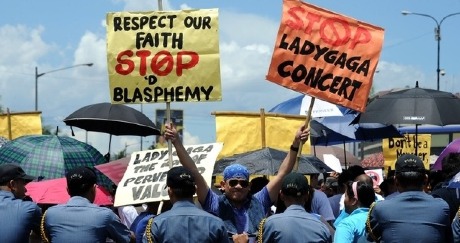
We are, of course, a free society from the perspective of our freedom to be an unruly lot. It is an artificial freedom at best for a society that wallows in squalor is not truly free. We even use this “freedom” to run a publishing industry that capitalises on the stupidity of the masses; allowing it to scrimp on journalistic talent and integrity. Worse and most sickening of all, we use this “freedom” to define ourselves — the only true democracy in southeast Asia. Surely the international community are in on this joke on us as well.
Democracy is not necessarily a pre-requisite to prosperity.
It is the other way around. Prosperity is a pre-requisite to democracy. If we cannot make an off-the-shelf system of governance (one that took hundreds of years for its successful practitioners to perfect) work for us, then we should consider alternatives.
Economic success and wealth-surplus must exist before a truly working democratic system (and not just a sham that is a cover for oligarchic anarchy) can be put in place. Well before the establishment of the United States of America, the Protestants and Puritans (pilgrims) who first settled there already had the so-called Protestant Ethic (a term coined by Max Weber to refer to the combination of Frugality, Hard Work, Discipline, Prudence, Pragmatism, etc of those people which made them economically succeed and accumulate surplus.) This so called “Protestant Ethic”, by the way, is in essence, the same as the Confucian ethic that many Oriental East Asian societies had when they went on in their onslaught towards economic success. (Japan, South Korea, Taiwan, Singapore, and today even China). They too possess Frugality, Hard Work, Discipline, Prudence, Pragmatism, and other similar traits. Externally, they look and act differently. But intrinsically, their attitude vis-a-vis economic (wealth accumulation) and societal development followed parallel paths.
Here’s the difficult question:
Are Filipinos collectively known to possess these qualities?
The present day Philippine style Democracy is slightly modified carbon copy of the American System. But economic and cultural realities point to the fact that our society has not yet evolved to the point that using an American-derived system would be appropriate. We have a long way to go before we can start mimicking their system. If anything, our social, economic, and cultural evolution is still at a stage that resembles the Middle Ages.
Mahathir himself had made quite clear what he believes is the fundamental issue with Indo-Malayan cultures like that of the Philippines and Malaysia. The solution does not lie in political change but in cultural change. He cites as case-in-point the challenge his own country faces…
The answer lies in the culture of the Malays. They are laid-back and prone to take the easy way out. And the easy way out is to sell off whatever they get and ask for more. This is their culture. Working hard, taking risks and being patient is not a part of their culture. It should be remembered that in the past the Malays were not prepared to take up the jobs created by the colonial powers in their effort to exploit the country.
[…]
To succeed, the Malays must change their culture. They must look towards work as a reward in itself. They must regard what they achieve through work as the true reward. There should be some financial reward but this must not outweigh the satisfaction obtained from the result of their work. ….
…. Changing culture is far more difficult than changing the policies of government. It is easy enough to propose affirmative action but it is not easy to implement it. The recipients must have the right attitude if the results are going to be obtained.
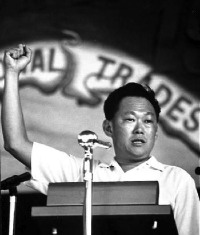
Mahathir’s contemporary, Singapore Elder Statesman and former Prime Minister Lee Kuan Yew had his own view about how the entrenched social caste system of the Philippines all but locks its society in a prison of abject wretchedness in his book From Third World to First…
There was no reason why the Philippines should not have been one of the more successful of the ASEAN countries. In the 1950s and 1960s, it was the most developed, because America had been generous in rehabilitating the country after the war. Something was missing, a gel to hold society together. The people at the top, the elite mestizos, had the same detached attitude to the native peasants as the mestizos in their haciendas in Latin America had toward their peons. They were two different societies: Those at the top lived a life of extreme luxury and comfort while the peasants scraped a living, and in the Philippines it was a hard living. They had no land but worked on sugar and coconut plantations. They had many children because the church discouraged birth control. The result was increasing poverty.
But even within Lee’s formidable mind, all roads still led to the cultural issue that underlies it all…
Filipino professionals whom we recruited to work in Singapore are as good as our own. Indeed, their architects, artists, and musicians are more artistic and creative than ours. Hundreds of thousands of them have left for Hawaii and for the American mainland. It is a problem the solution to which has not been made easier by the workings of a Philippine version of the American constitution.
The difference lies in the culture of the Filipino people. It is a soft, forgiving culture. Only in the Philippines could a leader like Ferdinand Marcos, who pillaged his country for over 20 years, still be considered for a national burial. Insignificant amounts of the loot have been recovered, yet his wife and children were allowed to return and engage in politics. They supported the winning presidential and congressional candidates with their considerable resources and reappeared in the political and social limelight after the 1998 election that returned President Joseph Estrada. General Fabian Ver, Marcos’s commander-in-chief who had been in charge of security when Aquino was assassinated, had fled the Philippines together with Marcos in 1986. When he died in Bangkok, the Estrada government gave the general military honors at his burial.
Does the solution to the chronic failure of the Philippines to prosper lie in politics? Most Filipinos seem to think so considering the sheer chunk of their narrow collective attention their politics seem to routinely capture. It is ironic that the Philippines fancies itself a democratic and supposedly “free” society considering it is trapped in the grip of a more odious form of tyranny — the tyranny of the popular sentiment harboured by a largely ignorant electorate.

- The way the Ateneo de Manila University issued its official statement on the deaths of Rene Clert Baterbonia and Divine Adili seems to suggest a cover-up - June 9, 2026
- The Philippine Senate has become a serious liability to the Filipino people and needs to be trashed ASAP! - May 28, 2026
- The Philippines’ outsourced justice system: why not outsource its executive and legislative branches too? - May 24, 2026
Democracy will never mature in this country as long as the ‘masa’ will continue to adopt the Aquino mentality that freedom is absolute.
It was the so-called icon of democracy who spawned this mentality of disrespect for the rule of law. Remember Edsa 2? And the succeeding attempts to unseat Arroyo via people power? They thought democracy is all about people power.
Very true. Freedom is not absolute. The correct view is that freedom does not grant license for anybody to do everything and anything under a rule of law. A citizen cannot abuse freedom and the rights of others.
One cannot invoke freedom by stepping on the rights of others. The use and abuse of people power as an excuse to mob rule above and beyond the rule of law should no longer be tolerated in this country.
Great political pretenders who know how to manipulate people always fallback on deceiving statements. Thus they say in mass media that it is a people’s victory or they are returning the Supreme Court to the people.
Deceit is complete as they achieve their subliminal black propaganda in manipulating people’s minds while they achieve their hidden agendas. Two birds with one stone. There is no people power when the political personality acts the part in rousing the rabble to do his bidding. The rule of law is set aside and the mass free to do the bidding of the puppet master. Beware the politician without scruples. He blinds people with promises and slogans. He enslaves them as he free them to commit abuse of right.
Freedom has but one absolute limitation: Among individuals, one’s freedom ends where another man’s freedom begins.
For example:
I have the freedom to acquire property of my own, but it is limited by the freedom of Der Fuhrer to choose to keep the property that I am interested in.
Freedom has its own demands. It is paid for by vigilance, and it comes with responsibility. How can we be free if we do not understand this?
I share the same sentiment as yours.
The quote below from an article is one of my all time favorites:
“Accountability is something that is left when responsibility has been subtracted.”
I did say in one of my earlier blogs that people are so caught up in a so-called freedom yet they forget the responsibilities that go along with it.
I can imagine many Pinoys who will cry butthurt after hearing what Dr. Mahathir had to say. He didn’t mince any words. And his experience as a politician amounts to more than 40 years, if i remember correctly.
Are the Filipinos better off as a rigid society? How do we instill discipline in a society where unruliness is the norm?
Painful truth. 🙁 If other nations see this, why can’t we?
I’m inclined to think the people don’t want to see it. Because it involves change, and change can only start if the person wants it.
Not saying this to be funny but people rather pay attention to Willie Reviliamme and Kris Aquino and are content with that. After all those are the people with real credibility. That’s our reality .
Right on. And may I add that these are the same people who vote for and put these kleptomaniac-leeches-politicians into office.
because our leaders don’t want us to see this.
they know about this and they are doing everything to cover it by blaming each other, getting the lime light and the sympathy of the poor families.
“We cannot assume majority of the people must be intelligent.â€
Sums up the main fault of Democracy right there.
The current administration keeps on saying, “we do what the people want.”
Here comes Mahathir: “don’t always listen to the people; most of them lack intelligence!” That’s a big rub-down on the current admin’s rhetoric.
And I like that pic of Mahathir doing the gesture of, “use your head!”
I remember Henry Ford. He said that if he just listened and gave in to what the people wanted, he would’ve come up with a better horse.
Of course, politicians have to use rhetoric. The name of the game is staying in power.
“Nec audiendi qui solent dicere, vox populi, vox dei, quum tumultuositas vulgi semper insaniae proxima sit.”
English translation:
“And those people should not be listened to who keep saying the voice of the people is the voice of God, since the riotousness of the crowd is akin to madness.”
–St. Alcuin of York, in a letter to Charlemagne.
Absolutely right.
i like this. so true…
Prime Minister Mahatir should understand that the Philippines, is never a Democracy. It has always been a Feudal Monopolistic Oligarchy. With the Monopolistic Oligarchs, having their own, followers and private armies…Our elections are almost becoming : “Town Fiestas”…with voters looking on the physical appearances of leaders. Instead of their competence to lead. This is the reason, we have many ShowBiz personalities, who are barely educated, becoming: President, Senators, Congressmen, Governors, etc…we even have Comedians, as our political leaders…It will take a SuperHuman leader to change this situation. The Mindsets of our people are also brainwashed, by Sanitized News, from propaganda networks of politicians…
Freedom without discipline tends towards anarchy instead of prosperity and efficiency. Noynoy is not a creature of discipline. Then again neither are pinoys in general, full of short cuts and inconsiderate behavior.
Napoleon once said, when asked to explain the lack of great statesman in the world, that to get power you need to display absolute pettiness. To exercise power, you need to show true greatness. Such pettiness and such greatness are rarely found in one person.
I’m hoping that every Filipino will read this article.Especially the President himself and his men. Please have this article translate in different dialects so that everyone can read this and reflect once and for all.
The problem is he is not the one who is in the country and did not eight for it thats why he doesnt appreciate our democracy. He didnt felt the devastation that Gloria made by making anomalous projects that stole billions of money fro the treasury and rigging the elections last 2004. Thats why the people are exposing her lies but what did Gloria did? She silenced them.
Good morning Kris. Looking forward to what dumb thing your Kuya will do or say today. Thank you for getting him elected. He gives meaning to my life . He is a true inspiration .
@Retard FishCRAP
Again, you are completely ignoring the FACT that gloria was cleared of any wrong doing in the 2004 elections. You must be some kind of freakin idiot if you keep insisting that complete and utter LIE.
You know, Mahathir would call that stupidity. If he talks to you, then he’ll say “You need to grow up. That comment is from an 8-year old child.” On rigging the 2004 elections, do you have evidence to back up your claims? Oh yeah, as of now, it was all base on hearsays and the evidence is weak. So Gogs, has a point after all: all you want is a Showbiz Government. Mahathir have no interests on trivial things.
Ok, he started his tenure as Prime Minister of Malaysia from 1981 to 2004. Heck, he had done much compared to Cory and even Noynoy because of his economic policies. 😛 He focused more on the important things on what Malaysia needs than trivial things like corruption (including the ‘Blame Gloria’ schtick with wishes on he being jailed without any strong evidence; misled by media and such) and others.
We can never move forward as a country if the likes of Fishball continues to exist. An immature country with a immature president along with an immature group of people makes things even worse. 😛
@Nutzi Fishball
Are you saying you and your pretender prez are more brilliant and discerning than Mahathir? Our democracy is abused and manipulated by dark politicians. These manipulators have no scruples. You are validating the fact that you yourself are a puppet on a string.
The country it’s people felt no difference between presidencies of Cory Aquino, Ramos, Erap, GMA and PNoy.
Except that the prices and brouwnouts are increased on both Aquino presidency.
From a friend:
‘Mahathir is right. I would highlight the point about accountability. There is nothing in Philippine society or culture that demands accountability. The reason that the various levels of government do not achieve results is that voters do not demand results nor are politicians punished by voters when they screw up (or when a president like BS fails to keep a single campaign promise two years into his term of office). I always use Imelda Marcos as an example – as Lee Kuan Yew is quoted as also doing in the article – because no other country would elect a thief and murderer, especially one who truly plundered this nation on a scale unseen anywhere else in Asia, and yet the wicked witch sits happily enthroned in Congress rather than rotting away in jail cell. The problem is not the politicians, per se, it’s the voter.’
BenignO: But this guy Mahathir is also known in his own place as “the Marcos of Malaysiaâ€
http://www.malaysia-chronicle.com/index.php?option=com_k2&view=item&id=33125:the-corruption-of-mahathir&Itemid=2
And note that, the population in Mahathir’s Malaysia is only a little over 28 million (2010) which is only about 30% or less than a third of the Philippines’ 92 million or so (2010).
Then, there’s Lee Kuan Yew’s Singapore with a population of only 5.1 million, of which only 3.2 million claim to be its citizens. Comparatively, Singapore’s population is only 3.5% of the Philippines’ over 92 million and less than one-half (44%) of that of Metro Manila’s 11.5 million (2010)!
As to political opposition (those who differ), there’s Mahathir’s “good friend‖Anwar bin Ibrahim.
http://en.wikipedia.org/wiki/Anwar_Ibrahim
As to Singapore’s “loyal opposition,†note that the latest “poll in 2011 was seen as a landmark election for the city state with significant gains for the opposition, which took six of the 87 seats – their best performance since Singapore’s independence in 1965.â€
http://www.bbc.co.uk/news/world-asia-18185982
It’s not that what these two guys are saying about the Philippines is wrong; it’s just that I think they’re NOT the RIGHT guys to criticize “the culture of the Filipino people.â€
It’s Independence Day, 12th of June, today, so I ask: Why is it that the concept of “culture†in these “wealthy†nations of Singapore and Malaysia were never able to mold a “national hero†to honor?
And why are there NO statues of native historical heroes (plural) in these countries in the same way that there are so many such statutes of heroes–of patriots and martyrs–in the “democratic†nations of the United States and the Philippines, to name a few?
Was EDSA the ironic face and the symbol of Kee Kuan Yew’s belittling dismissal of the “the culture of the Filipino peopleâ€?
Maybe it’s consuelo de bobo, perhaps, but why not even ONE “historical hero” in the countries these two guys come from?
If i am not mistaken 28 million was the population of the Philippines back in the early 1950s. Just saying…
Do understand that Mahathir and Lee presided over vastly different countries with their own unique set of issues. But the statements they made were more at the level of broad principles and did not really go as far as prescribing specific initiatives. As you said, those two guys aren’t necessarily wrong about what they observed about the Philippines, and I believe not being wrong about our country (i.e., their observations and conclusions cannot be readily disputed) lends a bit of credence to what they say (they’re experience and trackrecord as executive statesmen notwithstanding).
As to the “heroes” syndrome we seem to suffer from as a people, we could draw some insight from the modern-day philosopher John Ralston Saul…
BenignO: Ralston can say what he wants about the concept of “heroes†and herosim, but to the much-abused Filipino domestic workers in these two countries who work there now (and who have this strange penchant for suddenly jumping from high-rise buildings), a “national hero†their boss do not have a holiday to commemorate in their own country is, as I said, consuelo de bobo for them.
Domingo,
May I offer a dissenting opinion? Doesn’t the concept of a national hero seem overrated?
While there is no national hero that Malaysia and Singapore are known to foreigners for, for now, the fact that they’ve accomplished much more than we have tells us that perhaps quiet achievement is more important than finding a hero to claim greatness with.
I’m guessing you will agree with me that there’s no such thing as an incorruptible society. What makes each one different is the way they contain it to a minimum.
Lee Kuan Yew had visited more than a few neighbors in Asia, because he wanted to see the good things that he could take home with him to Singapore. Dr. Mahathir had to deal with similar circumstances with the Bumiputra, and while he wasn’t successful all the time, give him props for trying.
Granted that the scale of upheaval here did not reach that of the racial riots in Malaysia in the 1970’s, but stability was eventually reached. We Filipinos simply have refused to move on. We have mistaken mediocrity for stability, which is sad.
If Dr. Mahathir and Lee Kuan Yew are not the right guys to criticize the culture of the Filipino people, who is? We certainly are not willing to criticize ourselves. We can’t blame other regional politicians for expressing their view: after all, we were once the country they looked up to. They are all wondering, except us: what happened to you, Philippines?
Fallen Angel: And that’s the precisely the reason behind why I cited the stark differences in the population of Singapore and the Philippines for that matter. For how would Lee Kuan Yew have handled Singapore even if it only had HALF our population, with different regional dialects at that? So, is it really, as Lee Kuan Yew claims, the “culture of the Filipino people†or is it perhaps the wide difference in the population between these two countries that may have mattered?
BTW both are not the RIGHT guys to criticize us, since both now have their own dynasties in their respective countries.
Then perhaps both population and culture made a difference. As a population grows bigger, so does the proportion of it that is unruly and uncontrollable. Couple that with a culture whose idea of democracy is running amok (namely ours), and it’s a surefire recipe for disaster as we see today.
I don’t know though, if we would have ever had a leader who would have done the same as Lee did with the Stop at Two campaign that promoted family planning. Given the Filipinos’ religious fervor something like that would have never taken off here. It still won’t.
Since you brought up the factors of culture and population, here’s some food for thought: Was our population boom a consequence of some fatal flaw in our culture?
We may have different views regarding Dr. Mahathir and former PM Lee, but in the end we agree to disagree.
Yeah what happened to you Philippines, those countries including Thailand just learned everything agriculture wise in the Philippines during the 60s from planting rice and fruits and look at Thailand now they are now supplying the whole world with rice and fruits, fresh and canned fruits are all over the stores here in the States. And they are really good compared to the products of the Philippines, and much cheaper too. What went wrong.
“National Heroes” are not the reason for a country’s progress. These are in fact more of a placebo for a people. I still think Mahathir and Lee are the right people to comment on the problems of the Philippines because our country is still similar to theirs (as part of SE Asia), and they did things right. The Filipinos, as usual, do things wrong, first of all by depending on “heroes.”
ChinoF
I never claimed, of course, that “National Heroes†are the reason for a country’s progress. I’m think I’m not that naive.
Rather, I cited heroes in my reply in the context of Lee Kuan Yews belittling of “the culture of the Filipino people.†And I countered, fully aware that Lee Kuan Yew during WWII worked for the Japanese occupation forces as a transcriber, which to my reading is treason, and a person who commits that crime is a traitor.
And since I’m one of those who happen to value loyalty and patriotism highly, I prefer not to be lectured by a traitor.
I see. But in the end, the “traitor” was one of the people who made his country successful after the war.
Unlike the grandson of the real TRAITOR who brought us misfortunes in this country than economic development what a laugh.
I don’t think Lee is a traitor by merely working as a transliterator for the Japanese. Unlike Benigno Aquino Sr., who I heard helped the Japanese hunt down resistance elements. That’s the real traitor for me.
Don’t we have fake heroes and saints in the Republic of the Philippines? Aren’t these fakes being used as a placebo for the people? Political expediency and opportunism may be negative to others but hey it seems to work in this country. “Heroes” and “saints” are needed to portray an image of false greatness.
ChinoF
Well, as I said, I have different view of people like Lee, and I’ll stick with it.
As I will with mine. No problem.
Fallen Angel
Owing to a rapidly AGEING population in Singapore, what used to be the “stop at two†policy in 1969 is now: “three or more, if you can afford.â€
http://voices.yahoo.com/singapores-aging-population-stop-two-three-2993157.html
You ask: “Was our population boom a consequence of some fatal flaw in our culture?†Frankly, I don’t know. I haven’t really studied that line; but for possible answers, try reading the latest 2009 U.N. report on WORLD POPULATION AGEING:
http://www.un.org/esa/population/publications/WPA2009/WPA2009_WorkingPaper.pdf
And the bare facts should just stare us in the eye. Malaysia and Singapore are still in better condition than our country.
ChinoF: Read the rather grim “bare facts” in the UN Report I cited in an earlier reply, particularly page 65:
TABLE A.III.5.
COUNTRY RANKING BY MEDIAN AGE, 2009
Singapore – 40.1 rank 18
Malaysia – 25.9 rank 101
Philippines – 22.9 rank 125
The UN Report defines “median age of a population” as “the age that divides a population into two groups of the same size, such that half the total population is younger than this age, and the other half older.”
In other words, in Singapore (ranked 18), for instance, where the median age of the population (both sexes) as of 2009 was an already very old 40.1–this simply means that half of its population in 2009 was over 40.1 years old while the other half is aged below 40.1.
Now compare that “old” median of 40.1 to the “young” Philippines (ranked 125) with a median age of just 22.9.
Let me quote a note in the UN Report relevant to Singapore’s “old” median age:
“The potential support ratio (PSR), that is, the number of persons aged 15 to 64 for each older person aged 65 years or over,indicates how many potential workers there are per older person.
“As a population ages, the potential support ratio tends to fall. Between 1950 and 2009, the potential support ratio declined from 12 to 9 potential workers per person aged 65 or over.
“By 2050, the potential support ratio is projected to drop further to reach 4 potential workers per older person.
“The reduction of potential support ratios has important implications for social security schemes, particularly for pay-as-you-go pension systems under which taxes on current workers pay the pensions of retirees.”
Hope you get to reread the UN Report, particularly the “Executive Summary.”
The Philippines may be down now, while Singapore and Malaysia are way up there. But the Philippines has not been knocked out yet–its median age is getting relatively younger.
I think the age of the people is not the real issue. I think our poverty level remains much worse than in the two countries mentioned. Even Indonesia seems better, I guess.
And even if one may dislike Mahathir, I think what he said in his UST speech is really something to listen to, despite his being the “Marcos of Malaysia” or anything like that. I wouldn’t shoot the messenger, I just love his message.
ChinoF
I’m certainly not aiming to shoot at any messenger here. It’s the UN Report that’s the one conveying the rather grim conclusion (at least for “ageing” Singapore) that the median AGE of the Human Resource in a country matters after all.
In the case of Singapore, the median age of 40.1 as of 2009 will probably zoom up to a high of 50 while the Philippines is steadily going down from 22.9 to perhaps as low as 18.
As regards Mahathir’s Malaysia, the median age as of 2009 is within the same level as the Philippines, although a little higher. So, I think, based on the UN Report, it’s not going to face the same difficulties Singapore will be confronted with a decade or two from now.
And another thing on the age issue… if it means Singapore and Malaysia will be hiring younger workers from the Philippines, it’s likely the Filipinos will be willing, since the jobs there are sure to pay better. And this will mean the younger people will be separated from their families. In the end, the Philippines still loses this way.
I wouldn’t bet on that. For there was a time when Europeans wished to have a SWISS Nanny (Sound of Music) to care for their children. Rich Filipinos, in fact, pre-war, wanted to have JAPANESE gardeners to trim their lawns.
So, let’s just hope that, very soon, we may be hiring Malaysians to shine our shoes and Singaporeans to trim our hair.
There is a need to substantiate any such “hope” though. Otherwise we merely end up scratching our heads when challenged with the question “Hope in what exactly?”
BenignO: I used “hope†in the sense that I cannot foretell the future; and to be asked or required to “substantiate†that feeling of “hope†would mean, of course, that I would have to present concrete evidence for something I merely speculated would occur in the future.
But note that I “substantiated†my use of the word “hope,†NOT on documents that an anonymous “little lady†handed to me in a hush, but on internet-available data concerning “median age†that the cited UN Report refers to and its consequences on a “future†event.
Either way, it’s still best for people to stay in their own country. Even I do not like the idea of the Philippines becoming an imperial power.
But then again, being able to afford foreign talent is a good sign indeed. And pooling much foreign and local talent together is a good thing.
I’m reminded of Adlai Stevenson’s(?) reply when told he had “the thinking man’s vote” when running against Eisenhower:
“That’s nice, but I need the majority to win.”
love it! hahahaha
wow! to take advice from someone who was at the forefront of constitutionalizing racism in his country, forcing the minority race into nothing more than cash generators for the bumiputras. wow! such enlightenment.
“We cannot assume majority of the people must be intelligent.†And neither are the posters here.
benign0,
I admire quite a lot the points you have raised in your article. However, if you don’t mind, there are things, theoretically, that I have to raise critically as well. As much as I can, I will try to provide the evidences needed in support of my contentions.
First, I will agree that democracy does not necessarily lead to economic prosperity. However, it is a pre-requisite: inclusive political institutions are needed in order to foster inclusive economic institutions. Genuine democratic, or to be very specific, pluralistic institutions actually have fostered the development of their economies.
Let me direct you the work of MIT economist Daron Acemoglu and Harvard political scientist and economist James A. Robinson. Just this year, they just recently published a book ‘Why Nations Fail: The Origins of Power, Prosperity, and Poverty.’
After a very impressive investigation, covering the economic and political histories of North America, Latin America, Western and Eastern Europe, Asia, and the Pacific, they found the patterns of growth and development to start by creating inclusive institutions and poverty and political instability is likewise associated with extractive institutions.
Inclusive institutions involve societies with clear property rights, representation among various sectors in society, efficient allocation of resources, and enterprises that take advantage of the creative destruction, leading to innovation and technological advancement. On the other hand, extractive institutions occur in societies where absolutist (or power to themselves) elites wield both economic and political power.
The experiences of all countries who were able to prosper and develop started off by establishing inclusive political institutions–political institutions where its legal and political structures enforce the rule of law, ensure that security of property rights, and provide equal representation among people through the (secret) ballot.
Countries like the United States and Australia benefited from their unique experience of being the New World. The United States, with its beginning settlers in the East Coast, actually fostered inclusive political institutions. Majority of those residing in the United States were largely poor laborers shipped away from Great Britain. In any beginning organization or civilization, there is always an incentive for the relatively influential to wield power all for himself.
The major problem that blocked the United States from adopting extractive institutions was found in organizing production. I will bring the story of Latin America as well to give a comparison of the strategies.
Interestingly, the new settlements of the United States provided incentives for their workers to stay within the settlements by paying them wages. Prior to that, settlements that enforced a rule of slavery to its labor force resulted into the rebellion of their laborers. These rebel laborers would simply have to eject themselves from the settlement and create their own in a very far away place. The drop in the labor force meant that existing laborers who stayed in the settlement had more bargaining power now to produce since they were the only ones left to do the hard labor. They demanded wages and because production and because the Council leaders had no choice where to find labor, they heeded to the demands of the workers.
In a way, this was a political revolution that happened in the United States, but the revolution was so subtle. This political development happened in Australia as well. A nation of former ex-convicts, Australia was able to enjoy inclusive institutions by providing the rule of law and equal opportunities for convicts to grow and prosper. As a colony of the British Crown, had Australia followed British Law, the convicts who settled in Australia would face a miserable end because British law prohibits any convict from owning anything. That meant that they cannot set up enterprises, they cannot own property, and they basically cannot create organizations that would adopt new technologies and innovations. However, the Australian government (ruled by soldiers back then) decided to grant the rule of law to convicts since they would benefit from them if they hire them as laborers. But what turned out as an institution for their self-interest became a platform that everyone, convicts, ex-convicts, and sons and daughters of ex-convicts, to benefit from. Through this, they were able to secure their property, create innovative enterprises, and eventually created a growing economy that took advantage of the benefits of the Industrial Revolution that time.
Second, a paper from Benito Arruñada found out that Weber’s Protestant “Work” Ethic did not cause the United States to grow but the social ethic that the Protestant ethic promoted: impersonal trade. And it is through impersonal trade, a key ingredient for markets to function well, is the key determinant for capitalist development.
You may see his paper on this website:
http://papers.ssrn.com/sol3/papers.cfm?abstract_id=563341
Third point, I am quite critical with Mahathir’s and Lee’s views that we need a cultural change, not political change. They blame heavily on our culture for being soft and forgiving. I would understand how they word out their views, considering that they ruled their countries with a dictatorial iron fist.
Culture may have a hand as to how the nuances in our institutions are shaped, but our culture is not necessarily the cause as to why we do not have a strong rule of law. I believe both Mahathir and Lee should expand their analysis on a global scale, and not just that, they also have to look at the past. What they failed to take into account that the Philippine or even the Southeast Asian case is not unique. Countries in Latin America and Africa also share the same situation. The common denominator is that many of the countries are colonies and the elites who took over these colonies used the existing infrastructure to turn their colonies into extractive institutions.
Singapore and Malaysia are really not good examples for comparison for the Philippine experience because we have totally different situations. But we can learn from Singapore for imposing the rule of law and equality for all Singaporeans that became the platforms for its rise as a financial and technology hub. Malaysia, on the other hand, operates as a Federation, and its system of successfully having a successful central authority and decentralization among its states is a good mix of securing property rights and rule of law.
What Mahathir contributed was not at all cultural change but political change for Malaysia. In fact, what Mahathir does not tell us are the bouts of corruption in Malaysia. Malaysia is found midway in the Corruption Perception Index scored at 4.4 (Singapore scores a 9.3, the least corrupt; the higher the score the less corrupt the country).
Although Singapore is largely a one-party rule, it offers a unique case considering that the Singapore government actually listens to its people. When Singapore’s economic performance was lagging last year, Singaporeans lashed at the government during the elections. Singaporeans have complained about the huge salaries among government executives. Alarmed, Prime Minister Lee Hsien Loong and his Cabinet decided to cut their salaries by more than 30%.
As a whole, good job for the article. If your goal was to bring about a conversation of different opinions and an introduction of various concepts, then you did it well.
Thanks Miguel. I will check out those references you cited in more detail and I note with interest the alternative view that it was really more of the social ethic rather than the work ethic amongst Protestants that was more of the determinant for the spread of prosperity in the U.S.
As to the cultural aspect (your third point). I don’t think Mahathir had limited his commentary on the role culture plays in the growth/spread of prosperity to the specific circumstance of Malaysia and then of southeast Asia. But I don’t think he (nor do I) mentioned anything about those cultural circumstances being unique to southeast Asia or, specifically, the Malays.
Before Great Britain became a world power, for example, its native inhabitants had themselves been conquered and colonised by foreign powers. It took foreign conquerors and foreign kings — first the Romans, then waves of Germanic and Scandinavian invasions — to eventually unite what was once a land of small disparate indigenous tribes into the unified kingdom it had become by the 13th Century. All throughout, it was the Anglo-Saxon and Scandinavian settlers who came once the military conquests of their warriors was complete that came to dominate political power and commerce. For the native Britons (the descendants of the pagan tribes that built Stonehenge, among others) it was an entire history of servitude under different conquering cultures from the European mainland.
My point is that the patterns are the same throughout history and across geography. Culture is shaped by the environment. Some environments forge softies (perhaps like ours), and other environments forge aggressive warlike conquerors. You can see that wealthier societies are the ones that tend to have strong military traditions and warrior cultures that go way back and are deeply ingrained in their psyches.
May I also recommend Ian Morris of Stanford with his equally interesting book, ‘Why the West Rules for Now.’
With your last point, I agree completely. Culture, politics, and economics play a very formidable mold. The politics of countries shape our policies and its corresponding economics set the stage of market transactions. Culture serves as the rules as to how all the political and transactions take place. Our culture is shaped by our shared psychological and sociological evolution. And yes, by evolution, it connotes a very Darwinian ring into it. In other words, our psyche and social interactions are products of thousands of years of shaping and reshaping our memories and experiences.
There are non-mainstream economists and social scientists right now who are in the verge of putting their heads together, quite a radical shift from the traditional compartmentalized approach of answering research questions. And this is a topic, which is hotly debated in conferences, round table discussions, and even lunch meetings. But yes, there is now a quest of developing a theory of the social science, a quest more or less the same as scientists in string theory are exciting to find out. The quest is not at all theoretical aggrandizing, but it attempts to fill a huge gap in the research of humanity. So many disciplines have pieces of information of a large puzzle we are seeking to solve. And from a phenomenological view, it’s simply just impossible to appreciate the story of humanity if the story is not put together.
Forums like this provide a platform for academics for a discussion and a conversation over the development of this framework. Indeed the Philippines is in the middle of an intellectual revolution, as it is a perfect story where so many pieces of the puzzle remain dispersed.
mahathir is the champion of corruption and also moved to curtail civil liberties. this is your idol?
Everyone is corrupt even you.
You’re not even making sense, are you? 😛
“If we can CHANGE, we can be successful.”
Si Mahathir ang nagsabi nun, hindi si Noynoy. Gets?
Ang BOBO mo. 😀
champion sa corruption pero bakit maunlad ang bansang pinamunuan nya?
Is the Philippines suffering from mediocre political leadership? Why? Who is to be blamed?
I can say it’s a yes. The reason lies in Mahathir’s statement: “We cannot assume majority of the people must be intelligent.†And because of such, people elect representatives to do ways that would be satisfying for us and best for our country as a whole. Our problem is that there is somehow a silent unbridled abuse happening. Our elected leaders during election are all pro-people but once they are in position, some forgot why they should be there for. And we people just accept these, since we just complain and complain. Unbridled meaning uncontrolled because they thought and we let them do, that they’ve got great powers. And so, we also are to be blamed, also for the fact that we let ourselves be bought by false promises and money.
Of course He doesn’t like democracy- he ruled for 20+ years. For once after a long time, and after all that’s been taken from us, we are actually a bright star in the gloomy global economy. Sorry I’d rather promote the Philippines than listen to another plundering dictator.
You’re a pathetic idiot Naypi. What he said is absolutely true. What you personify is the kind of Filipino that makes the country miserable.
Within our “soft culture” lie the twin characteristics of denial and a surprising chauvinism. Naypi is typical of the lot and is indicative of the long arduous way into meaningful change.
Amen!
Totally agree with regor.
I agree with Naypi. Reposting my comment from another friend’s wall: I agree to some of his points like the cultural similarity of Malays to Filipinos but I disagree that our “forgiving culture” is our weakness. It is our strength. Our mistake is in the assumption that by forgiving, it means we don’t hold the guilty accountable. That is still in the Bible – there is no justice without retribution. I also disagree that the lack of population control is the reason why we are poor. He is wrong and anyone who argues for this is significantly wrong. We need the number of people to move this country forward. We are not over populated at all. The mistake boils back to his original point – the inability of people to choose the right leaders equipped with the necessary tools to enforce and implement our policies. As Mahathir said, we lack the political maturity to implement the American system we are currently utilizing for the past several decades. But due to the advent of internet, where information are no longer limited or cannot be controlled as what happened in the past 25 years under Aquino & Ramos rule, Filipinos are becoming MORE and MORE mature, hence the birth of an online blog called, Get Real Philippines. We all have our pace. The Philippines is not behind. We will be ahead when the time comes. Malaysia, as much as Indonesia, South Korea, China, Singapore even will also experience their own peak or breaking point as well. Development and historical changes oscillates. It isn’t linear. Who would think the US will be the way it is now? Nobody. But the US is suffering as much as we do. Considering the problems of Europe? The Philippines have more of a fighting chance to get things right fundamentally. So no, I am not fatalistic on the fate of the Philippines. We are a slow learner but there’s definitely more hope for us than many other countries out there because of all the countries in the world, regardless of trials and tribulations, we have managed to protect our forgiving culture, our humane culture, our God-fearing culture. Mahathir has killed more people than Marcos. Had Marcos decided to massacre all those edsa protesters, his regime would still be alive today like that of Mahathir but it wouldn’t make it right. Malaysia is STILL not morally better than the Philippines. Neither is Indonesia. The Philippines, in the long run, will still be better than these countries. You’ll see.
Population control is one of the factors that makes the Philippines poor and anyone who disagrees can’t do simple Mathematics. More people + mediocre-taxed-to-death-salaries = poor people. Poor people = cannot afford proper education and some may not even consider holding on to their values or morals. This is the realm of the prostitutes in Quezon Ave. who need to FUCK for a living. This is the realm of the “Sampaguita” vendors who knock on your car door to feed themselves and their family. The realm of jeepney drivers, taxi drivers, bus drivers, pedicabs, street vendors, kids on rugby, people eating “Pagpag”; boiled leftover meat from the garbage and what you speak of is “Hope”, “Development”, “Humane”, “God-fearing” and “Marcos”?.
I have been to Kuala Lumpur, Malaysia and I have seen their infrastructure, citizens, culture and they are indeed ahead in all aspects. I have been to Bayern, Germany and Amsterdam, The Netherlands and you can’t EVER compare the Philippines to either country. I also live in the UAE and I have not seen a single informal settler here.
We only have a large amount of this “hope” you describe because we need it the most. Not a lot of good will come from being “Morally” better than anyone other than ourselves.
Filipinos are Malays
Nah, you’re just TROLLING.
Now I wanna ask: So you love being a government whored by media that tells everyone that ‘everything is ok’ and never look forward for progress as a society and a nation but to be part of a MEDIOCRITY?
Sorry, kid. But you need to stop demonizing Marcos because as long you always did that, you’re just taking away what he did for the country. The downfall of the Philippines started AFTER Marcos left and you connect the dots.
My father went to Malaysia (mostly Kuala Lumpur) and he loved that place since the people and the city are orderly and peaceful. So you’re point is moot about the Philippines being ‘morally’ better because of our dysfunctional culture. All we need is DISCIPLINE.
And if you and your fellow ilk will cease to exist, then the Philippines will move forward. We’ll see.
“The downfall of the Philippines started AFTER Marcos left” Wow..your a perfect example of why our country will continue to struggle…you’ve had more than 20yrs to educate yourself about Marcos and you’re still a clueless idiot. “taking away what he did for the country”…hmmm I’m guessing that if we change the last two words in that sentence from “the country’ to ‘my family’ we’d be closer to the truth abt you and why it seems that my high school undergrad household helper is smarter than you….coz she sure as hell understands that what Marcos did FOR the country had as much value as pound of sugar..hard to be grateful when what he did TO the country whilst in power was worth 10M metric tonnes of putrid shit…So much stinking crap it will take generations before we can even adequately clean up the stink it left behind in the the tapestry of our society, culture and every aspect of our govt. system. We can thank Marcos for creating a the breed of notoriously corrupt self serving money hungry power addict politicians & govt officials (even rank and file employees got in the game)……… who got their jobs because of who they knew and not WHAT they knew….They were the ancestors, mentors, idols of the their counterparts in today’s cesspool of disgusting corrupt officials. We have more thieves working in our govt than those we have locked up in our jails. Well…anyhow, that’s all I’ll be contributing to your education today. As a concerned kababayan, who has to put up with the trash the ignorant voters place into office…may I gently recommend that you step out of your plastic bubble and spend the next 20+ years educating yourself so that at the very least you may learn enough to stop humiliating yourself publicly by mouthing off and like you have and giving people evidence of your stupidity and foolish, foolish stoic need to remain ignorant. Ignorance is a choice you know….
@ A Javier
Instead of attacking the commenter, WS with personal issues, why not point out how he is wrong in saying that the country went downhill when Marcos left. Start from there, idiot, otherwise you are just a product of the yellow lobotomy.
Such a long post, all BS.
Nice ad hominem, lying cunt. 😛
News flash:arcos was a crook because he was pointed as one by media pundits but let’s not go after Cory for her crookery while in office and what her family has done as well because she is well loved by autists like you an everyone else because she bore the ‘Aquino’ name.
Because only fools are gullible enough to believe Aquino magic and hype, much like everyone with a last name has a label to them.
Like joeld said: long post, all BS. YOU should be the one who should educate yourself because the fact is that you’re humiliating yourself in the first place. And you didn’t even notice it, right? 😀
@AJavier a.k.a. TROLL:
“I’m guessing that if we change the last two words in that sentence from “the country’ to ‘my family’ we’d be closer to the truth abt you and why it seems that my high school undergrad household helper is smarter than you….coz she sure as hell understands that what Marcos did FOR the country had as much value as pound of sugar..hard to be grateful when what he did TO the country whilst in power was worth 10M metric tonnes of putrid shit”
Fact is that your so-called high school undergraduate household keeper is just as gullible as you. The fact is that you’re totally IGNORANT just like your fellow zombies.
Too bad you are circle jerking your way out of your long BS nonsensical argument, much like anyone who doesn’t have ANYTHING to add except for hearsay and LOL EVIL Marcos. 😀
@ AJavier
What is your source in opining that Marcos is pure unadulterated evil? Guinness, Wiki…..oh right your high school undergrad househelp. What a pity.
Maybe if you have lived long enough to experience political changes first hand then you could understand better what the yellow rulers are doing (have done).
As I said before: Your choice…blue pill or the red pill?
As long as we need autocracy for progress.
Candy Ventor, should I laugh?
I must to agree with you Candy. Most of the ASEAN Countries, still looking forward to see the Philippines to progress. And guess what? They are all envious at our currently county’s economic development. Give 15-20 years from now, Philippines will be better than Singapore or even Dubai! 🙂
All these ID s I have never seen want to speak for all our readers. How amazing is that ? Plus all this optimism from a country with no peace,order, discipline. All their skilled laborers looking for work abroad. Yet they see the future. Either they are Nostradamus or Nostramoronus,
Unless the philippines solve its population problem. The country will not prosper. Keep dreaming!!!
Well said Ms.Ventor.
You’r totally missing the point. -_-
Correct ka dyan Naypi. Concentrate lang siya sa Malaysia. Hindi nya alam, strength natin is being citizens of the world (Rizal’s idea).
You’re missing the point. Hindi mo alam na what he is pointing is about how flawed our democracy was, not to mention about our dysfunctional culture.
Don’t mention about Rizal’s idea about being ‘citizens of the world’. His novel, ‘Noli me Tangere’ criticizes the backward mentalities and attitudes of his countrymen, which Mahathir is spot on; no wonder why the alternate title for Noli is “KANSER”. Actually, Rizal would agree with Mahathir if he’s still alive today.
Get off your stupidity and look at the bigger picture, will ya?
Naypi, you got the best Pinoy gene in you. Lots of readers like your strengths and optimism. like your mind.
Mention ‘Pinoy’ means something. You want to support something… “dysfunctional.”
Brace yourself for FAILURE. 😀
What’s wrong with us is that we’re not humbly admitting our faults and flaws that could pave the way to life-changing events…
Indeed and well said. our president is a mediocre.
he made alot of “promises but where is it now? maybe “some” but most of it are gone. such sweet words. another haha for the ones who voted for the yellow propaganda
Did you read the entire article or just read the title and commented?
Hindi mo yata binasa at inintindi ang article pre!
Of course, he did.
You’re just REACTING, that’s why.
Culture determines the economic and political characteristic of a country? Or is it the other way around? Didn’t the Philippines’ historical circumstances (Spanish colonization, encomiendas, the hacienda system which concentrated land and wealth in the hands ofthe colonizers and their descendants), which Malaysia and Singapore did not suffer, a better driver of the political-economic dynamics of the country? Assuming the article accurately describes the condition of the country, the logical solution will then be a dictatorship of a single political party? Which party?
Its worth a reflective contemplation…otherwise we are bunch of hyprocites…always failing in discerning who really and what we are as Malay-Filipinos.
Great read… insightful.
A great read. Though I would just like to say that the descriptions in the article is that of a constitutional republic, which is what the Philippines was originally modeled after. I do believe that “democracy” is what the Philippines has now; which is mob rule. And since the majority of the voting people, the mob, have the average IQ of morons; then as a result they will choose other morons to run the country for them.
Great Read!!
Grear read. I agree that “our society has not evolved” significantly to even understand the concept of “public service”, for instance. The only thing our people seem to understand is “private/personal service” which is close to “my “first responsibility is for me and mine so i survive” which is close to “survival of the fittest”, which is how animals behave in the animal kingdom.
Malaysian foreign policy towards the Philippines is janus faced. They extend a warm handshake while holding a clenched left hand behind their back with the middle finger up. It is plain and simple they want the Philippines in perpetual turmoil and division so they can maintain their grip hold on their bread basket and milking cow which is Sabah. Only a school that would give doctorate degree to Renato Corona would give an honorary professor title to someone who said that Orang Asli were not entitled more rights than Malays even though they were natives to the land, he posted on his blog comparing the Orang Asli in Malaysia to Native Americans in the US, Maoris in New Zealand, and Aboriginals in Australia.
Spot on! Every Filipino should read this. Who ever still thinks that this is not true should be put on a boat and drowned in Manila Bay, as he is just breathing up good air.
This idiotic Aquino government is the poster child of what Mahathir is talking about. At the same time, Marcos had realized all of the above a long time ago. He did not declare martial law to stay in power, but to have more power and therefor sidestep the coconuts in the Congress and Senate. One man. One decision. ….and we move on. Next! Democracy has rotten this country to it’s core. Yellow is the color of piss!
Very good article, and should be read and mulled over with an open mind.
Mahathir is not the greatest leader by any standards, but much of what he says rings true. And the truth can hurt.
The question is: are we “big” enough to accept it, and to do something about it? I know some are, and that is what gives me hope. And my hope has nothing to do with my religion. I believe in the saying that “God helps those who help themselves”. Those who think God is the answer to our prayers, are simply passing on the buck.
may kasabihan ako, “i will tell you what you NEED to hear, not what you WANT to hear.”
yan and problema ng mga pinoy. most of us always wanted to hear good things kahit hindi. yung tipong sabihin ng foreigner, “pinoys are loving people, they are clean”, etc. puta let’s be realistic mga mare at pare.
I agree…
Correct!! Wait…
Get rid of democracy, and we can’t have this kind of blogs anymore..
What now????
not literally na walang democracy. discipline ang kailangan while enjoying democracy. yan lang naman talaga eh.
A well written article, but is off-putting considering it lauds Mahathir’s statement as a fact, when the former PM himself has done more bad for Malaysia than good. Yes, Malaysia is by far richer than the Philippines, but politics is a non-factor. Malaysia has budget deficits that is ballooning since Mahathir’s time, a people that are classified based on race and ancestry (Malay, Indian, Chinese, Kadazan, Orang Asli, etc), and many others. What makes Malaysia better economically is the fact that they have sold Malaysia as the MNCs hub in Southeast Asia by giving all the perks to the investors, (tax-exemptions included). Go ask any businessman in Malaysia about his off-the-record thoughts on corruption in the country. Go ask any Malaysian how Mahathir’s party still runs the country despite losing the majority vote last May.
If Mahathir wants to preach about true democracy and its limitations, he should at least push his puppets at the Barisan Nasional to free all political prisoners, stop corruption, stop arresting members of the opposition and activists who are calling for political reform, investigate all deaths in custody, foster racial harmony among Malaysians, and stop flying in foreigners to vote during elections.
The author has valid points in the article. A lot of them. But would do better to choose a political leader that does not only have skeletons in his closet but an entire graveyard.
What’s bad to be a forgiving nation? That’s how we should live in this world full of differences of ideas and directions. The Filipinos love to be free and their limit is God alone.
what is being stressed here is the bad effects of being a forgiving people. kaya maraming tarantado dito sa pinas kasi masyadong malambot ang mga pinoy.
love to be free? kahit saan magtapon ng basura? malayang manigarilyo kahit saan mo gusto lalo na sa public places? malayang bumoto kahit incompetent ang kandidato?
God has nothing to do with the stupidity of most luzonians, visayans, mindanaoans.
First time to see and read articles, comments and reactions here.
This is very insightful, informative and entertaining. This is a result of the democracy that we are enjoying.
Yes, avoid personal attacks on the commenter. Just express points and insights professionally. There are always to sides of the story, always to different views/stand, either you agree or not, for or against.
Beauty lies upon the hand of the beholder…
Dictatorship and Democracy are two different perspective, that both have good and bad aspects in it. One will appreciate one and despise the other. The combination of their good aspects will certainly produce better results.
Freedom is not absolute, it is not doing what you want to do. FREEDOM IS DOING WHAT YOU OUGHT TO DO…
Leadership is cannot be measured by one’s achievement, education, and position/rank. LEADERSHIP IS HOW MUCH INFLUENCE YOU HAVE WITH OTHERS…
PM Mahathir gave his view and perspective on our country’s political and leadership’s state. It is up to us to appreciate it or not. Take and prosper on the points that are helpful and throw away those that are not.
We all have our own perspective and appreciation on our country’s political, economic and social history.
Let’s take our responsibility, be accountable, do what we ought to do, and influence others…….
CHEERS!!!
Hopefully the bloggers in here would be bold enough to speak up on the forthcoming 2016 presidential election. Don’t just mouth things, do something. Share what you know, enlighten our mostly misled countrymen, give our beloved country a chance to progress by installing rightful leaders, new breed and with real dedication and intent, break the monotony of political dynasties.
“America had been generous in rehabilitating the country after the war.” Not half as generous in its rehabilitation of Japan which was the aggressor nation during the war… In which case the former Singaporean strong-man betrays his ignorance of history. But why are people listening to has-beens like Mahathir and Lee Kwan Yew? Peninsular Malaysia exploited all the other component parts of the Federation; and Singapore is after all a small island-state. The Philippines has a very different make-up, and what failures it has cannot be attributed to democracy.
Why so many commentators are focusing on the giver of the advice instead of the advice itself is puzzling to me. I bet if God were to tell them to sacrifice their children, they won’t even hesitate to do it.
Sheesh. It’s the ADVICE that matter and should be discussed, yo.
Who make/made bad publicity to sea nations? And it is still happening. Lets go back to history.
What’s wrong with people, in general, is that we refuse to admit our own downfalls, flaws and faults. If only we would humbly agree and accept our shortcomings. Then, it would have a very positive effect and change on our government.
We could look at it in a much simpler way… The government, being the outward appearance or the clothing that we wear and our customs and culture, being our attitude. No matter how hard we try to change our outward appearance, change clothes everyday and impress others it will never really have a positive changing effect in our lives if we don’t start with our attitudes. Our attitude being our culture and upbringing is the fundamental key to a positive change. It, being the foundation of virtually, everything…
“The present day Philippine style Democracy is slightly modified carbon copy of the American System. But economic and cultural realities point to the fact that our society has not yet evolved to the point that using an American-derived system would be appropriate. We have a long way to go before we can start mimicking their system. If anything, our social, economic, and cultural evolution is still at a stage that resembles the Middle Ages.”
Spot on adre! kaya nga Feudalism ang application ni mayor duterte sa Davao City. he’s taking them to the era kung saan nababagay ang thinking/culture nila. because of discipline, they are being taken slowly to enlightenment.
and well, actually halo-halo ang thinking/culture satin dito sa pinas. may middle ages at progressive culture tayo. it’s like we are meeting in the middle. para sa mga mahihirap nating kababayan (stuck in the middle-ages culture), we can’t blame them. mahirap lang talaga sila at sa tingin ko ito ang after-effects ng full blown capitalism na hindi naman talaga natin kaya i-implement sa buong archipelago.
about sa culture natin, talagang marami parin and hindi gising. as long as may mga mahihirap, tapos nag-aanak pa sila, again na-inherit ng mga anak nila ang middle-ages culture at dumadami pa sila. ito ang problema. i call it the Celia Veloso Culture. LOL.
wise words from a dictator