Is the world overpopulated? The answer to that depends on who you are asking. If you ask a capitalist, he will most definitely say no because to a capitalist, the bigger the population, the higher his bottom-line. If you ask the Church, the answer is still no because to religious leaders, we need to pro-create and not worry about anything else because “God will provide”. While the United Nations (UN) is predicting that the global population will reach seven billion by this year, capitalists and Church leaders alike are chanting, More! More! without considering the impact of their agendas.
If you ask a politician in charge of the immigration department however, he will most likely say yes, the world is becoming overpopulated. This is because he is getting tired of boatloads of refugees and illegal immigrants from war torn or third World countries who cross their borders and then strain the resources of and possibly wreak havoc in their adopted countries.
If you ask environmentalists and scientists too the answer to the question will be a resounding yes!!! The world is becoming overpopulated and overpopulation is wreaking havoc to our environment!
| SUPPORT INDEPENDENT SOCIAL COMMENTARY! Subscribe to our Substack community GRP Insider to receive by email our in-depth free weekly newsletter. Subscribe to our Substack newsletter, GRP Insider! Learn more |
World-renowned physicist, Stephen Hawking is even advocating that it is imperative we look to other planets for expansion now because according to him, it is unlikely that planet Earth will be able to support the continued rate of human population growth we are seeing today. Is his prediction too loony, doomy and gloomy perhaps? Or is he just being realistic and proactive?
If you ask me, I would not bother to go as far as seeking residency on another planet yet. We can’t even agree on how to deal with the current problems we have on planet Earth so the idea of going to another planet to search for more bounty and peace is not the solution. You can bet your lucky stars that humans will just do the same amount of damage on any other planet since we are incapable of coming to any resolution about certain issues — such as human population, for example.
In a recent news report about overpopulation, the UN has predicted that the global population will climb to nine billion by 2050 and according to John Bongaarts of the non-profit Population Council, “almost all of the growth [will be] occurring in poor countries, particularly Africa and South Asia.” Jason Clay of the World Wildlife Fund likewise said that “By 2050 we will not have a planet left that is recognizable.” The following is an excerpt from the article:
The swelling population will exacerbate problems, such as resource depletion, said John Casterline, director of the Initiative in Population Research at Ohio State University.
But incomes are also expected to rise over the next 40 years — tripling globally and quintupling in developing nations — and add more strain to global food supplies.
People tend to move up the food chain as their incomes rise, consuming more meat than they might have when they made less money, the experts said.
It takes around seven pounds (3.4 kilograms) of grain to produce a pound of meat, and around three to four pounds of grain to produce a pound of cheese or eggs, experts told AFP.“More people, more money, more consumption, but the same planet,” Clay told AFP, urging scientists and governments to start making changes now to how food is produced.
Where does the Philippines fit in the above scenarios?
With a population of 100 million and with an estimate of only 38 million members employed, the Philippines is the 12th most populous and is among the poorest countries in the world. Add to this information, Filipinos rely mostly on imports to feed themselves. Our main staple is rice but Filipinos are incapable of producing enough rice to feed its entire population. The Philippines is in fact the number one importer of rice because of Filipinos’ addiction to the grain.
In terms of income, the country also relies heavily on the international community to provide jobs for skilled and non-skilled Filipinos with an estimated of more than one million (and counting) Filipinos working abroad as overseas foreign workers (OFWs). The continued deployment of Filipino workers abroad has provided support to the country’s economy with the steady flow of remittances expected to top $20 billion this year. This has helped support consumption and helped keep the economy from collapsing.
Likewise, the country’s national security depends on international assistance as well. Without the assistance of the United States military, the Philippine military is ill equipped, too incompetent and too corrupt to provide security for the nation even against threats coming from within.
To be sure, in an extreme scenario, the Philippines if left alone, could possibly have a collapsed economy, sink into anarchy and maybe cannibalism.
Is a large population helping the Philippines stay afloat then?
More likely, the Philippines’ growing population is a double-edged sword. The Philippine economy is steady along with a growing population. However, economic growth also depends on the population’s ability to spend. The more babies there are, the more diapers Procter and Gamble will sell, which means higher profits for the company and a bigger pay rise to its employees.
But as I keep saying in my previous articles, when people have no income, there will be no money to spend. Without a job, instead of nappies from Procter and Gamble, people will just contend with washable cloth diapers. If things get even tighter, babies will just have to run around in their birthday suits. That kind of situation will be no good for companies like Procter and Gamble. They might have to close production plants, which would mean further job losses.
Aggressive company expansion can also be risky when a company relies on sheer population growth alone as the basis for expanding its market. If you were a shopping mall owner like Henry Sy for example, at the end of the day, you would scratch your head and wonder why your retailers are complaining of low profits when your mall is actually so full of people. It should not be a mystery to anyone that a lot of the people who go to the mall are just there for the air-conditioning and to ogle. People don’t necessarily spend money when they go on a field trip to the shopping centers. One look at the parking areas and you will see that there are even families by the jeepload who bring their own meals. The shopping mall operators have seen through this “modus operandi” and some have forbidden shopping patrons from eating at the food court with their own “baon“.
In essence, venture capitalists should bear in mind three things: 1) The earning capacity of Filipinos can be volatile. Considering OFWs do not have a habit of saving, their earning capacity will become little to nil if their luck runs out in the job market. 2) Natural resources are finite, meaning there will come a point when raw materials will become so precious, the prices of goods will skyrocket. 3) Making money does not necessarily have to mean aggressive expansion. A lot of companies have fallen victim to overexpansion. Companies such as book and music retailer Borders or Krispy Kreme or even Starbucks are examples of such. The former have had to file for bankruptcy due to slow sales and the two latter companies have had to downsize operations around the world due to overexpansion.
Is the Philippines really overpopulated?
First, let us define overpopulation. Overpopulation is when the number of organisms exceeds the carrying capacity of its habitat. Have Filipinos exceeded the carrying capacity of the Philippines? My answer to that is: because the number of people living in major cities is not in line with its carrying capacity, there is overcrowding. To a great extent, the available sustainable resources of the country does not support the size of the population. So therefore, the overcrowding has more to do with how the government has mismanaged the situation.
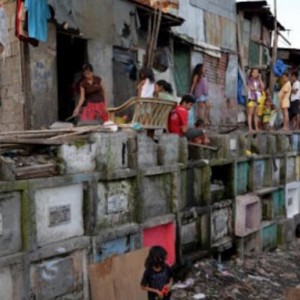
In Manila’s North Cemetery for instance, among the dead there are an estimated 10,000 living-and-breathing Filipino squatters who consider the 100-acre burial ground as their permanent residence. These Filipinos who belong to the country’s below-poverty-line underclass have found a way to survive by occupying the space reserved for the dead. Clearly, there is an issue of overcrowding here.
Out of the country’s 100 million, only a 38.2 million are productive or employed. Obviously, there are more Filipinos who are part of the unproductive members of society and who do not contribute to the growth of the economy. They in fact, just occupy precious space and pull down the economy.
Overcrowding is the least of Philippine society’s problems due to government mismanagement; crime rate goes up along with the growing population because people fight for the same limited resources. Criminals end up in equally overcrowded and almost inhumane prison cells as well and as a result, there is no rehabilitation program in place for convicted criminals. This means that the minute they rejoin society, chances are, they will go back to doing criminal activities
Does overpopulation or overcrowding in the Philippines lead to climate change?
Although overcrowding has damaged the aesthetics of the country and continues to put Filipino lives at risk when natural calamities occur, the Philippines being a poor country does not add to climate change (assuming climate change is real) as much as affluent countries do. This is because the country does not have manufacturing plants as plenty as and that are operational 24 hours a day like China’s. And since Filipinos do not have the spending power equivalent to that of the First World, we are less accountable for the bigger proportion of the carbon emissions said to be responsible for climate change.
The world’s richest people — that’s about 7 per cent of the global population — are said to be responsible for half of the world’s carbon dioxide emissions. The bad news is, if climate change is real, the poorest countries like the Philippines will bear the brunt of extreme changes to the climate. We will not have the capability to counter the effects of La Nina or El Nino if and when it hits us.
Whether you believe in the threat of overpopulation to the environment or not, there is enough evidence to suggest that the country’s unsustainable resources is not enough to cater to the country’s growing population. If we want to attain economic stability, we must address the issue of our dependence on importing food from outside the country. Not only that, we also have to address dwindling water and energy supplies, which even now is not even enough to support the lifestyle aspirations of the current population.
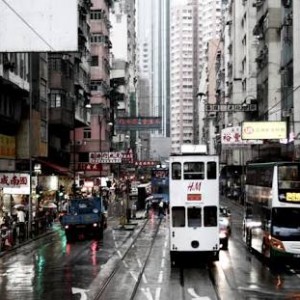
At the rate the population of the country is growing, there will not be enough arable land to use for agriculture to make the country more self-sufficient. To address the issue of overcrowding, we should encourage people to live in high-rise buildings to reduce the chances of agricultural lands being converted into subdivisions for housing. This will also address the public transportation problem because people will not have to live too far from their work.
If the government is not keen on addressing population growth, they should at least ensure that the country’s resources could cater to everyone’s needs especially the most vulnerable members of society – the poor. Come to think of it, even if there are only ten people in the Philippines, if there are no more resources to use for survival, those ten people will be doomed.
In summary: the Philippine government should consider the following options:
1. Control population growth; or,
2. Manage the country’s resources efficiently.
If controlling the population or managing the country’s resources is not an option, everyone should be prepared for the dire consequences.

what does carrying capacity mean?
What do you think it means, GabbyD?
this is  what i think is the definition is — available sustainable resources of the country cannot support the size of the pop. this just trades one set of words “carrying capacity” for another set: “available sustainable resources… does not support… the size of the pop”.
think about available, sustainable… if there are exhaustible resources (you cant replenish), does that mean no country in the world is within carrying capacity? any population greater than zero is over pop?Â
i dont think this is what she means, so i’m puzzled.
So what do you think she means then, GabbyD?
it doesnt matter what i think she means. the key issue is what she means.Â
i could have infinite guesses as to what i think she means. when i said above “i dont think thats what she means”, thats rhetorical. judging from what she wrote, she COULD have meant that. i have no idea.for a “demystified” concept, this concept remains steeped in mystery.Â
Gabbyd said:
—
Only to you Mr GabbyD. Only to you. Use your googling skills and figure it out.Â
whatever you feel u communicated with your definition, u didnt. but its ok. whatever overpopulation/carrying capacity is, as longs as you are fine with it, its ok.
I happen to think that the article is already idiot proof GabbyD. Just read the rest of the comments below. You are the only one who can’t seem to understand.
In summary: the Philippine government should consider the following options:
1. Control population growth; or,
2. Manage the country’s resources efficiently.
…or both.
Yes, applying both options would be the best way to fast track the country’s social and economic recovery. But to the Philippine government, either one is already too much to ask.Â
It would be interesting to associate the problems with some of what we know. The country bleeds millions due to kickback and other forms of corruption. The country loses a lot of foreign investors due to law and order mismanagement. The country also puts so much of its limited budget into debt servicing.
Both options would indeed be good, particularly limiting the size of families when income is simply insufficient. I would continue to point out, though, that the options for achieving this can just as well be based on *modern* natural family planning methods and a *big* education campaign.
Wouldnt it be a greater contribution if the author was able to state how to control population and how to manage the resources.
My answer to my own comment “how” without being arrogant but only honest, would be:
– Stop pro-creating in the name of god, pro-create only when you can afford it (financially, mentally, psychologically, bodily.
(PS: god has nothing to do with the proces of getting pregnant. Its a simple sperm cell and a egg cell)
– Allow and make available all contraceptives currently available
– Introduce the chapter “the human body” during all biology lessons during primary and secondary school in order that people know how one’s body really works (OVULATION!!!!!)
Hm. That would be a very long article then because there are many solutions. Perhaps a Part 2 is in order?
I like that we are given this information and only just this because then we could have a discourse, like we are doing now. Too much information would be spoon-feeding (not to mention unwieldy in an interface such as this) and there would be nothing much left in the comments section to discuss.
I think it should be Control population growth AND manage the country’s resources efficiently. Great article, Ilda.
Yes but it would be too daunting for the Philippine government who can’t even do any of the options.
Thanks geeky Mary!
I agree with geeky Mary. Some people are too stuck on false dilemmas, thinking that it’s only one or the other, when the true best option is to do both or all at once.Â
Well, as I said Chino, it would be great if both could be implemented but either one of the concepts is already hard to sell to people let alone both. If you will note, the government is doing none of the options so choosing one is a compromise.
Cheers
Presi-Noynoy has brought in China to manage thousands of hectares of Pilipinas agricultural land. Money will exchange hands, of course. BUT the real issue — the hectares Pilipinas agricultural land will be managed to feed China population.
Cool!
Shoot man! I knew it. I happened to see this in an NBN4 show. So its true? Idle land is to be given to the PRC just like that? That bastard has already sold our sovereignty to Beijing. So that’s what he means when I read in the Inquirer a few days ago about an article saying that we won’t have a war with China. We already have been subterfuged and covertly invaded without us having to fire a single shot! He is in bed with the commie bastards!
great article. a voice like yours is precious. i appreciate your efforts.
here in the philippines, im going to say that POVERTY IS POWER. the poor is the majority, and the philippines is a democracy. they get much protection from gangster-politicians and are being ENABLED by the oligarchic forces that be. we, the more discerning ones in society, are left as struggling underdogs in this fight for enlightenment, progress. we want out of this seedy anti-intellectualism in our culture that is depressingly reflected in our tabloid-like mass media.
Thanks den.Â
You are correct of course. There are people in power who would rather keep the status quo because they do not want to empower the poor. Those who enjoy the privileges of being on top of every body else will have to give it up when the poor people suddenly become enlightened. Â
Exactly what i have been thinking about the vicious cycle situation in the philippines.
Its definitely a good article. We’ll definitely try to kill each other first before embarking and colonizing to other planets. And if we could do such, the areas of the stars are for those with the cash to use.
Its true, the country isn’t overpopulated, its just the cities are just overcrowded.
In this desperate times, we really need to use the energy for the necessity and not the unnessesary
Thanks Ryukaze!
The government needs to embark on projects that would convert every city into becoming self-sufficient. Industries need to be spread out so it is not concentrated in one place. This will make the capital city less congested and it will also solve the transportation and traffic problems.Â
exactly what i had in mind, ilda. Â i wish you were the president. Â 😉
thumbs up on your article…thanks!
Thanks ici 🙂
GMA tried her best to improve economy and the use of natural resources but unfortunately was demonized and still being falsely persecuted of wrong doing, the only working president we ever had…
Great article, Ms. Ilda. I’m learning so much from this site.
Is there a politically correct word for “squatter”? Anyway, I was wondering why “squatters” don’t just go back to their own provinces if they can’t find work in the big cities? Is their situation so dire at home that they would rather put up with the squalid, overcrowded conditions in the city slums rather than go back? I think if those who are unemployed did that, it would make a huge difference in terms of space. I hate to sound so brutal, I don’t know how else to say it. But if you’re just wasting space, then get out.
“SQUATTERS” can be called “Filipinos in ECONOMIC LIMBOS”. These people, hoping to find better lives , migrate in Urban Centers, like Metro Manila. If they find employments; their pays are not enough to pay for the basic neccessities of : Food, Clothing and Shelter…So, they live in Sub-Human Level.
The Politicians use them for Votes…for Photo Opportunities, during Elections…showing that they are Charitable to “Poor people”…Erap Estrada distributing: Tuyo, Rice, Noodles, etc…are just example of how these self-serving Politicians utilize these people.
This is the Reason, why our SQUA TTER Problems, will never be solved..
Politically correct word for squatters is supposed to be “informal settlers” if were going to based it from our mass media.
I have my own – “committed voters”. Check that one on my fb.
right. number is power and they’ve committed to that role as enabled by politicians. just check out the squatter’s area across the makati medical center. it’s smack dab in the middle of the makati business district like it’s binay’s pride.
Hmmmm…you have a point there.
Thanks Dark Passenger
I assume that the first generations of squatters or “informal settlers†were lured into the city with the promise of a better opportunity. Unfortunately, a lot of them got stuck with a bad deal and could not go back to where they came from probably out of “hiya” or something. That’s how the endless cycle of squatting began I suppose. Some of the new generations of squatters have lived where they are all their lives so there’s really no “province†for them to go back to.
The real culprits are the barangay officials and law enforcers who didn’t nip the problem in the bud. Why didn’t they get rid of the first wave of people who shacked up on public and private lands in the first place? They allowed the problem to go out of hand.
the 1st wave of squatting happened after the end of WWII, where the only job available are in the metro areas, since, the bulk of rebuilding and security was concentrated in this area. (The Huks and Japs where still terrorizing the rural areas). The first wave of migration proved to be beneficial to the Phil in general. However, because of this, the “perception” was develop in the rural areas, that in the urban areas is land of milk and honey. This was further aggravated by the fact that politician concentrated the country’s development in the urban area only and encourage “squatting in public land” so they can have a “captured electorate”! thus, the migration continue.
The ill effect of the uncontrolled migration was first manifest during early 70’s [depression  of wages(labor supply greatly out number labor demand), food shortage(lack of farmers, being harassed by the NPA’s, the military and the land lords)] and still continue up to now.
This “phenomenon” should be reversed by decentralization of economic growth and the maintenance of peace and security in the rural areas. If this “phenomenon” will be allowed to continue the social tension will continue to build up (“edsa 3”, north triangle demolition, san juan demolition etc) until the democratic institution can no longer contain the dissent and the restlessness of the “masses” and we might end up like Somalia/North Korea.
when the communist party of the philippines was founded by joma sison, the squatters flourished in the key cities like it’s an agenda. it further flourished during cory’s time. then cemented as so-called commited voters as enabled by politicians still during Cory’s time until now.
My fiancé and I are exasperated over this too, just like what Dark Passenger said. People in the rural areas try to brave the city “for a better life”, but if they don’t have the skills (or aren’t willing to learn), what are they doing there in the first place?
On the other hand, I do see the dilemma too: they go to the city because they feel there’s nothing for them in the provinces, where they feel the pangs of poverty.
I discussed this with a friend of mine, and his answer to that was to develop the rural areas. I like his idea of providing more or better jobs in the provinces — maybe that way, it could pave a way for better and reachable education for more people –, but why haven’t we done this yet?
We are in for a Nightmare Reality on overpopulation…I believe that there will be Food Riots soon. The Churches and Religious institutions are not going to change their dogmas that: (1) children are the gifts of God. (2) Birth control of any kind is murder and evil. (3) Babies are potential OFW slaves, to earn needed foreign currencies. Besides, these Churches need people, to increase their flocks…more religious contributions…more money to their churches.People like Manalo can build more Mansions. Catholic Bishops can build more Bishop Palaces. While their members, live in shacks and in poverty…
Feudalism is the cause of the Failure of Food Production in the Philippines. Large areas of lands are owned by the Oligarchs…while most of the people in their areas, are their tenants/slaves. Noynoy Aquino’s Hacienda Luisita is an example…Has his tenants/slaves prospered by being tenants/slaves?
We have the same problem as that of the Czarist Russia, before the Bolsheviks Revolution. The Oligarchs/Aristocracy owned most of the cultivated lands. While their tenants/serfs are tied to their lands, as serfs/slaves.
This is the reason Lenin’s cry of : “Land and Bread.”, won him the revolution…
Unfortunately, there are elite members of society who are still under the illusion that everything is ok. Â Even though these people have more to lose when disaster happens and the poor majority become restless, riot or loot their homes.Â
There are people who still refuse to be critical of the current administration because they believe that PNoy is the right man for the job even though he does not have any vision or plans beyond his promise of not being as “corrupt” as the previous administrators. Unfortunately, that’s not going to be enough. Five more years of PNoy doing minimal work or worse, just being present for work without any new initiative is like putting the country on autopilot. It’s like a ticking time bomb.
With the current events in the world and the comparative poverty, there are others feeling the same in the Corporate States of America and Britain.
Perhaps a Peasant’s Revolt will happen again and hopefully as successful as the French Revolution.
Let’s have some numbers to see where our population against our land area stands:
The land area of Philippines is 298,170 sq km. The NSO projected population up to 2010 is around 94 million (2007 population was 91 million).
If we have a population of 100 million, that will leave everyone 0.29817 sq km or 298,170 sq meters of space to play with individually. If we assign 225 sq meters (a length by width of 15 meters by 15 meters per family – a size of half of basketball court) in one family of five (0.000045 sq km/person), that will compute to only 0.015% land area being occupied by us if we have a 100 million population. A 99.985% land area has still to be occupied.
The calculations did not include the areas for infrastructures, factories, and lands for cultivations. I just want to put numbers on whatever we would like to visualize where we are on this population thing.
Japan’s population in 2008 was 127.7 million and their land area is 377,835 sq km (population heavier than Philippines but land area is smaller). It leaves a 0.003 sq km (2,958.8 sq meters) per person to play with and yet they claim they’re overpopulated.
If I’m going to allocate the same area as I’ve used in our country to Japan which is 0.000045 sq km per person, they are occupying only 1.521% of their land area.
Compare 2,958.8 sq meters per person as overpopulated as with our 298,170 sq meters per person.
It will take additional 100 million population to consider ourselves overpopulated and still can play around like in Japan. And when will that be?
I don’t have the answer. At 3% per year population growth, Maybe around 25 years from now.
It’s just me.
My bad. Something went wrong on the way I want them calculated. Correction is as below:
Let’s have some numbers to see where our population against our land area stands:
The land area of Philippines is 298,170 sq km. The NSO projected population up to 2010 is around 94 million (2007 population was 91 million).
If we have a population of 100 million, that will leave everyone 0.003 sq km or 2,982 sq meters of space to play with individually. If we assign 225 sq meters (a length by width of 15 meters by 15 meters per family – a size of half of basketball court) in one family of five (0.000045 sq km/person), that will compute to only 1.51% land area being occupied by us if we have a 100 million population. A 98.491% land area has still to be occupied.
The calculations did not include the areas for infrastructures, factories, and lands for cultivations. I just want to put numbers on whatever we would like to visualize where we are on this population thing.
Japan’s population in 2008 was 127.7 million and their land area is 377,835 sq km (population heavier than Philippines and land area is larger). It leaves them a 0.003 sq km (2,958.8 sq meters) per person to play with and they claim they’re overpopulated.
If I’m going to allocate the same area as I’ve used in our country to Japan which is 0.000045 sq km per person, they are occupying only 1.521% of their land area.
It’s just me.
My apology for the mistake.
Realistically speaking, not all the land area is habitable by humans. We also have to allot areas for parks and wildlife and more importantly, agriculture.Â
Japan obviously manages their resources and spaces efficiently. If you do some research, the Japanese live mostly in small houses/spaces, which includes high-rises.
Realistically speaking – US, Japan, China will still be prosperous – Philippines will still be kulelat.
@Trosp: I would recommend a nice book for you to read, Land-use planning in Hong Kong. I read this a while back and I lost my copy, but hopefully it’s available there in pinas. Also, here’s a reference site: http://www.pland.gov.hk/pland_en/p_study/comp_s/lup/index_e.htm this is not the author’s but it provides a very good overview of how the leaders of Hong Kong plan for utilization of their land knowing fully well that it is limited.
@Ilda: I agree, apartments here in Japan are tiny and expensive. Japanese are also minimalists in nature so they make the most of the available space. It is only here that I find vegetable gardens even on urban areas. Pinoys don’t do that, they find gardening too rural 😀
@kusinero -thanks a lot.
A very good benchmark as to the land area percentage that could be practically allocated in a given population. I’ll still revisit it and perhaps I could come up with some numbers that I can make my own benchmark.
the so-called Filipino poor prefer begging, food rations and cash from Empress Dinky, hotdogs from our president, stealing, killing, robbing, kidnapping, rugby, prostitution than planting vegetables and maintaining vegetable gardens. pag nga may nahuhuli sa crime, ang reason is this >> kaysa mamatay sa gutom
While singapore is only about 704 sq km. with population about 5million. I leave here and i do not feel like im in a overcrowded place. We have lot’s of parks and almost no traffic jam. While i believe that you cannot really disperse your population by by person per land area and think that it is an economically viable strategy. This kind of analysis does not really make for anything.
About the rice issue, I think Filipinos should start reducing rice intake. Compared to the older generations, and other Asian cultures, Filipinos today have the highest rice intake from what I’ve seen. Â In fact it’s a ridiculously large amount, in an average meal, Filipinos consume more rice than in an average Chinese, Korean, Indian, Thai, Vietnamese and Japanese meal.
They really need to start finding ways on crating more employment in the Philippines. When the recession hit North America a number of OFW’s here lost jobs and some struggled to even maintain rent/mortgages here. If the Philippines had an economic boom, a big increase in employment and a rapidly growing economy a vast majority of the OFW’s would gladly go home, work and stay in the Philippines instead of adapting to foreign land. Did I mentioned cold weather, ugh, I hate snow. Or going to Africa or Middle East where it’s crazy dry and hot, much more than the Philippines.
Yes, the Philippines is overcrowded the way I see it. And they have to do something about it. I would say a part of the problem is that a vast majority of the people in the Philippines are not educated in family planning or sex. Most people from developed countries, despite increasing numbers of teenage moms, are educated in family planning and sex. The vast majority of people in developed countries often choose to have a small family or no children at all because they know the expenses required to make sure the child lives comfortably. I myself will never have a child until I am sure I am able to give that child a good quality of life, that includes my ability to be able to pay for my child’s post-secondary education (university) without going into debt.
Rice is the Cheap Food that Average Filipinos can fill their empty stomachs. The Cost of other foods like: meat, chicken, pork, beef, fish, vegetables, etc…are too costly. They buy, a few portions of these foods (tingi)…then, cook it with a lot of soup…with plate of rice or two…”busog na”…other countries are rich. Their ordinary citizen can afford these foods…In our case, the rich, the greedy politicians, the oligarchs, the feudal lords…can only afford them…
Don’t believe what are shown as propagandas in TV shows…it is just a show of make believe…
Go to the Slums…you will see the realities…
Here is a video from Get Real Philippines regarding the rice shortage:
Filipinos need to learn to eat other staples like Potatoes, yams and other root vegetables.
Less water usage and better than just having rice.
The Brazilians like having rice and potatoes as staples.
Preferably we get up to 60 per cent of our energy out of carbohydrates. Starch is an complex carbohydrate mainly available in potatoes, cereals, legumes and certain vegetables such as pumpkin.
They contain a lot of starch (20 per cent) and quite some full proteins. On top potatoes contain nearly as much vitamin C as a similar amount of most fruits.
A portion of 200 gr potatoes meets 40 per cent of our daily need of vitamin C. This portion meets 10 to 15% of the daily need of magnesium and iron and 50 per cent for potassium.
End result: Better for the water usage in the Philippines and healthier Flips.
Rice price is reasonable, compared to other food sources that have taken big hits such as cabbage (repolyo), fish, other vegetables like tomatoes, etc. So you see people shifting their nominal diets to being carb heavy and adding very little room for vegetables. And you wonder why the Philippines has a huge underlying case of diabetes that is also genetic (besides the obvious intake of other high sugar and simple carb based foods). Not to say there are many very healthy alternatives, such as the kamote that comes in different varieties but is even more healthier than the ordinary average sinandomeng.
4 seasons do something to your habits. You learn, adapt and the lessons you gain from it are invaluable. But Philippine weather is very reasonable especially in areas that aren’t as congested. If Fresh air is at a premium in the city, the countryside has a wealth of it as long as you aren’t close to a factory.
Its easier to teach 1 to 2 children how to live and be more involved in their lives, besides making it financially easier to provide for them as opposed to adding 2-3 more mouths to feed. Also in an educational standpoint, though that is something else to be discussed in a topic that relates to that.
Your comment reminds me of people who eat a big amount of rice with very little viand to go with it. Of course, this has more to do with lack of other option due to budget constraints. Â Some even eat rice with just sauce to go along with it. And that is definitely not good for their health. Rice has very little nutritional value and puts people at risk for diabetes.Â
Below is taken from the Net:
“White rice as a stand-alone carbohydrate is not good. It’s glycemic index (the rate at which the carbohydrate is converted to sugar and absorbed into the blood system is high). The resultant high blood sugar will cause the body to react by producing insulin. Basically, insulin grabs that sugar and stores it in the body (i.e. weight gain). That being said, if rice is combined with a slower absorbing food, like protein (e.g. fish) or even fat (e.g. a coconut curry sauce) it is digested and absorbed much more slowly and less likely to cause a spike in blood sugar and an insulin surge.â€
baka nga more than half ng filipinos eh may pre-diabetes and they don’t know it yet. just last month, tinawanan ako ng mga kakilala ko when i put tuna in my instant pansit canton snack and tinawanan uli ako when i tossed in naman tomatoes and itlog na maalat in my instant pansit canton bowl days after. i was told that my food portioning is weird. they just had to eat their instant pansit canton as it is the same way they had to eat 2-3 cups of rice with questionable viand every single day.
Mismanagement of our country’s resources makes our country overpopulated. I believe, we must first reform or have complete overhaul of our system of goverment.Without reforming first our system of government, population control is useless.
If you are going to allow your population to grow, you need to manage your resources well. Mismanagement leads to all kinds of chaos like overcrowding. Mismanagement happens when people running the government cater too much to instant gratification. Instant gratification leads to bad decision-making, irresponsible behavior and negligence.Â
how can we address our rice problem when people are brainwash that “planting rice was never fun”, when the government support dole-outs rather infrastructure for the farmers, when credit is barely if not totally unavailable to the farmers, when our farmers are continuously harass by the NPA and other lawless elements and finally, when the govt opted to buy cheap the locally produce rice, while more than willing to buy a more expensive imported rice.
The rice problem has become way out of hand, unfortunately. The government is obviously not good at managing our resources, which is why it is imperative that they consider option number one – curb the population growth.
the biggest problem as well is the whole infrastructure regarding bringing stuff from the breadbasket to the markets. Philippines honestly has so much more diverse alternatives to the white rice, such as its more colorful cousins or other hearty starches yet you don’t see them on the markets easily due to crazy prices. At least for me, there are short fixes to deal with that rice problem issue on a personal level.
Overpopulation is a myth…The whole world population could fit in Texas itself..yes all seven billion of them..here is the Math…from other site..
According to Wikipedia Texas is 268820 square miles.
According to the US Census Bureau World Population Clock the world population is 6870301578 as of 21:56 UTC (EST+5) Sep 21, 2010.
268820 square miles x 27878400 feet per square mile = 7.49427149 × 10^12 square feet.
7.49427149 × 10^12 divided by 6870301578 people = 1 090.82133 square feet per person.
~1090 sqft is plenty of living space per person. Granted there would be no room left for infrastructure.
Its not practically possible…the point is, if all of us could fit in a state of taxes..the earth has plenty of space to grow and feed humanity. I’m from India and I have lived in Mumbai and Manila, so i know what over-population is 🙂
The thing its all planned, if humanity is left to its own devices we will be better off..we need a leaderless, non-nationalist society..where all humanity is one…I’m convinced after meeting so many people from around the world that, we don’t need a leader, we can look after ourselfs…
Its freemasons that are problem, they divide and rule…all founding fathers of all countries were freemasons…those are the evil ones we should all know about
Dear Jack,
As I mentioned above, realistically speaking, not all the land area is habitable by humans. We also have to allot areas for parks and wildlife and more importantly, agriculture.
Indeed, there are a lot of greedy people in the world. Whether what you say about the freemasons is true or not, it is still easier to be free from their bondage when people are not preoccupied with their basic needs. There is less likelihood of people being exploited when the majority of the population is educated. And there is more likelihood of the majority being educated when there are less people fighting for the privilege.
Dear Ilda,
I agree completely. My only worry is we need a complete picture to know the whole game. Why on one hand church promotes population while the government want contraceptives. This is the game we need to understand.
Yes. its the Jesuit-free masonic cabal that are above the political rulers of the world. I knew already that founding fathers of India, China, Russia, America, UK etc etc were all freemasons…I did not expect the level of deceit in PH….Jose Rizel to Marcos to Aquino….They are all freemasons…
That is the reason…nothing seems to change in PH. The same secret society is ruling PH that is ruling the world.
I really hope, one day anit-pinoy will shed light on the greatest deception PH has ever known. This is the biggest secret. What we see on TV is just a show. Behind closed doors of lodge they are all brothers. Unless, we expose these people, there is no hope for PH and the world and humanity.Â
Please give freemasonic research a chance. I hope anti-pinoy goes to the root cause of the problem in PH and expose this Evil. Search for David Icke, Micheal Tsarion to get more info on this. Thanks
It’s simple, really. They have different agendas. Please note that not everyone in government is pro-population control and there’s actually a small minority of priests (those who use their heads) who are NOT against population control.
It boils down to which side they are on. I don’t really believe that the freemasons run the show. Those who say that the Jews own Hollywood might disagree with you. 😉
@ Jack
I’m sorry but I have to disagree with you. Nothing is an exact science even statistics. Granting if your “over-population-is-a-myth” is true then why do populated countries like China use contraceptives and artificial family planning method? It’s pretty obvious, because they know the effects of overpopulation.
And one thing you did not consider are the attitude of people like GREED. More people equals more greedy persons. It’s basic Psychology. Yes, the earth can satisfy a lot of people but it cannot satisfy our greed. More people equals more diseases too if you consider medicine, namely sexual transmitted diseases.
The point is, food is not only the one you have to consider in a population, education, clothing, and other human needs have to be met that includes emotional and psychological needs. Human beings are very complicated organisms and you need to satisfy a lot of things. Â
Everything is being drained here in the Philippines. It’s not only the food but talents, skills, and quality education of the people that can influence other people to strive hard for the country is declining.
The point is, population is no “rocket science.” It’s basic Darwinian Law. More people means more food needed. More people equals more financial resources needed. More people means more problems. Simple.
The objective why some people want the artificial contraceptive method is not only to prevent diseases but also slow down the population so we, the Philippines, can have enough time to solve other bigger problems first like corruption. If we have lowered all those problems and everything is stable, why not raise the population? We can support it because our country is now stable at that time.
The point is, if we cannot support today’s population how much more tomorrow’s population? The Philippines should not rush into something they are not ready for. It’s like having a family, you cannot rush having a family unless you have a stable job, a matured mind, a steady flow of money and a lot of good experiences in life.
If we can support a big population then I don’t see a problem in raising it, but the truth is we can’t. I don’t know about there in India but I lived my whole life here in the Philippines and I can obviously see the effects of over population and I don’t like it. Actually, I hate it. I agree with the doctors here, yes we should control the population, not for the sake of only saving today’s lives but also for the sake of saving the future of the children to be.  Â
Hi Edd…You make good points. I was in the same view point when i was growing up in India. However, when i started to travel outside and saw the world. I realized the problem that we faced in India is same all over the world.
I could relate the most with Philippines as both countries were ruled by foreign forces and english language plus bend towards call center jobs for both countries etc etc
I will agree with you. I will agree with all view points. My only concern is that, the thing that PH is facing is not NATURAL…that is all i want to say…The problem of PH and India and rest of the world could be FIXED. I only want to shed light that, there are actually “people in this world” that don’t want PH to grow up…
There is a power structure above all politics and governments of the world. I want to shed light on that. Everything will make sense, once you know this group…Its Jesuit-freemasonic cabel that has destroyed PH and other countries.
Give conspiracy a chance. Thats all i’m asking. Search for David Icke, Micheal Tsarion and check their works…the dots will start connecting…Thanks
@ Jack
Yes you too have a good point, but I want to state something of a philosophy here first, if I were a soldier and I face an enemy in front of me do you think my enemy will give me a chance to let me win against him? Would you think he would give me the chance to strike even an inch of his body? Don’t count on it.
It’s the same in life. We’ve seen how brutal life can be to a lot of people, giving a theory that is not fully understood instead of using a method that is already proven will be unwise. You’ll be killed instantly by your enemy. In a battle, use any means necessary to survive, don’t let him strike you because he won’t you strike him.Â
My point is life is extremely brutal, that’s the truth. Try as you may to believe in those stuff you’re saying, I won’t stop you. If you want to enlighten people then go ahead, but I won’t rely on a theory that is new. No theory is perfect, but if I’m going to follow a method, I’m going to use old theories that have universal principles like the Darwinian Law.Â
Â
Â
A soldier who does not have a good strategy will be wiped out.
Philosophy which is not grounded on the facts has a habit of hitting the ceiling.
China today is overpopulated primarily because China was stuck in an agrarian economy that uses large family sizes as a hedge against poverty.
China’s one child policy is quite well know – and that was even before China adopted the market economy.
Was China any better then – the fact is it WASN’T.
Therefore – given that one child per family was already a constant – the change in China’s economic capacity did not change due to said one-child family policy. The change in China’s impoverishment happened AFTER adopting a market driven economy.
That ain’t a theory – that’s a FACT.
But everyone knows that the Chinese people are unlike the Filipino people. In fact, they are so unlike any other people in the world.
You can’t just look at numbers and say, “Hey, they have a higher population than us but they are doing ok.†You have to look at what they are doing right and start from there. You can’t analyze a group of people using one data. You also have to look at the conditions of their habitat, dig deeper into their anthropological and sociological background.
Besides, if the Chinese think that their one-child policy still has to stay even though they are already doing well economically, that should tell you a lot about their need to curb their population growth.
I don’t really see anything terribly wrong about limiting the number of unproductive people who are just putting a strain on the country’s limited resources.
That’s exactly the point – what are they doing right given that:
1) they had a high population before, had one child policy and were impoverished; and,
2) they still have a high population, still have one child policy – but are moving out of poverty
***
The matter with “unproductive” people is this:
– when there are no jobs, people are “unproductive”.
– when there are jobs, people are “productive”
Should they be punished for not having a job – considering that not having a job is in itself a punishment.
Or shouldn’t we provide for an enabling environment that allows them to have jobs so they cease to be “unproductive”.
Now what if, the economic environment changes – and the jobs come in – and because we don’t have enough manpower – then we’ll have to result to importing workers.
Second who can really say before a child is born – whether the child is “unproductive” or “productive”. Even Hellen Keller and Stephen Hawking are “productive” in their environs. In a Philippine environment Stephen Hawking and Helly Keller will be reduced to beggars in Manila’s streets.
***
The new wave of Chinese are actually calling for a rethink of the one child policy, as pointed out in a recent BBC report < a href="http://www.bbc.co.uk/news/world-asia-pacific-11404623">“China’s one-child policy – success or failure?” by Weiliang Niew :
Please find excerpts below:
@Bong,
First of all no one said that unproductive people should be punished. Curbing the number of unproductive people will actually be beneficial to the existing unproductive members of society because the latter will have more chances of having access to health care and education if there is less competition.
You said it yourself, “when there are jobs, people are productiveâ€. Realistically speaking, is the Philippine government capable of providing or creating jobs for the existing number of unproductive Filipinos? The answer is no so why do you want to increase their numbers?
You are worried about the time when a miracle happens and all of a sudden the country experiences economic boom and then we find ourselves in short supply of manpower. Well, do you really see that happening in our lifetime? Some of the “unproductive†people we are talking about have been unproductive all their lives and will quite possibly die without experiencing that economic boom. The government is not utilising the “unproductive†people efficiently. The government does not even know what to do with them. The scenario you mentioned of having to import workers is still too far fetched.
There is a saying, “cross the bridge when we get there.†We are not in that economic environment yet. There are still many bridges to cross before we can get there. One of them is the 60/40 provision you want to get rid of which you keep insisting is essential to achieving economic growth.
I agree with you that the Philippine government is not capable of providing or creating jobs for the existing number of unproductive Filipinos – at the moment.
What am saying is Empirical evidence shows that economic prosperity – in China, US, Japan – curbed the fertility rate because women became more empowered when they joined the work force. It also showed that fertility decreased as education increased. It also showed that the impact of government funded population programs that aim to control the fertility rate were not effective.
Based on these studies therefore, to control the fertility rate – the best option is to create the conditions for a higher quality of life where women have the income, careers and education be able to afford reproductive health medical care that best meet their needs.
In practical terms – that’s weighing whether constitutional reform (create econ prosperity for women – and not just women but for all – CoRRECT Movement) versus RH bill (government procurement and distribution via pork barrel disbursements to give “free contraceptives” ) is a solution that creates “the conditions for a higher quality of life where women have the income, careers and education to be able to afford reproductive health medical care that best meet their needs.”
Yes, I would have to agree with that – but you need to educate people first before they can become skilled enough to be employed. The best way to empower both men and women is through education. Unfortunately, the country does not have the capacity educate everyone because the country’s resources has been mismanaged. So we have to address the issue of how to educate those who need it most – the poor.
Economic prosperity will help keep men and women away from the bedroom. Their idle days will become a thing of the past when both of them have jobs and social lives. In short, they will lead busier and more productive lives when they are earning.
We are really stuck between a rock and a hard place, which is why we need to study well which issue is worth fighting for. I have to admit though that I purposedly structured my article to steer clear of the debate about the RH bill because the bill has had so many revisions already and I can’t catch up anymore. I wanted to go back to the basic discussion about overpopulation. I think that even before we discuss how to curb the population growth, we all need to agree that there is a need to do it. For me what’s more important is for us to agree that we need to empower all Filipinos and to give them a choice. The how is another matter for discussion in another article. 😉
That’s when the “no money no honey” part comes in. That can be such a bummer… lol
“
The Philippines does not have a one-child policy so there is no need to panic. Any one who even proposes to implement such will be shot down by the Catholic Church quicker than you can say “one-child.”
right on!
and if I may add – with your kind indulgence – some priests might even have more than one child 🙂
lol 😉
@Edd
Edd: “The point is, population is no “rocket science.†It’s basic Darwinian Law. More people means more food needed. More people equals more financial resources needed. More people means more problems. Simple.”
IMO, population is more on law of nature than a basic Darwinian Law.
I agree with more people means more food and more financial resources needed. But more people means more problems might not be always true.
Take these examples, snippet from http://en.wikipedia.org/wiki/Population_decline
““Former Russian President Vladimir Putin directed Parliament to adopt a 10-year program to stop the sharp decline in Russia’s population, principally by offering financial incentives and subsidies to encourage women to have children. Australia currently offers a $5,000 bonus for every baby plus additional fortnightly payments, a free immunization scheme and recently proposed to pay all child care costs for women who want to work. Many European countries, including France, Italy, Germany and Poland, have offered some combination of bonuses and monthly payments to families. Some Japanese localities, facing significant population loss, are offering economic incentives. Yamatsuri, a town of 7,000 just north of Tokyo, offers parents $4,600 for the birth of a child and $460 a year for 10 years. The Republic of Singapore has a particularly lavish plan: $3,000 for the first child, $9,000 in cash and savings for the second; and up to $18,000 each for the third and fourth.[17] The effectiveness of these policies is currently the subject of debate.
Paid maternity and paternity leave policies can also be used as an incentive. For example, Sweden has generous parental leave where parents are entitled to share 16 months paid leave per child, the cost divided between both employer and Stateâ€.
Edd: ” The objective why some people want the artificial contraceptive method is not only to prevent diseases but also slow down the population so we, the Philippines, can have enough time to solve other bigger problems first like corruption. ”
IMO, in my family, I also practiced birth control not to slow down the population but I don’t wan my wife to give birth every year. I don’t have a data, but I can tell that there are lots of people whose purpose in using contraceptive is family planning but not in slowing down the population. I treat family planning and population control as different issue.
I don’t know what you mean in ” the objective why some people want the artificial contraceptive method is not only to prevent diseases”, but there are some valid reasons which I’ve gathered why they want it:
(As I’ve commented in http://houseonahill.net/carlos-celdran-machiavellian-no-doubt/)
– not ready for responsibility
– blaming the relationship problem
– mother’s health
– pregnancy resulting from rape
– failed birth control method
– how a child would change their lifestyle
– they have all the children they wanted
I’m just wondering why various major population control organizations, just like global warming/climate change/climate crisis (they’re always rebranding it) advocates, are always operating primarily under government grants.
Bong, Ilda and Anti-pinoy…My favorite blog article writers on the net. …I’m from India…but originally, i’m from another galaxy :)….I relate more to PH than to US or Uk or even India….Filipino people are been suppressed deliberately by a group of people.
I beg of you to give conspiracy a chance…I don’t understand…Why role of Jesuits and Freemasons is not discussed here…please research on these people who hide behind shadows and rule PH…Thanks
Jack , set aside all your conspiracy theory.the only people to blame for this is the Catholic church. Lack of Foresight and planning set the Philippines to failure a long time ago, same as India and any third world country.
I read somewhere a long time ago that the world isn’t really overpopulated. In fact if you placed all the people in the world in a land mass the size of Texas, you’ll only have a population density similar to Hong Kong which about 14,000 people per square mile. The real problem is in the distribution of resources.
Suppose you can really fit the entire population of the world in one place such as Texas, realistically speaking, why would you? Would the people be willing to live in just one place? In fact, part of the reason humans keep moving about is because they have a need to look for greener pastures. It’s in our nature to conquer a new place to live in.
Let’s look at the math.Â
JapanÂ
Area – Total 377,944 km2 (61st)145,925 sq mi  – Water (%) 0.8Population – 2010 estimate 127,360,000 (10th)- Density 337.1/km2 (36th)
873.1/sq miGDP (PPP) 2010 estimate – Total $4.308 trillion(3rd) – Per capita $33,828[6] (24th)
South KoreaÂ
Area – Total 100,210 km2 (108th)38,691 sq mi  – Water (%) 0.3Population – 2010 estimate 48,875,000[1] (24th) – Density 491/km2 (21st)1,271/sq miGDP (PPP) 2010 estimate – Total $1,457.063 billion(12th) – Per capita $29,791(26th)
PhilippinesÂ
Area – Land 299,764 km2 (72nd)115,831 sq mi  – Water (%) 0.61% (inland waters)Population – 2009 estimate 91,983,000 (12th) – 2007 census 88,574,614 – Density 306.6/km2 (43rd)794.1/sq miGDP (PPP) 2009 estimate – Total $324.692 billion – Per capita $3,520
If we look at it. Japan has a bigger population and their land area is almost the same as the Phils. SoKor has a bigger population density [means more people per area]. Yet it is estimated that the average Jap or Korean earn more than 5 times the average Pinoy.
Thanks for the data but we need more than that to get a big picture of what countries like Japan, South Korea have that we don’t have. You have to look at what they are doing right and start from there. You can’t analyze a group of people using one data. You also have to look at the conditions of their habitat, dig deeper into their anthropological and sociological background.
 As I mentioned above:
“Realistically speaking, not all the land area is habitable by humans. We also have to allot areas for parks and wildlife and more importantly, agriculture.Â
Japan obviously manages their resources and spaces efficiently. If you do some research, the Japanese live mostly in small houses/spaces, which includes high-rises.”
I symphatize with Ilda on the matter of statistics. You have to dig deeper. Why does a country have a higher capita. Can be for a simple reason ike natural resources, like oil, gold mines, gaz. Plus the fact that the working force has a maybe higher IQ (lets forget about EQ & SQ here). A country can have something unique (like a USP, unique selling point), like perfect infrastructure, good products (including raw materials).
Dont create jobs to create jobs. Create usefull, efficient jobs only. Everybody can work at at conveyer belt. But doing such work is not even usefull bec a robot (literally) can do the same.
If the educational system works perfectly then those who graduate can start working in the field of R&D. There is where the money is made.
In summary: the Philippine government should consider the following options:
1. Control population growth; or,
2. Manage the country’s resources efficiently.
…or both.
However, based on the Filipino’s (and his government’s) track record, the sensible Filipino, should no longer pin hope on his country and countrymen that they will save him. It could happen but not in the near future. He must proceed to make plans of leaving this place lest he wants to become a casualty of a ticking time-bomb that is the Philippines. Drive in a road where most of your fellow drivers are uneducated, or have poor eyesight because they can’t afford a check-up or know they have that option, or are rushing because they need to beat the clock to earn that extra, and sooner or later you will be caught in an accident no matter how educated, how good your eyesight is or how calm you’ll be driving.
The Philippines is just like that road. Blockheads running around with blockheads directed by the inept based on rules formulated by some more blockheads is a disaster waiting to happen.
It is not wrong to pin hope on our country, but if you consider, your own life expectancy, or how short life really is even if you were to live up to a hundred, and you have no big dreams of being a hero or changing the world, the most practical, sensible albeit selfish (although no one will blame for you for it) thing to do is to secure yourself (bodily and financially) by leaving the country, possibly taking your love ones with you, never to come back.
From there you can pursue your potential because you are no longer on the “defense” mode.
You owe yourself and humanity this much.
This is my personal conclusion after chancing upon AP 2 months ago, and after I finished reading GRP 2 weeks ago.
If I may propose, how about – “To control population growth let Manage the country’s resources efficiently by providing an environment which is designed around “equitable access to income, careers, and education that allow/empower citizens (particularly women) to purchase very affordable reproductive and general medical health care in a manner that meets their personal needs and preferences.”
@Bong
Realistically speaking, it could take years, even decades before an individual can feel the positive effects of a “good” economic reform while everyday a woman is at risk of having an unwanted pregnancy. I think providing the poor access to contraceptives and maternal healthcare now can have a quicker effect on our society while the government is working on the economic reform.
Realistically speaking US, Japan, China will still be enjoying lower fertility rates because of economic reform,
Realistically speaking US, Japan, China – has shown that government programs are ineffective.
So being realistic again – scientific empirical studies providing show that “free contraceptives” is ineffective.
Of course there’s always the tin foil hat. Though am not sure whether the line is supported by empirical data.
Obviously, the science does not agree with the politics.
And Filipinos wonder why – they are i deep do doo. They always take the tin foil :))
I am not against economic reform. What I am saying is it could take decades for individuals to feel the positive effects of economic reform if and when we actually implement one. I also did say that I agree that economic prosperity will help keep men and women from having unwanted pregnancies. But REALISTICALLY speaking, it is not possible to achieve economic prosperity overnight. While in the meantime, giving poor women contraceptives or giving men condoms will prevent an unwanted pregnancy overnight. As I said earlier, as to the HOW we will provide contraceptives to those who need it most will be up to the lawmakers. I cannot claim to be an expert on that. None of us can assume that giving free contraceptives won’t work for the Philippines just because “US, Japan, China – has shown that government programs are ineffective.â€
it’s like this:
Scientist from China, Japan, US have identified that gravity accelerates 9.8 meters per second.
Scientists from Philippines deny the existence of gravity.
In the face of a cliff – China, US, Japan – develop systems that allow a safe climb down the cliff.
The Pinoy just jumps off the cliff.
And pinoy wonders why he hit the cliff with a thud. LOL
If you don’t like the way the authors of the RH bill are proposing to distribute the contraceptives for free, I say there are other ways of educating the masa about responsible parenthood or limiting the number of their children. The government can come up with a massive advertising campaign about responsible parenthood for example. There are other ways to do it that will not cost as much to the taxpayers.
Here is a fact: economic prosperity will not happen overnight while unwanted pregnancies happen overnight.
GMA laid the groundwork to boost the economy during her term (pump-priming the economy during the recession) and PNoy is the one who is benefiting from it. This proves that it takes time before you can feel the effects of any kind of measure that you want to implement.
It doesn’t bother me a bit – the science is saying one thing – and Filipinos do something else. it’s not surprising – and it’s actually a trademark of the Da Pinoy – nothing new.
As far as I know, Filipinos are currently doing NOTHING to satisfy any of us here. They are doing nothing to curb the growth of the unproductive members of society and they are doing nothing to achieve economic prosperity. That alone defies any scientific logic.
Well, at least in the absence of economic reforms, there are calls from some people to curb population growth. But obviously discussions need to continue as to how to go about doing it.
Hi Jomar
I can understand your frustration. It is very frustrating to deal with people who look down on others just because they think differently. It’s certainly not easy to live among people who refuse to acknowledge that there is something wrong with our culture.
Thanks for reading our articles.
Hi Ilda
Thank you for your articles. Thank you for AP.
Before AP, Me and a buddy just complain from day to day about things we find wrong in the workplace, the community and schools, never really touching on CULTURE as a whole, just a collection of encounters with the Wrong, the Evil and the Dumb.
After reading AP, particularly GRP, our observations are now put into a context. They found a structure. And it gave us a rude awakening. We are convinced that HERE is not the way to LIVE.
We are now currently taking steps to leave and raise our children in a new place.
Probably, when I am no longer pressed with the demands of the lower level of the hierarchy of NEEDS, I will try to contribute to AP.
For now, my feet will do the voting.
Yes, the Philippines is overcrowded, straining its carrying capacity. The government has not been able to provide the resources needed by the population, so instead of finding ways of providing those resources it’s trying to control the population consuming resources while being unproductive.
Great article once again, Ilda.Â
Unrelated, wasn’t one of the Millennium Development Goals access to reproductive healthcare by 2015? And this is the pressure behind the RH bill?
According to the United Nations Development Programme (UNDP), access to maternal health care is their 5th Goal and their target is to 1)Â Reduce by three quarters, between 1990 to 2015, the maternal mortality ratio and 2)Â Â Achieve, by 2015, universal access to reproductive health. Unfortunately, they even indicated on their site that the probability of reaching their target is low.
Thanks for sharing the article!
ilda,
Let me kindly address this over-crowding issue. Philippines population is growing by a given percentage each year and that due to a compounding effect, this translates into exponential growth in population size; specially Manila City and its surrounding.Â
My first question to you is, have any libertarians, “or do we even have any seated in congress…,!” ever seriously tried to tackle this difficult issue in a scholarly fashion?
The reason why this concerns me so much is that the end game of all this top down totalitarianism is population control. The RH Bill does promote to reducing over-crowding; thats if ever pass the Congress or CBCP are in total control of our legal system. Arguably the Filipino people themselves are all about radical depopulation. Now if this claim of mine is correct, it would be good to discuss the opposing approach to depopulation.Â
I must admit, while it seems like the libertarian movement at large is inclinationally disposed to anti depopulation arguments, citing namely the santity of human life, noninterferance in the reproductive habits of others, etcetera-etcetera…, our own government do not propose any serious solution to what I would argue is the most serious long term problem for The Philippines and its Filipino race, or our society as whole.
“And that would be over-crowding, not over-population, but mismanaged as you’ve stated in this article of yours. A great one at that, ilda.”
But if this nation of ours is to recover from over-crowding and mismanagement, Philippines needs a long term investment,  and promote economic turn around for our people.Â
Hi Mario
The only person I know in government (aside from the authors of the RH bill) who is advocating for curbing the population growth is Senator Miriam Santiago. Â There are not a lot of public servants who actually understand the implications of the country’s growing population. Majority of them still follow what the church says or they just want to keep quiet to avoid annoying the church and risk losing votes.Â
Thanks for reading the articleÂ
climate change is real hoax!
The Philippines will be one of the first countries to find out whether the climate change is a hoax.
If you will look at Metro Manila it would be easy to say that the Philippines is over populated. But it you go to rural places such as Burgos Pangasinan, one does not need to think. I believe there’s just an over concentration of the population in the Metros.Â
With regard to resources, I don’t think that we don’t have enough natural resources to sustain life. I hope that the government  is monitoring our resources.Â
When it comes to demographics, we should also consider mortality rate and migration. Lots are born in a day but lots of people die too.Â
Good post. Will definitely share this on our site.
More importantly however: what the frak do we do about it now? I’m all for the important stuff–
– Control population growth
– Get more people to move out of the cities, and keep building other “hubs” outside Metro Manila.
– Increase food production
– Support better legislation
– Get more people to work somehow (which also means creating new jobs for entirely new workforce segments).
Time to come up with all sorts of crazy ideas, and hopefully we stumble upon something that might actually work.
Thanks Renzie
Great inputs! We certainly need to rally behind coming up with a more intelligent city to live in.
I visited and saw NSO’s 2007 Census Population. If people won’t mind, I’ll paste it here so we can all have a quick glance.
Luzon-
NCR : Manila – 11,566,325
CAR : Baguio – 1,520,847
Region I : San Fernando, La Union – 4,546,789
Region II : Tugegarao – 3,051,487
Region III : San Fernando, Pampanga – 9,709,177
Region IVA : Calamba – 11,757,755
Region IVB: Calapan – 2,559,79
Region V: Legazpi – 5,106,160
Area: 104,688 km^2
Total Population: 49,818,331
Visayas-
Region VI: Iloilo – 6,843,643
Region VII: Cebu – 6,400,698
Region VIII: Tacloban – 3,915,140
Area: 61,007 km^2
Total Population: 17,159,481
Mindanao-
Region IX: Zamboanga – 3,230,094
Region X: Cagayan de Oro – 3,952,437
Region XI: Davao – 4,159,469
Region XII: Korondal – 3,830,500
ARMM: Cotabato – 4,120,795
CARAGA: Butuan – 2,293,346
Area: 97,530 km^2
Total Population: 21,586,641
http://www.census.gov.ph/data/census2007/index.html
–
Perhaps it seems really appropriate to say that Filipinos are overcrowding Luzon, taking consideration of the population size and land areas of other two main region especially Mindanao.
Don’t forget the illegal immigrants and the criminals added to that and there are some people who were born without any birth certificate like the ones who were born inside the house.
NCR : Manila – 11,566,325 versus Region IVA : Calamba – 11,757,755
Calamba is even higher. I wonder if the crime rate there is higher too?
No questions asked about that, everywhere here in Luzon has a high crime rate.
One reason why this happen is that everyone thinks that there is life in NCR, One fact why people from provinces migrate to NCR is that the laborers in the provinces are salaried by their own provincial rates. But when you buy items it is just the same as you bought it in NCR.
Though I have to admit that properties are way much cheaper in the provinces, but life is in the capital. If there are high speed trains that will take me 45 minutes – an hour to travel from Batangas or Bulacan, to Makati, then I would be more than willing to buy a house there than live in the more crowded area.
[Philippines is a Newly Industrialized Country and part of Next Eleven economic powers.
The Philippines was then one of the richest countries in Asia, but due to political instability and adoption of inconsistent economic policies, it took a turn to being one of the poorest. The Philippines, despite its relatively small land area, has the world’s 12th largest population. This leads to many social problems such as poverty, unemployment, and crime. However, the Philippines is now growing fast and needs are being fulfilled. It performed well compared to other Asian countries and is now considered as a newly industrialized country. It had shown its economic stability in facing financial crises.[25] According to Goldman Sachs, the Philippine economy will become the 14th largest economy in the world by 2050]
Have to point out that GoldmanSachs is most culpable in the current financial meltdown.
They assisted Greece in cooking their books to allow entry into the Euro.
They also packaged sub-prime mortgages (worthless) and recommended them to their clients. Then bet against those same investments.
All in all, I would not trust Goldman Sachs assessment. They will profit somehow, but to the detriment of the Philippines.
Read the article for the 35th time. It’s also timely since our leaders are deciding whether to limit population growth or not. If they can’t do it, they should try managing our resources. If they can’t do both, then we’re screwed.
@Markus U
I am flattered that you did not get tired of reading it. I guess the RH bill is such a hot topic right now. I feel like we’ve written about this ad nauseum since last year though. Thank you.
http://definitelyfilipino.com/blog/2011/10/13/ang-huling-pag-asa-ng-pilipinas-4/
Is the Philippines overpopulated or just mismanaged?
In urban areas, definitely yes, there are more people staying in a given small/ limited space; in rural areas, no, not really, there are less people living in a relatively wider area. In the country in general, I think it’s not yet overpopulated at the moment…
Is it mismanaged? Categorically I say YES! Our population has not been given importance by government. There’s rampant migration from rural areas to urban areas without giving due consideration on its carrying capacity in terms of decent housing, enough food, clean/ safe water, available jobs, recreational facilities, among others.
I do not need any college degree to understand that sadly we we in the Phil. is overpopulated and at the same time mismanaged. To ignore even one of them is called “missing- the- mark” so to speak.
Solution is easy and we see it coing every year. Lots of disasters in terms of typhoons, floods, earthquakes and fires. God is not sleeping. When a country is overpopulated like the Phils He doesnt hand out condoms or pills to couples, he sends His riders of the Apocalypse to ensure there will be famine, natural catastrophes and war. Thats how he keeps the population in check. The only complaint God should send more of these Riders to the country. You do not reduce population by killing a thousand in one blow. You need to stamp out millions so hopefuly He will send a megatsunami or megaearthquake soon and if done frequently enough the population may go down to half of the current size all in one year. So please, please I urge everyone to pary to the Lord for this to happen
Hi Mr. June.
That’s a great comment you have there. Yeah, it is true, the Lord checks and keeps the balance of everything. He knows what to do. Philippines – overpopulated, nah. He visits us with natural calamities to keep our population in check.
Mismanaged, TRUE.
If only our leaders would ask for true guidance from our Creator, they will be truly guided and they will be inspired to make the right decisions for our country’s betterment. But sad to say, most of them do not seek for true guidance, but they seek for power, glory and financial gain. How sad.
Definitely, we are not overpopulated, we are unequally distributed (our provinces have vast areas for occupancy but they lack the necessary establishment where people can work that’s the reason why provincial folks flock to Metro Manila to find their luck). Another thing, there are lots of business opportunities offered by the government but it is not cascaded to the grass roots or to anyone with business desire because the local government will not earn from it. Good Luck, Philippines!